



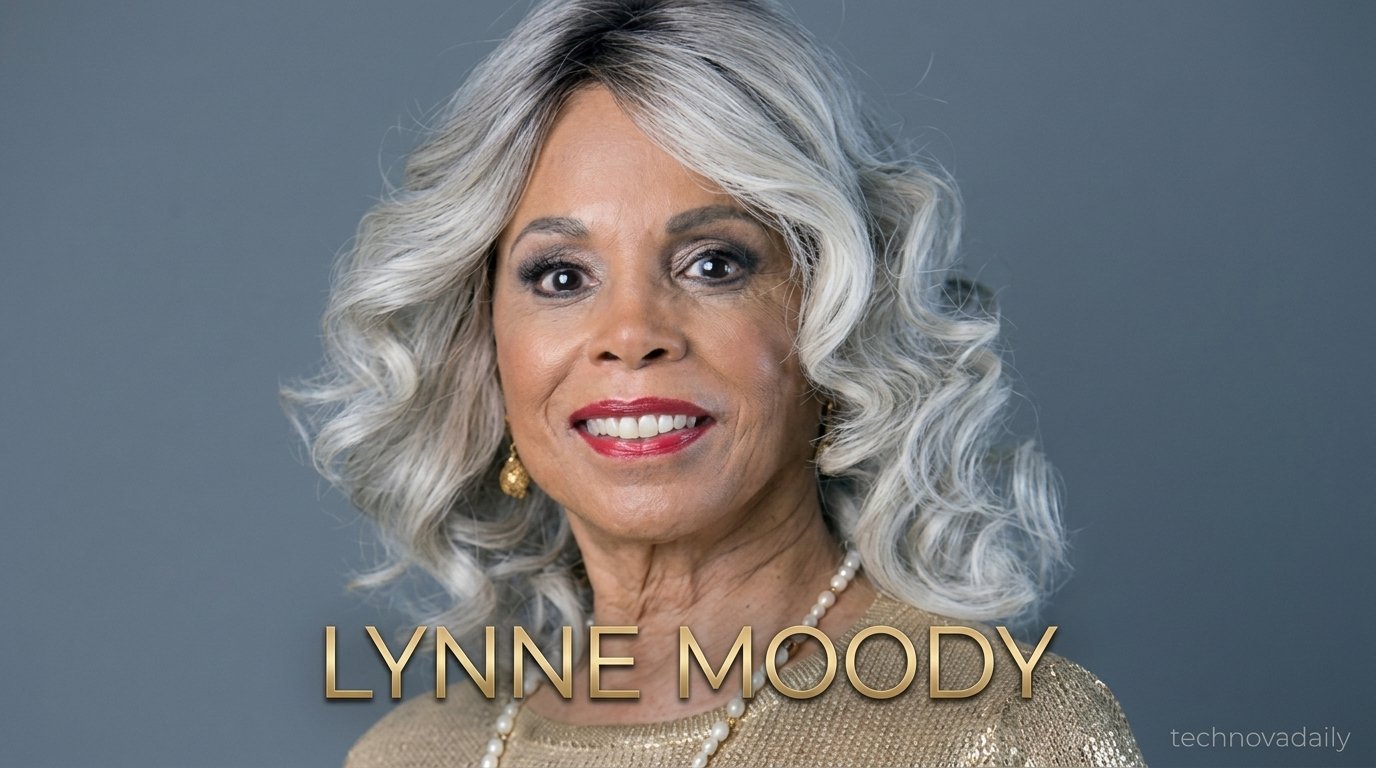
Lynne Moody is one of the most recognizable faces of 1970s and 1980s American television, known for her graceful screen presence and her ability to move effortlessly between drama, comedy, and daytime soap opera. Over a career spanning more than four decades, she built a body of work that includes some of the most talked-about shows of her era, from the groundbreaking miniseries Roots to the primetime soap Knots Landing. Beyond the screen, her personal story of reuniting with a daughter she gave up for adoption decades earlier has touched audiences just as deeply as any role she ever played. This article looks closely at who Lynne Moody is, where she came from, the roles that defined her career, and the remarkable personal journey that has shaped her later years.
Who Is Lynne Moody?
Lynne Moody, born Emmalyn Paulette Moody, is an American actress whose career took off in the early 1970s and has continued in various forms ever since. She is best remembered for playing Tracy Curtis-Taylor in the ABC sitcom That’s My Mama, Irene Harvey in the landmark miniseries Roots and its sequel Roots: The Next Generations, and Patricia Williams in the long-running primetime drama Knots Landing. Her work across network television made her a familiar presence in American households during a period when Black actresses were still fighting for meaningful, well-rounded roles.
What makes Lynne Moody’s career particularly notable is its range. She was equally comfortable in a lighthearted sitcom, a historical drama with cultural weight, or a glossy nighttime soap opera. That versatility is part of why her name still comes up in conversations about influential Black actresses of American television’s golden network era, alongside contemporaries like Leslie Uggams and Debbi Morgan, both of whom she worked alongside in Roots.
Today, Lynne Moody is remembered not only for her television credits but also for a deeply personal story that resurfaced in the media years after her acting career slowed down. Her reunion with a daughter she placed for adoption as a teenager added a new layer to her public story, one rooted in resilience, hope, and family.
Early Life and Background
Lynne Moody was born on February 17 in Detroit, Michigan, though she was raised primarily in Evanston, Illinois, a northern suburb of Chicago. Her upbringing was shaped by parents with strong professional backgrounds: her mother worked as a social worker, and her father was a physician at a hospital in the Chicago area. This kind of household, grounded in service and discipline, gave young Lynne a stable foundation before she ever considered a career in entertainment.
She attended Evanston Township High School, graduating in the early 1960s, a period when opportunities for Black women in mainstream American entertainment were still extremely limited. Before acting became her full-time pursuit, Moody held down more conventional jobs, including a stint as a flight attendant, which took her around the country before she eventually made her way to Los Angeles to chase a career in film and television.
Her path into acting was anything but a straight line. While supporting herself working at a Playboy Club in Los Angeles, she began taking acting classes at the Pasadena Playhouse, one of the most respected training grounds for performers in Southern California. She later added to her craft with additional training at Chicago’s Goodman Theatre and Hull House, institutions with long histories of nurturing serious dramatic talent.
Breaking Into Hollywood
Lynne Moody’s first credited screen role came in 1973, when she appeared in the blaxploitation horror film Scream Blacula Scream. It was a modest start, typical of the era, when many Black actors found their earliest opportunities in genre films aimed at Black audiences. That role, however, opened the door to television work, which would come to define the bulk of her career.
Her first real brush with a hit series came through All in the Family, one of the most influential sitcoms in television history. Moody originated the role of Jenny Willis in a 1974 episode focused on Lionel’s engagement, a character who would later become central to the popular spin-off The Jeffersons. Although the role was eventually recast before The Jeffersons premiered, Moody’s involvement placed her early in the orbit of one of the most important sitcom franchises of the decade.
That same period saw her land the role that gave her a national audience for the first time: Tracy Curtis-Taylor in That’s My Mama, an ABC sitcom starring Clifton Davis and Theresa Merritt. The show, centered on a Washington D.C. family running a neighborhood meat market, was part of a wave of sitcoms in the mid-1970s that placed Black family life at the center of the story rather than at the margins.
That’s My Mama and Early Television Success
Moody portrayed Tracy Curtis-Taylor throughout the first season of That’s My Mama, helping establish the show as a modest hit for ABC. According to reporting from the period, she chose to leave the series after her manager indicated she was no longer enjoying the role, and she was replaced by actress Joan Pringle for the second season. Career decisions like this were common in the era, when actors often weighed long-term creative satisfaction against the stability of a steady television paycheck.
After stepping away from That’s My Mama, Moody did not stay off screens for long. She landed a starring role in the television film Nightmare in Badham County, a women-in-prison exploitation drama that was later given a theatrical release under the shortened title Nightmare. While a departure from sitcom work, the role demonstrated her willingness to take on darker, more intense material, a sign of the range that would come to define her later career choices.
This period of her career, moving from a family sitcom to gritty television drama, previewed the kind of versatility she would need for her most acclaimed role just a couple of years later. It also reflected the reality many working actors faced at the time: steady employment often meant saying yes to a wide variety of genres and tones rather than sticking to a single lane.
The Role of a Lifetime: Roots and Roots: The Next Generations
In 1977, Lynne Moody took on the role that would define her career and cement her place in television history. She played Irene Harvey in Roots, Alex Haley’s sweeping ABC miniseries that traced generations of an African American family from slavery through emancipation. Roots became a cultural phenomenon, drawing record-breaking audiences and sparking national conversations about American history and race that had rarely been given this kind of mainstream platform.
Moody reprised her role as Irene Harvey when Roots: The Next Generations aired in February 1979, continuing the family saga into the twentieth century. Being part of a production of this scale, alongside a cast that included Leslie Uggams, Georg Stanford Brown, Louis Gossett Jr., and Ben Vereen, placed Moody firmly among the actors most associated with one of the most important television events of the twentieth century. Decades later, surviving cast members, including Moody, have continued to be honored and photographed together at retrospectives celebrating the miniseries’ lasting cultural impact.
Roots gave Lynne Moody a level of recognition that few actresses of her generation achieved, and it remains the credit most closely tied to her name whenever her career is discussed. For many viewers, her portrayal of Irene Harvey is inseparable from the emotional weight of the larger Roots story, a testament to how effectively she embodied the role.
From Soap to Hill Street Blues: Expanding Her Range
Following her success with Roots, Moody continued working steadily across a variety of television genres. From 1979 to 1980, she played Polly Dawson on the satirical sitcom Soap, a show known for its absurdist take on the soap opera format and its willingness to push boundaries for network television at the time. The role allowed her to showcase her comedic timing after the heavy dramatic work Roots had required.
In the 1980s, Moody appeared in several episodes of Hill Street Blues, Steven Bochco’s acclaimed and influential police drama that changed the way television approached ensemble storytelling. Being part of a show as critically respected as Hill Street Blues added further credibility to her résumé, showing that she could hold her own in serious, socially conscious drama as well as comedy.
She also took on the role of Nurse Julie Williams in E/R, a hospital-set sitcom that predates and is unrelated to the later, more famous medical drama of the same abbreviation. This stretch of her career, moving between comedy, procedural drama, and ensemble storytelling, reflects the kind of steady, adaptable working actor’s life that rarely gets the same attention as a single breakout role but is often what sustains a decades-long career.
Knots Landing, General Hospital, and Later Television Work
Between 1988 and 1990, Lynne Moody took on the role of Patricia Williams in Knots Landing, one of the defining primetime soap operas of the 1980s and a spin-off of the massively popular Dallas. Knots Landing was known for its blend of suburban drama and long-running storylines, and Moody’s presence added to a cast that helped keep the show relevant well into its later seasons.
In 2000, she took on a recurring role as Florence Campbell on General Hospital, one of the longest-running and most beloved daytime dramas in American television history. Appearing on a soap with the cultural staying power of General Hospital introduced her to yet another generation of viewers who may not have been familiar with her earlier work on Roots or That’s My Mama.
Alongside her scripted television work, Moody also lent her voice and public profile to charitable causes. In the 1990s, she participated in public service radio announcements for Africare, an organization focused on improving living conditions across Africa, working alongside fellow Roots cast members Georg Stanford Brown and Louis Gossett Jr. This kind of advocacy work, tied closely to the themes of the project that made her famous, reflected a consistency between her public career and her personal values.
A Mother’s Reunion: The Story of Lisa Wright
Perhaps the most emotionally powerful chapter of Lynne Moody’s life has nothing to do with a script at all. In December 1964, at eighteen years old, Moody gave birth to a daughter and made the difficult decision to place her for adoption. As she has described in interviews, hospital staff covered her eyes during the delivery specifically so she would not see her baby, a common and painful practice at the time meant to prevent emotional attachment before adoption.
For more than fifty years, Moody quietly carried the weight of that separation, searching for her daughter whenever she could, even asking Roots author Alex Haley for help at one point, though the search repeatedly hit dead ends because of sealed adoption records. The breakthrough finally came in 2018, when her daughter, Lisa Wright, used a 23andMe DNA test and the help of Moody’s brother, Carlton Moody, to track her down. The two met for the first time on June 2, 2018, a moment Moody has described as feeling like giving birth all over again.
Since their reunion, Moody and Wright have built a close relationship, spending time together across cities including Los Angeles, Seattle, Portland, Chicago, and Atlanta, where different members of the extended family live. Wright, who built a long career in marketing working with major brands, has also become involved in mentoring foster youth, a cause that carries obvious personal resonance given her own story. Moody has spoken publicly about getting to know her grandson as part of this new chapter of her life, describing the reunion as one of the greatest gifts she has ever received.
Lynne Moody’s Lasting Legacy in Television History
Lynne Moody’s career belongs to a generation of Black actresses who helped push American television toward more honest, varied representation, often while navigating an industry that offered far fewer opportunities than it does today. Her role in Roots alone secures her a place in television history, given the miniseries’ role in shifting how American audiences engaged with stories about slavery and family history on a mass scale.
Beyond Roots, her steady presence across sitcoms, dramas, and daytime soaps over several decades reflects the kind of durable, adaptable career that speaks to genuine skill and professionalism rather than a single lucky break. Actors who can move convincingly between a satirical sitcom like Soap, a gritty drama like Hill Street Blues, and a long-running soap opera like Knots Landing tend to be underappreciated for just how difficult that range actually is to sustain.
Her personal story, particularly the reunion with her daughter, has also given her a different kind of public recognition in recent years, one rooted in resilience and honesty about a painful chapter of her past. That willingness to speak openly about the experience has resonated with many people who have their own connections to adoption, whether as birth parents, adoptees, or adoptive families.
Where Is Lynne Moody Today?
In more recent years, Lynne Moody has largely stepped back from the pace of a full-time acting career, choosing instead to focus on family, mentorship, and the relationship she has rebuilt with her daughter and grandson. Sedona, Arizona, has been described as something of a second home for her, a place tied to some of the more recent milestones in her family reunion story, including gatherings with relatives.
She continues to be recognized by fans of classic television, particularly around anniversaries connected to Roots, and appears periodically at retrospective events alongside surviving cast members. Her story continues to circulate through interviews, retrospectives, and fan communities dedicated to celebrating the actors who shaped television during the 1970s and 1980s.
For those discovering her work for the first time, whether through streaming reruns of Roots, Knots Landing, or General Hospital, Lynne Moody’s career offers a clear example of what a long, adaptable working life in entertainment can look like. Combined with her deeply personal story of loss and reunion, her life illustrates that the most memorable stories are not always the ones written into a script.
