



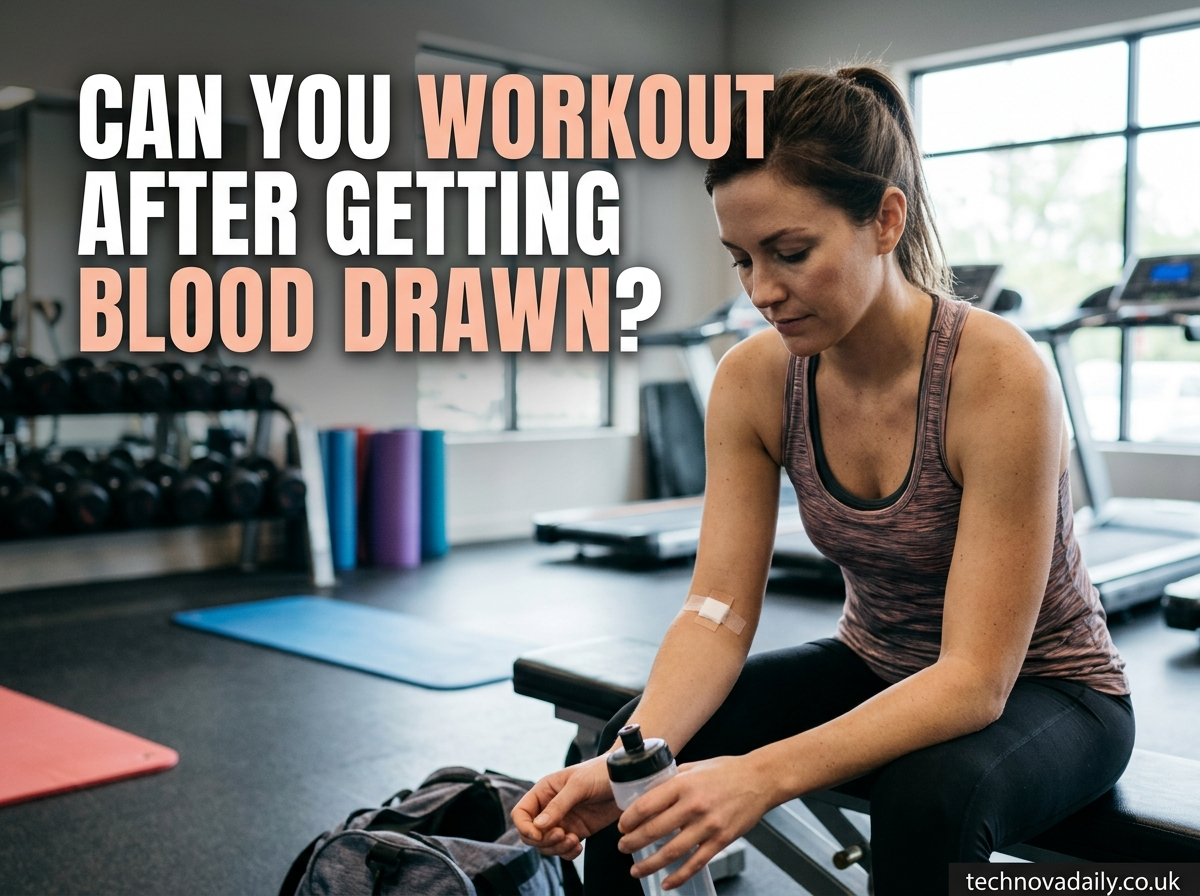
If you have had a blood test and want to go to the gym, you may wonder whether it is safe to exercise right away. You can usually return to light activity after a routine draw if the bleeding has stopped and you feel well. However, it is best to avoid heavy lifting and strenuous exercise for at least the rest of the day or as advised by your healthcare professional. This helps reduce the risk of bleeding and bruising around the needle site. MedlinePlus advises avoiding heavy objects for 24 hours after a blood test.
The right time to resume your workout depends on how much blood was taken, how you feel afterward, and whether you have any medical conditions that affect bleeding or recovery. A routine test is also different from donating blood, so the same exercise rules do not apply to both situations.
Can You Work Out After Getting Blood Drawn?
Yes, many people can do light exercise after a routine blood test. A standard draw removes a small amount of blood, and most people can return to their usual daily activities without problems. Still, it is wise to give the needle site time to settle before doing anything that puts pressure on your arm.
Walking around your home or taking a gentle walk may be fine if you feel normal and the puncture site is no longer bleeding. You should avoid a hard workout if you feel weak, dizzy, or lightheaded. These symptoms can increase the risk of falling or getting hurt during exercise.
If your healthcare professional has given you specific instructions, follow those instead of general advice. You may need a longer break from exercise if the draw was difficult, you have a large bruise, or you take medicine that affects blood clotting.
How Long Should You Wait to Exercise After a Blood Draw?
There is no single waiting time that suits everyone after a blood test. For many people, light activity is fine once they feel well and the puncture site has stopped bleeding. Heavy exercise needs more care because it can put pressure on the area where the needle entered the vein.
If you plan to lift weights, perform intense cardio, or do a workout that heavily uses your arm, waiting until the next day is a sensible choice. MedlinePlus recommends avoiding heavy lifting for 24 hours after blood testing. Some healthcare facilities give similar advice about strenuous activity, particularly when there is bruising or discomfort.
Do not use the clock alone to decide when to exercise. If you still feel dizzy, notice ongoing bleeding, or have increasing pain or swelling, skip your workout. Wait until the symptoms settle and seek medical advice if they persist or become worse.
What Types of Exercise Are Safe After a Blood Draw?
Walking and Light Cardio
Walking is often a reasonable option after an uncomplicated blood test. Start at an easy pace and pay attention to how you feel. If you have no dizziness, weakness, or bleeding, gentle movement may be more comfortable than a full gym session.
Avoid turning a short walk into a demanding workout. If you have been fasting for the test or have not had enough fluids, you may feel less comfortable during physical activity. Stop and sit down if you begin to feel faint.
Running, Cycling, and Other Cardio Workouts
Running, cycling, swimming, and other cardio activities vary in intensity. An easy session may be manageable for some people, but intense intervals, long runs, and strenuous cycling are better left until you feel fully well and have followed any aftercare instructions.
Be extra careful with activities where dizziness could cause an accident. Outdoor cycling, running on busy roads, and exercising at heights are poor choices if you feel lightheaded after your test.
Weightlifting and Strength Training
Weightlifting deserves extra caution because gripping weights and tightening your arm muscles can put pressure on the puncture site. Heavy lifting may lead to further bleeding or a larger bruise, especially if the site has not settled.
For that reason, skip heavy sets, intense arm exercises, and strength training that places a heavy load on the affected arm for the rest of the day. If your healthcare provider has advised you to avoid heavy lifting for 24 hours or longer, follow that guidance.
Can You Lift Weights After Getting Blood Drawn?
It is better to avoid heavy weightlifting immediately after getting drawn. Even though a routine blood test usually takes only a small amount of blood, the needle leaves a small opening in the blood vessel. Pressure on the area before it has settled can cause bleeding under the skin.
You may be tempted to train another muscle group instead. However, exercises such as bench presses, rows, shoulder presses, and deadlifts can still involve the arm used for the draw. It is safer to postpone a demanding gym session than to risk worsening a bruise or causing the site to bleed again.
If you want to stay active, consider gentle walking instead, provided you feel well. Return to your normal lifting routine when the puncture site is comfortable, bleeding has stopped, and any symptoms have settled. If you develop a large or painful bruise, ask a healthcare professional when it is safe to resume training.
What Happens If You Exercise Too Soon After a Blood Draw?
Bruising and Swelling
A small bruise may appear around the needle site after a blood test. This can happen when a little leaks into the surrounding tissue. Exercise that puts pressure on the affected arm may make bruising more noticeable.
The NHS notes that some bruising or swelling can occur after a blood test and usually goes away within a few days. If swelling increases, pain becomes severe, or the area becomes unusually red or warm, contact a healthcare professional.
Bleeding From the Needle Site
The puncture site may start bleeding again if you put pressure on it too soon. If this happens, stop exercising and press a clean piece of gauze or cloth firmly over the site until the bleeding stops. Keep your arm supported while applying pressure.
If the bleeding does not stop after firm, continuous pressure, seek urgent medical advice. Heavy bleeding or rapidly increasing swelling needs prompt assessment.
Dizziness, Weakness, or Fainting
Some people feel faint during or after a blood draw. Fasting, anxiety, dehydration, or a reaction to the procedure may contribute to these symptoms. Starting a demanding workout when you already feel unwell can increase the chance of fainting or injury.
Stop what you are doing, sit or lie down, and wait until you feel better. Do not return to exercise while symptoms continue. Seek medical advice if dizziness does not settle, keeps returning, or occurs with other concerning symptoms.
What Factors Affect Exercise After a Blood Test?
Several things can affect how you feel after having blood drawn. Knowing what applies to you can help you decide whether to rest or take a gentle walk.
Fasting before a blood test: Some blood tests require you to avoid food and certain drinks for a set period. If you have been fasting, follow the laboratory’s instructions about when you can eat again. Once the test is complete, have food and fluids when permitted, particularly before considering exercise.
Dehydration: Not drinking enough fluids may leave you feeling unwell, especially if you have also been fasting. Drink water unless your healthcare professional has told you to limit fluids. Wait until you feel normal before considering a workout.
A difficult blood draw: Multiple needle attempts, tenderness, or a larger bruise may mean you need extra time before exercising. Avoid putting pressure on the affected arm until it feels comfortable.
Medication and medical conditions: Blood-thinning medicines and conditions that affect clotting can increase the risk of bleeding or bruising. If either applies to you, ask your healthcare professional for advice. Do not stop prescribed medicine on your own.
The amount of blood removed: A routine blood test usually takes a small amount of bloo. Blood donation removes much more, so it requires different aftercare. The American Red Cross advises donors to avoid heavy lifting and vigorous exercise for the rest of the day after donating blood.
How to Recover After Getting Blood Drawn
You can take a few simple steps to look after the puncture site and feel comfortable after a blood test.
Keep firm pressure on the site for as long as the healthcare professional recommends. Once the bleeding stops, follow the instructions you were given about the bandage. Avoid rubbing or repeatedly checking the area in a way that could disturb it.
Drink water and eat when your test instructions allow it. If you had to fast, make sure you follow the instructions for ending the fast before returning to your normal routine. Rest if you feel tired or lightheaded rather than trying to complete your planned workout.
When you return to exercise, begin with an easy session and increase the effort gradually. Do not push through pain, dizziness, or bleeding. If you had a difficult blood draw or have been told to avoid exercise for a certain period, follow that advice.
When Should You Avoid Exercise After a Blood Draw?
Do not work out if the puncture site is still bleeding or you feel dizzy, weak, or close to fainting. Exercise can make it harder to respond safely if these symptoms occur. Rest until you feel well, and do not return to activity while symptoms continue.
You should also avoid exercise that puts pressure on the affected arm if you have increasing swelling, a painful bruise, or ongoing tenderness. Contact a healthcare professional if the area becomes more painful, swollen, red, or warm rather than improving.
Seek urgent medical care if you have severe or persistent bleeding, rapidly increasing swelling, fainting with ongoing symptoms, chest pain, or difficulty breathing. These problems should not be treated as normal after-effects of a routine blood test.
Conclusion
You can usually do light activity after getting blood drawn if the bleeding has stopped and you feel well. However, heavy weightlifting and strenuous exercise are best avoided for the rest of the day, with a 24-hour break from heavy lifting being a common recommendation. Your healthcare professional may advise a longer rest depending on your circumstances.
Drink water, eat when your test instructions allow it, and pay attention to how you feel. If you notice bleeding, increasing swelling, or dizziness, skip the workout and get medical advice when needed. Taking a short break from the gym is better than risking an injury or delaying recovery.
Frequently Asked Questions (FAQs)
1. Can you work out after getting blood drawn?
Yes, light exercise is often fine after a routine blood draw if you feel well and the bleeding has stopped. Avoid heavy lifting and strenuous exercise for the rest of the day or for the period recommended by your healthcare professional.
2. Can I go to the gym after a blood test?
You can go to the gym, but it is better to keep your activity light on the day of the test. Walking or gentle movement may be suitable, while heavy lifting and intense workouts should wait.
3. Can I lift weights after getting blood drawn?
Avoid heavy weights for at least the rest of the day. MedlinePlus recommends avoiding heavy lifting for 24 hours after a blood test. Follow longer restrictions if your healthcare professional gives them.
4. Can I run after a blood test?
A gentle run may be manageable if you feel well, but walking is a safer choice if you are unsure. Avoid intense running if you have been fasting, feel dizzy, or have bleeding or bruising at the puncture site.
5. Can I do cardio after getting blood drawn?
Light cardio may be fine after an uncomplicated blood draw. Start gently, and stop if you feel weak, dizzy, or unwell. Postpone intense cardio until you have recovered and followed any aftercare instructions.
6. Can I work out after a fasting blood test?
You should first follow your laboratory’s instructions about eating and drinking after the test. Once you can eat, have a meal or snack if needed, drink water, and make sure you feel well before considering light activity. Skip strenuous exercise if you feel weak or lightheaded.
7. Is it safe to exercise the same day as a blood test?
Light activity is generally fine for many people after a routine blood test. Heavy lifting and strenuous exercise are better avoided for the rest of the day, and some aftercare guidance recommends waiting 24 hours before heavy lifting.
8. What happens if I lift heavy weights after a blood draw?
Heavy lifting may cause the puncture site to bleed again or increase bruising around the area. If bleeding starts, stop exercising and apply firm pressure. Seek medical advice if the bleeding continues or swelling increases.
9. How long should I keep the bandage on after a blood test?
Follow the instructions from the person who took your blood. The recommended time can vary depending on the dressing and your circumstances. Keep the area clean and follow the advice you were given about removing the bandage.
10. Can you work out after donating blood?
Blood donation is different from a routine blood test because a much larger amount of blood is removed. The American Red Cross recommends avoiding heavy lifting and vigorous exercise for the rest of the day after donation. Drink extra fluids, eat a snack or meal, and rest if you feel lightheaded.
