



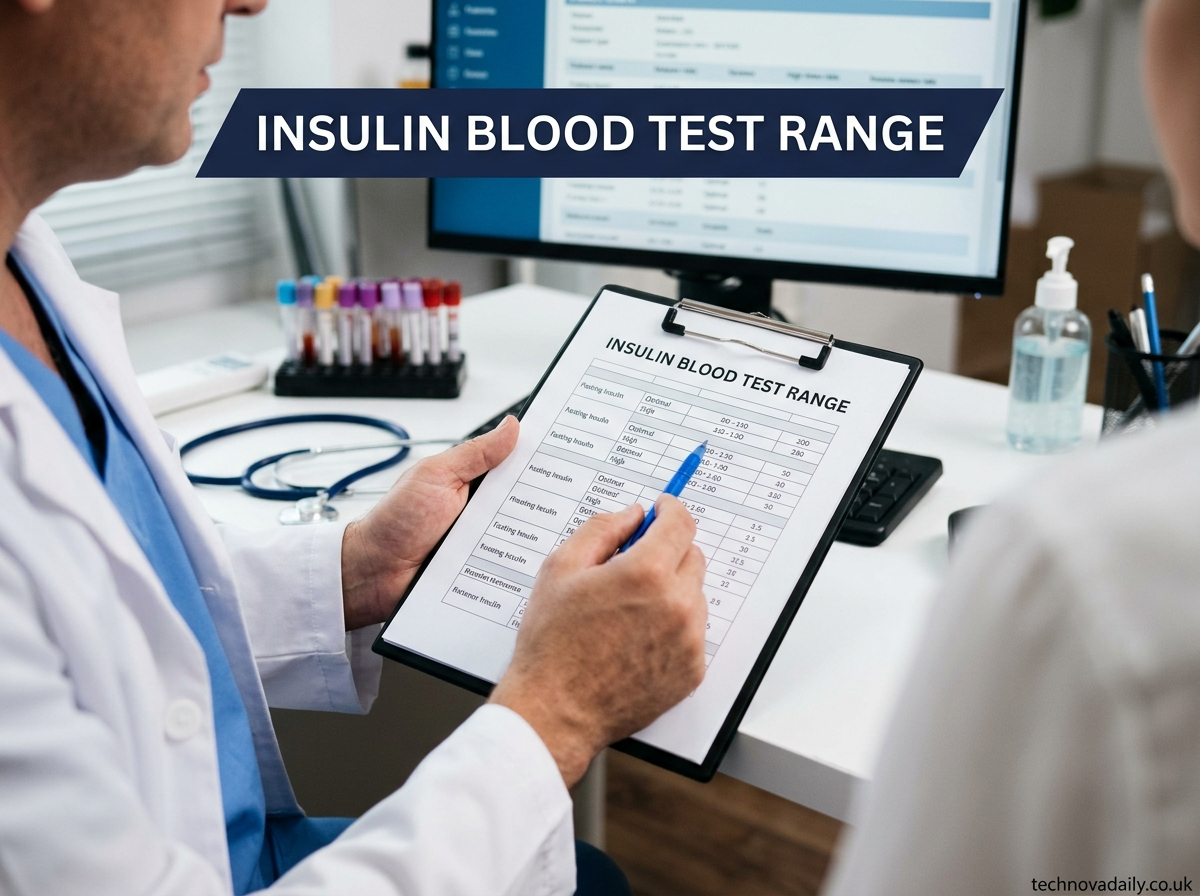
The normal fasting insulin blood test range is commonly around 2.6–24.9 µIU/mL, although the exact range depends on the laboratory and testing method. An insulin blood test measures how much insulin is present in your blood. Doctors may use this test to investigate low blood sugar, assess insulin production, or help evaluate insulin resistance. Your result should be reviewed alongside your blood glucose level, medical history, and the reference range printed on your lab report.
What Is the Normal Insulin Blood Test Range?
Insulin is a hormone made by the pancreas. Its main job is to help glucose, also called blood sugar, move from the bloodstream into the body’s cells, where it can be used for energy. When blood sugar rises after a meal, the pancreas normally releases more insulin. As blood sugar falls, insulin release usually decreases.
A commonly used fasting insulin reference range is 2.6–24.9 µIU/mL. However, this is not a universal range for every laboratory or patient. Some laboratories use different testing methods and reference limits. Your age, health history, medications, fasting status, and blood glucose level can also affect how a result is understood.
A result within the laboratory’s reference range does not automatically mean that insulin is working normally in your body. For example, a person with insulin resistance may produce extra insulin to keep blood glucose under control. A doctor will consider the full picture rather than relying on one number. Source: MedlinePlus and Cleveland Clinic Laboratories.
Fasting Insulin Normal Range
A fasting insulin test measures insulin after you have gone without food for a set period. Healthcare providers often ask patients to fast for 8–12 hours before testing, although you should follow the exact instructions given by your doctor or laboratory. Plain water is generally allowed during a fasting period.
Fasting matters because eating causes changes in blood glucose and insulin. After a meal, insulin levels may rise as the pancreas responds to the glucose entering the bloodstream. A sample collected after eating may therefore show a different result from one collected after an overnight fast.
Doctors may order fasting insulin with fasting blood glucose to understand how the body manages sugar. They may also request an HbA1c test, which estimates average blood glucose over the previous two to three months, or a C-peptide test to assess the body’s own insulin production. These tests answer different questions and may help explain an unclear result.
Insulin Blood Test Range Chart
The following chart provides a general guide to understanding an insulin blood test. It is not a diagnostic chart, because laboratories can use different reference ranges and the meaning of a result depends on the blood glucose level and the conditions under which the sample was collected.
| Insulin test result | Possible meaning |
|---|---|
| Below the laboratory’s reference range | May indicate reduced insulin production, depending on the glucose level |
| Within the laboratory’s reference range | Falls within that laboratory’s expected limits |
| Above the laboratory’s reference range | May reflect increased insulin production or insulin resistance |
For example, an insulin result of 10 µIU/mL may fall within a laboratory range of 2.6–24.9 µIU/mL. However, that number alone cannot tell whether a person has insulin resistance or diabetes. The result must be considered with fasting status, blood glucose, symptoms, and other clinical findings.
Always check the units and reference range printed beside your result. If your report marks the value as high or low, ask your healthcare provider whether further testing is needed. A result outside the reference range does not always mean that you have a disease, and a result inside the range does not rule out every problem with glucose regulation.
What Does a High Insulin Blood Test Result Mean?
A high insulin level means that more insulin than expected is present in the blood for the laboratory’s reference range or the circumstances of the test. One possible explanation is insulin resistance. In this condition, the body’s cells do not respond to insulin as effectively as they should. The pancreas may respond by making more insulin to help glucose enter the cells.
Insulin resistance can occur before blood glucose rises above the normal range. Over time, the pancreas may struggle to produce enough insulin to meet the body’s needs. This can contribute to prediabetes and type 2 diabetes. Insulin resistance is also associated with conditions such as polycystic ovary syndrome (PCOS). Still, a high insulin result by itself cannot confirm any of these conditions.
High insulin can also be seen when blood glucose is low. In some cases, this may be related to diabetes medication or, less commonly, an insulin-producing pancreatic tumor called an insulinoma. The timing of the blood sample and the person’s symptoms are important. If high insulin occurs with low blood glucose, a doctor may request additional tests to identify the cause. Do not try to lower insulin levels with supplements or medication without medical advice.
What Does a Low Insulin Blood Test Result Mean?
A low insulin result may mean that the pancreas is producing less insulin than expected. Its meaning depends heavily on the blood glucose level at the same time. If blood glucose is low and insulin is also low, that may be an appropriate response because the body generally reduces insulin release when it does not need to lower blood sugar further.
However, low insulin combined with high blood glucose may suggest that the pancreas is not making enough insulin to control blood sugar. Possible causes include type 1 diabetes and certain pancreatic conditions. Doctors may order additional blood tests, review symptoms, and consider other findings before deciding what the result means.
Low insulin does not automatically mean that a person has diabetes. Likewise, a single high or low result cannot establish a diagnosis on its own. If your report shows an abnormal value, discuss it with your healthcare provider, especially if you also have increased thirst, frequent urination, unexplained weight loss, shakiness, sweating, or episodes of dizziness.
Insulin Resistance and Insulin Blood Test Results
Insulin resistance occurs when the body’s cells respond less effectively to insulin. As a result, glucose does not move from the blood into cells as efficiently as it should. The pancreas may produce more insulin to compensate, sometimes keeping blood glucose within the expected range for a period of time.
A person with insulin resistance may have a normal fasting blood glucose result but higher insulin production. This is one reason why a normal blood glucose test does not always tell the entire story about how the body responds to insulin. However, insulin levels vary between people, and there is no single fasting insulin value that confirms insulin resistance in every case.
Doctors may consider fasting glucose, HbA1c, medical history, physical findings, and other tests when assessing insulin resistance. Depending on the person, they may also look for related conditions such as PCOS or signs of prediabetes. If you have concerns about your results, ask your doctor which tests are suitable for your situation instead of trying to interpret insulin levels in isolation.
Insulin Blood Test vs. Blood Glucose Test
An insulin blood test measures the amount of insulin in the bloodstream. A blood glucose test measures the amount of glucose, or sugar, in the blood. Although these substances work together, they provide different information. Insulin helps the body manage glucose, while the glucose test shows the amount of sugar present at the time of testing.
Doctors commonly use blood glucose and HbA1c tests to diagnose diabetes. An insulin test is not usually enough to diagnose diabetes because insulin levels can be low, normal, or high in people with different forms of diabetes and other health conditions. Results also change depending on whether the person has eaten and whether they use insulin medication.
A C-peptide test can help doctors estimate how much insulin the pancreas is producing. The pancreas releases C-peptide when it makes its own insulin, and C-peptide remains in the bloodstream longer than insulin. Doctors may use it with glucose and insulin results when they need more information about insulin production. The tests selected will depend on the symptoms and the question the healthcare provider is trying to answer.
How to Prepare for an Insulin Blood Test
Your healthcare provider may ask you to fast for 8–12 hours before an insulin blood test. During this time, plain water is generally allowed, but you should avoid food and other drinks unless your testing instructions say otherwise. Not every insulin test has the same preparation requirements, so confirm the instructions with your laboratory before your appointment.
Tell your healthcare provider about all medicines and supplements you take. Insulin medication can affect the interpretation of some insulin tests, and biotin, also called vitamin B7, may interfere with certain laboratory methods. Your doctor or laboratory may advise you to pause biotin before testing, depending on the test and dose. Do not stop prescribed medicines or change your insulin dose on your own.
During the test, a healthcare professional takes a small blood sample, usually from a vein in your arm. You may feel a brief sting, and minor bruising can occur afterward. Most people can return to their usual activities once the sample has been collected, unless their healthcare provider gives them different instructions.
When Should You Talk to a Doctor About Insulin Test Results?
Contact your healthcare provider if your insulin result is outside the laboratory’s reference range or if you have symptoms that may be related to abnormal blood glucose. Your doctor can compare the result with your glucose level, fasting status, medicines, and medical history. Depending on the findings, you may need repeat testing or other tests, such as HbA1c, C-peptide, or additional glucose measurements.
Symptoms of low blood glucose can include sweating, shakiness, hunger, dizziness, a fast or irregular heartbeat, and confusion. Severe low blood glucose can cause fainting or seizures and requires emergency medical care. If someone is unconscious or having a seizure, do not give food or drink by mouth; seek emergency help.
High blood glucose may cause increased thirst, frequent urination, tiredness, or unexplained weight loss. Severe symptoms, including vomiting, abdominal pain, deep or rapid breathing, or confusion in someone with possible diabetes, need urgent medical assessment. Do not wait for an insulin test result if you are experiencing a medical emergency.
Frequently Asked Questions About Insulin Blood Test Range
What is a normal fasting insulin level?
A commonly used fasting insulin reference range is around 2.6–24.9 µIU/mL, but the correct range depends on the laboratory and test method. Check the reference interval on your own report and interpret the result with your blood glucose level and medical history.
Is an insulin level of 20 normal?
A fasting insulin result of 20 µIU/mL falls within the 2.6–24.9 µIU/mL range used by some laboratories. However, it may not be considered normal under every laboratory’s criteria or in every clinical situation. Your fasting status and blood glucose level help determine what the result means.
What insulin level indicates insulin resistance?
There is no single insulin number that confirms insulin resistance in everyone. Doctors may assess insulin alongside fasting glucose, HbA1c, medical history, and other findings. A normal glucose result does not always rule out insulin resistance, but a high insulin result alone does not confirm it.
Can insulin levels be high when blood sugar is normal?
Yes. The pancreas may produce extra insulin to compensate when the body’s cells respond poorly to it. This can help maintain blood glucose within the expected range for some time. A healthcare provider can decide whether further testing is needed.
Does a low insulin level mean diabetes?
Not necessarily. Low insulin can occur for different reasons. When insulin is low and blood glucose is high, reduced insulin production may be a concern, but doctors need additional information to determine the cause.
Do I need to fast before an insulin blood test?
Fasting for 8–12 hours is often requested, especially for fasting insulin measurements. Follow the exact instructions from your healthcare provider or laboratory. Plain water is generally permitted during fasting.
What is the difference between insulin and C-peptide tests?
An insulin test measures insulin in the blood. A C-peptide test helps assess how much insulin the pancreas produces because C-peptide is released along with the body’s own insulin. Doctors may use both tests to investigate particular glucose or insulin problems.
Conclusion
The insulin blood test range helps healthcare providers assess how much insulin is present in the blood. A commonly used fasting reference range is 2.6–24.9 µIU/mL, but the range on your laboratory report should take priority. High insulin may be associated with insulin resistance, while low insulin with high blood glucose may suggest reduced insulin production. Neither result should be used alone to diagnose a condition.
For an accurate interpretation, review your insulin result alongside blood glucose, fasting status, medicines, symptoms, and medical history. If your result is outside the reference range, discuss it with a qualified healthcare provider. The right follow-up tests can help explain the finding and guide any care you may need.
