



Introduction
Joey Heatherton is widely remembered as one of the most striking and dynamic entertainers to emerge from American television during the 1960s and 1970s. Born Davenie Johanna Heatherton on September 14, 1944, she built a career as an actress, singer, and dancer who became deeply associated with the golden age of television variety shows. Her performances combined athletic dance, expressive stage presence, and a bold charisma that made her a standout figure in an era dominated by live entertainment and network specials.
As the daughter of television pioneer Ray Heatherton, she entered the entertainment world with a strong artistic foundation and early exposure to Broadway and television culture. Over time, she developed into a pop culture personality whose image reflected both the glamour and changing social attitudes of her time. Her career spans film, television, stage, and music, making her one of the most recognizable multi-talented performers of her generation.
Early Life and Artistic Roots
Joey Heatherton was born in Rockville Centre, Long Island, New York, into a family already connected to the performing arts. Her father, Ray Heatherton, was a Broadway performer and early television personality best known for hosting The Merry Mailman, a children’s program that made him a familiar face in New York households. Growing up in this environment meant that performance was not just a career possibility but a daily reality.
From a young age, she was immersed in structured artistic training. She studied ballet intensively and later expanded into jazz dance, voice training, and acting. Some accounts note that she trained under respected instructors and was exposed to advanced dance discipline early in life, which helped her develop the fluid movement style that later became her signature on television. These formative years shaped her discipline, confidence, and comfort in front of live audiences, preparing her for a demanding entertainment career.
Education and Early Entry into Show Business
Joey Heatherton’s education combined traditional schooling with professional artistic development. She attended Saint Agnes Academy while simultaneously pursuing dance and performance training. Her transition into professional entertainment began early, influenced strongly by her father’s connections and her own growing talent.
One of her earliest major experiences came when she joined Broadway production environments as a teenager. She appeared in The Sound of Music as part of the ensemble, gaining firsthand experience in live theater performance. Around the same period, she began appearing on television programs, including guest roles that introduced her to national audiences. These early opportunities marked the beginning of a career that would soon expand rapidly across multiple entertainment platforms.
Breakthrough in Television Variety Entertainment
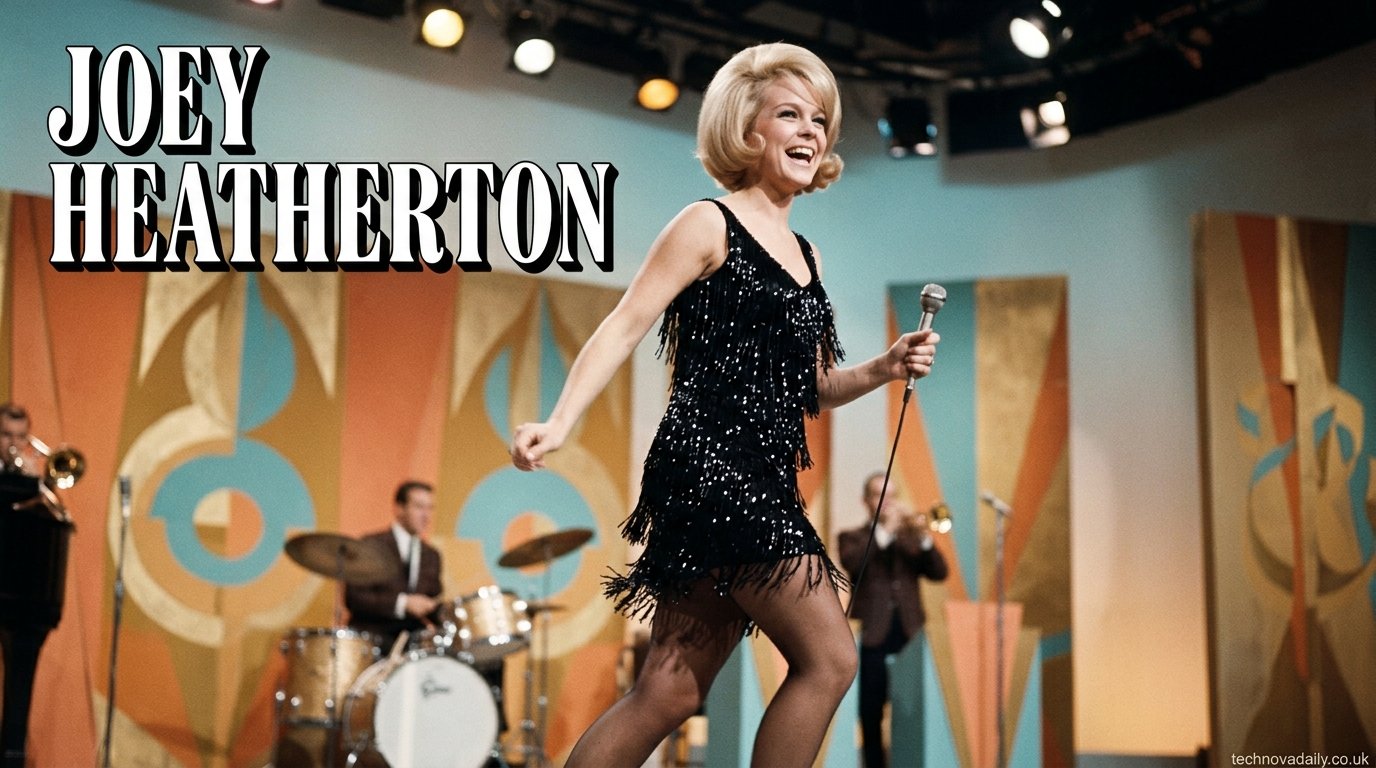
Joey Heatherton rose to national fame during the peak of American variety television, a format that dominated prime-time entertainment in the 1960s. She became a frequent guest on major programs such as The Dean Martin Show, The Ed Sullivan Show, The Andy Williams Show, and The Perry Como Show. These appearances allowed her to showcase her unique blend of dance, singing, and expressive performance style.
Her television presence quickly became distinctive. She often performed energetic dance routines that reflected the evolving youth culture of the 1960s, including modern dance styles that contrasted with more traditional television performances of the time. This bold approach drew significant attention, making her both a popular guest and a subject of public discussion.
During this period, she also gained exposure through USO tours organized by Bob Hope, performing for American troops overseas. These tours lasted for more than a decade and helped solidify her reputation as a dedicated performer willing to bring entertainment to diverse audiences in challenging environments.
Film Career and Hollywood Expansion
In addition to television, Joey Heatherton built a solid film career during the 1960s and 1970s. She appeared in several feature films that highlighted her ability to transition from television performance to cinematic acting. Her early roles included appearances in Twilight of Honor (1963), Where Love Has Gone (1964), and My Blood Runs Cold (1965), where she often portrayed emotionally complex young women.
These films placed her alongside well-known Hollywood actors and gave her opportunities to explore more dramatic storytelling. While she was still primarily known for her television presence, her film work helped broaden her professional identity and introduced her to new audiences beyond variety show viewers.
In later years, she continued working in films such as Bluebeard (1972) and The Happy Hooker Goes to Washington (1977). These projects reflected a shift in Hollywood toward more provocative and experimental storytelling styles, and Heatherton adapted to these changing trends while maintaining her recognizable screen presence.
Music Career and Recording Projects
Alongside acting and dancing, Joey Heatherton also explored music recording. During the 1960s, she released several singles that showcased her vocal abilities, often tied to her television performances where she would sing and dance simultaneously. Her music career reflected the broader entertainment model of the time, where performers were expected to be multi-talented entertainers.
In 1972, she released a studio album titled The Joey Heatherton Album, which included a collection of pop and standard-style songs. The album represented her effort to establish herself more firmly as a recording artist rather than only a television personality. Although her music did not achieve major commercial chart success, it contributed to her overall image as a versatile entertainer.
Her musical performances were often closely connected to her television appearances, where she would introduce songs in variety show formats. This integration of music and television helped maintain her visibility throughout the decade and reinforced her brand as a dynamic stage performer.
Public Image, Fame, and Cultural Impact
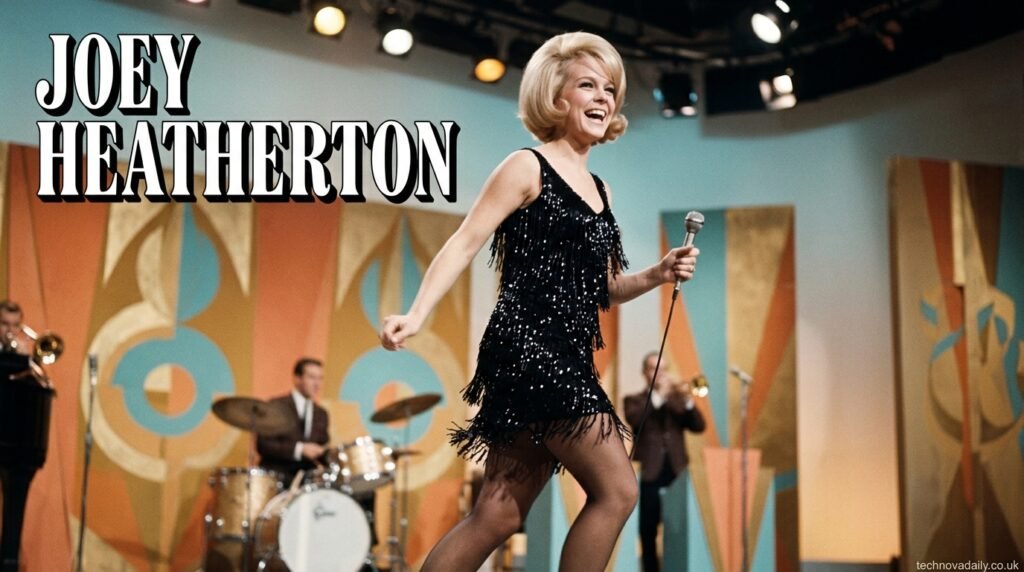
During the height of her fame, Joey Heatherton became a widely discussed cultural figure in American entertainment. She was often described as a sex symbol of the 1960s and early 1970s, largely due to her bold stage presence, dance style, and glamorous television appearances.
Her performances sometimes sparked debate, as her energetic and expressive dance routines pushed boundaries for network television at the time. While some critics viewed her style as controversial, others saw her as a symbol of changing cultural attitudes toward performance, femininity, and television entertainment.
Despite differing opinions, her influence on variety entertainment remains significant. She helped shape a more modern, expressive style of television performance that reflected the cultural shifts of the 1960s. Her presence on screen contributed to the transformation of variety shows into more dynamic and youth-oriented programming.
Personal Life and Challenges
Joey Heatherton’s personal life often attracted public attention alongside her professional career. In 1969, she married professional football player Lance Rentzel, a relationship that drew media interest due to both their public profiles. However, the marriage later ended in divorce following personal and legal difficulties.
Like many public figures of her era, Heatherton experienced the pressures of fame at a time when celebrity culture was becoming increasingly intense. Reports of personal struggles and legal challenges later in her life affected her public image and contributed to a gradual decline in mainstream visibility during the late 1970s and beyond.
Despite these challenges, she remained an important figure in entertainment history, with her earlier work continuing to define her legacy.
Later Career and Lasting Legacy
Although her peak popularity occurred in the 1960s and early 1970s, Joey Heatherton continued to appear in occasional film and television projects. One of her later notable appearances came in Cry-Baby (1990), where she participated in a revival-style production that introduced her to a new generation of audiences.
Her legacy is most strongly tied to the golden age of American television variety shows. She represents a unique era when entertainers were expected to be complete performers, combining singing, dancing, and acting in live or semi-live broadcasts. Her bold performance style helped pave the way for later generations of multimedia entertainers.
Today, she is remembered as a symbol of 1960s entertainment culture, representing both its glamour and its evolving artistic boundaries.
Conclusion
Joey Heatherton remains a significant figure in American entertainment history, known for her versatility as a singer, dancer, and actress during one of television’s most influential eras. From her early beginnings in a performance-oriented family to her rise as a nationally recognized television star, she built a career defined by energy, talent, and cultural impact.
