

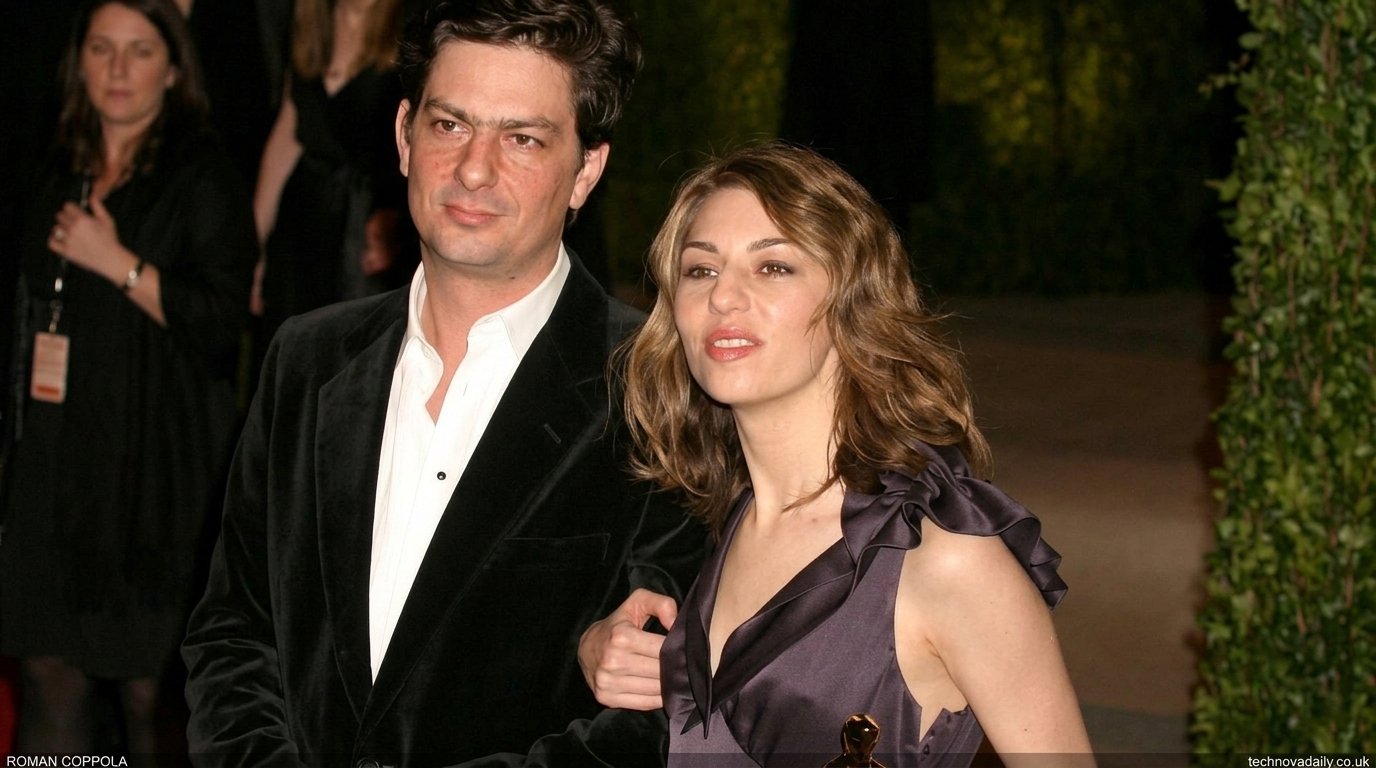
Roman Coppola is one of the most respected yet understated figures working in American cinema today. As a director, screenwriter, and producer, he has built a career that stretches from experimental music videos to Oscar-nominated screenplays, all while staying largely out of the spotlight compared to other members of his famous family. For anyone curious about who Roman Coppola is, what he has created, and why his work continues to matter in 2026, this article offers a clear and accurate look at his life, his projects, and his lasting influence on modern filmmaking.
Who Is Roman Coppola?
Roman Coppola is an American filmmaker, screenwriter, and producer known for his sharp visual style and his long creative partnership with director Wes Anderson. Born on April 22, 1965, he comes from one of the most celebrated families in film history, yet he has carved out a career defined by originality rather than reputation alone. He currently serves as president of American Zoetrope, the production company founded by his father, and he is also the founder of The Directors Bureau, a commercial and music video production house he built from the ground up.
What sets Roman Coppola apart is his range. He is not simply a director or simply a writer; he moves fluidly between roles, often serving as a producer on one project and a co-writer or second unit director on another. This versatility has made him a trusted collaborator across the film industry, particularly among directors who value visual precision and offbeat storytelling.
Early Life and Family Background
Roman Coppola was born in Neuilly-sur-Seine, France, to filmmaker Francis Ford Coppola and documentary artist Eleanor Coppola. Growing up, he spent time on the sets of some of the most influential films in cinema history, including The Godfather, The Godfather Part II, and Apocalypse Now. This early exposure to filmmaking gave him a hands-on education that no film school could fully replicate.
As a young adult, he worked on the crews of his father’s films The Outsiders and Rumble Fish, learning the technical and creative sides of production simultaneously. His sister, Sofia Coppola, would go on to become an acclaimed director in her own right, and the two eventually formed a production company together called Commercial Pictures in the late 1980s, backed by American Zoetrope. This early collaboration set the tone for a career built on family ties, creative risk-taking, and independent production values.
Career Beginnings in Filmmaking
Roman Coppola’s formal entry into directing began with visual effects and second unit work on his father’s 1992 film Bram Stoker’s Dracula, a project that earned a BAFTA Award nomination for its visual effects. This early technical role shaped his lifelong interest in the mechanics of filmmaking, from in-camera effects to composition and camera movement.
Throughout the 1990s, he built a reputation directing commercials and music videos, a period that proved essential to developing his visual language. His work during this era combined technical experimentation with a strong sense of style, foreshadowing the meticulous, symmetrical aesthetic he would later become known for as a writer and director on feature films.
Breakthrough with CQ
In 2001, Roman Coppola made his feature directorial debut with CQ, a film set in Paris in 1969 that premiered at the Cannes Film Festival. The story follows a young film editor caught between his personal life and a science fiction film he is helping complete, blending genres and timelines in a way that felt fresh for its era.
CQ was well received by critics and gave audiences their first real look at Coppola’s directorial voice: playful, visually inventive, and unafraid to blend nostalgia with modern sensibility. While he has not directed many feature films since, CQ remains an important reference point for understanding his artistic instincts as a filmmaker.
Collaborations with Wes Anderson
Perhaps the most significant thread running through Roman Coppola’s career is his long-standing creative partnership with Wes Anderson. The two have co-written several of Anderson’s most celebrated films, including The Darjeeling Limited, Moonrise Kingdom, The French Dispatch, Asteroid City, and The Phoenician Scheme. This collaboration has produced some of the most visually distinctive and critically praised films of the past two decades.
Their partnership goes beyond screenwriting. Coppola has often contributed to the visual planning and production design conversations that give Anderson’s films their signature symmetrical, storybook look. Industry observers frequently credit this collaboration as one of the more consistent and fruitful writing partnerships in contemporary cinema, and their joint screenplay work has earned Academy Award nominations, including recognition for The Grand Budapest Hotel.
The Directors Bureau and Music Videos
Roman Coppola founded The Directors Bureau in 1996, a production company that quickly became known for producing stylish commercials and music videos. Through this company, he directed all four music videos for The Strokes’ debut album Is This It, along with videos for artists including Daft Punk, Moby, Green Day, and Fatboy Slim.
His music video for Phoenix’s “Funky Squaredance” was notable enough to be added to the permanent collection of the Museum of Modern Art in New York, a rare honor for work in this medium. This chapter of his career demonstrates how commercial and music video direction can serve as both a creative outlet and a technical training ground, skills that later translated directly into his feature film work.
American Zoetrope Leadership
As president of American Zoetrope, Roman Coppola plays a central role in shaping the direction of a production company with deep roots in independent filmmaking. Founded by his father decades ago, American Zoetrope has long championed director-driven storytelling outside the constraints of major studio systems, and Coppola’s leadership continues that tradition.
In this role, he balances administrative and creative responsibilities, supporting new projects while maintaining the company’s identity as a home for ambitious, personal filmmaking. His involvement extends beyond his own directing work, offering guidance and resources to other filmmakers working under the Zoetrope banner.
Personal Life
Roman Coppola is married to Jennifer Furches, and the couple has one child together. Compared to other members of the Coppola family, he maintains a relatively private personal life, choosing to let his creative work speak for itself rather than seeking media attention.
This preference for privacy has not limited his professional visibility, however. He remains active on the festival and industry circuit, frequently appearing alongside longtime collaborators like Wes Anderson at premieres and events such as the Cannes Film Festival, where their joint projects continue to draw critical attention.
Recent Projects and 2026 Activities
Roman Coppola remains professionally active heading into 2026. He has continued his collaboration with Wes Anderson, most recently through The Phoenician Scheme, and has also taken on executive producing roles, including work on the documentary series A Century in Sound, which explores Tokyo’s music café culture. Earlier in 2026, he participated in a public film masterclass hosted by the Italian Cultural Institute and the Italian Consulate General in San Francisco, where he discussed his creative process and his work at American Zoetrope with UCLA film professor Pietro Pinto.
These appearances reflect a filmmaker who, even decades into his career, remains engaged with new formats and willing to mentor and discuss craft publicly. His involvement in documentary production also shows a continued interest in storytelling beyond narrative fiction.
Legacy and Influence in Cinema
Roman Coppola’s influence on modern filmmaking is easy to underestimate precisely because his contributions are often collaborative rather than solo achievements. Yet his fingerprints are visible across some of the most visually admired films of the last twenty years, and his work as a co-writer has helped define a distinctive cinematic style built on symmetry, wit, and emotional restraint.
His career also serves as a case study in versatility within the film industry, showing how a filmmaker can succeed by moving between directing, writing, producing, and executive leadership without being defined by a single role. As American Zoetrope continues to support independent voices and as his partnership with Wes Anderson produces new work, Roman Coppola’s place in contemporary film history remains firmly secured, not through spectacle, but through consistent, thoughtful craftsmanship.
