



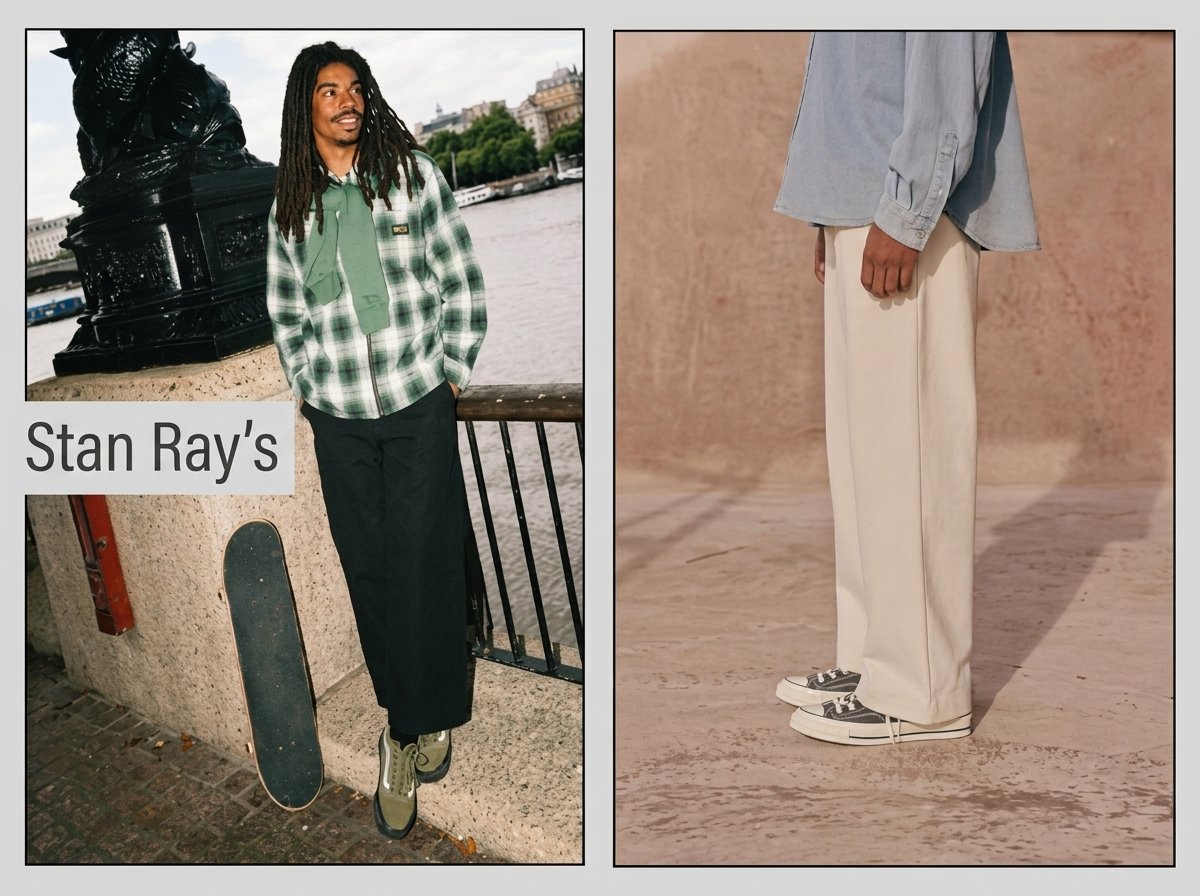
Stan Ray has quietly become one of the most respected names in American workwear, admired by tradespeople, skaters, and streetwear fans alike. What started as a small pants factory in rural Texas has grown into a globally recognized label known for its painter pants, fatigue trousers, and no-nonsense approach to clothing. This article looks at where Stan Ray came from, what makes its garments stand out, and why the brand continues to earn loyal customers more than fifty years after it began.
What Is Stan Ray?
Stan Ray is a Texas-based clothing company that specializes in durable, work-ready apparel, including painter pants, fatigue trousers, jackets, and shirts. The brand is best known for building rugged, functional clothing that holds up to physical labor while still looking good in everyday settings. Its pieces borrow heavily from military and utility design, featuring tool pockets, reinforced seams, and heavyweight cotton fabrics that are built to last.
Unlike many fashion labels that chase trends, Stan Ray has stayed close to its original purpose: making clothes for people who work with their hands. That focus has earned it a loyal following among painters, carpenters, and other tradespeople, while its rugged aesthetic has also made it a favorite in skate and streetwear circles. The brand’s honest, unfussy approach is a big part of why it continues to resonate with such a wide range of customers today.
The History of Stan Ray: From Crockett, Texas to Global Recognition
The Stan Ray story begins in 1972, when Earl Beard started a small clothing operation in Crockett, Texas, a town positioned between Houston and Dallas. After losing his job at a machine company, Earl bought a handful of sewing machines and launched what he called Earl’s Apparel, with a simple goal in mind: produce hard-wearing workwear made entirely in the United States. His early painter pants and fatigue trousers quickly built a reputation among tradespeople across the state for their toughness and reliability.
The brand’s name changed over time for an unexpected reason. It was originally going to be called Stanley, but the American tool manufacturer of the same name objected, so Earl renamed the line Stan Ray after his son, Stanley Ray Beard. This small twist of fate gave the brand the identity it still carries today.
What really pushed Stan Ray onto the global stage was an unlikely export. Surplus versions of its OG-107 fatigue trousers ended up in secondhand stores, eventually catching the attention of Japanese collectors fascinated by authentic American workwear. Demand from Japanese retailers, including well-known shops like Beams, helped keep the Texas factory running even as many competing brands shifted production overseas. Decades later, Stan Ray is still family-run, now managed by the next generation of the Beard family.
What Makes Stan Ray Workwear Different
A big part of Stan Ray’s appeal comes down to consistency. While countless heritage brands have moved manufacturing abroad to cut costs, Stan Ray has kept its core production rooted in Texas, using the same construction methods that built its reputation decades ago. This commitment to domestic manufacturing gives the brand a level of quality control that’s hard to match, and it’s a key reason tradespeople keep coming back.
Another defining trait is the brand’s refusal to overcomplicate its designs. Stan Ray garments are not loaded with unnecessary branding or seasonal gimmicks. Instead, the focus stays on functional details such as triple-stitched seams, roomy tool pockets, and sturdy waistbands that can survive years of hard use. This straightforward design philosophy is exactly why the brand has aged so well, appealing equally to construction workers and fashion-conscious shoppers.
Stan Ray Painter Pants: The Brand’s Signature Piece
If there’s one product that defines Stan Ray, it’s the painter pant. Originally designed for tradespeople who needed pockets for tools and fabric that could survive constant movement and mess, the painter pant has become the brand’s most recognized silhouette. Its relaxed fit, drawstring or button waist options, and durable canvas construction make it just as practical on a job site as it is for casual, everyday wear.
Part of what makes the painter pant so enduring is its versatility. Painters and contractors still choose it for its functionality, while a completely different audience, including skaters and streetwear enthusiasts, wears it for its comfortable fit and vintage-inspired look. Few garments manage to bridge trade utility and street fashion this successfully, which is a large part of why the painter pant remains Stan Ray’s best-selling item year after year.
Stan Ray Fatigue Pants and Military-Inspired Designs
Alongside the painter pant, Stan Ray’s fatigue trousers hold a special place in the brand’s history. Modeled after the classic OG-107 military fatigue pants, these trousers feature a slightly more tailored fit than the painter pant, along with cargo-style pockets and a rugged cotton sateen fabric. They carry an unmistakable military heritage while still functioning as everyday casual wear.
This military influence extends across much of the Stan Ray catalog, showing up in shirt jackets, field coats, and utility shirts. Details like flap pockets, epaulettes, and custom camouflage prints nod to classic army surplus gear without feeling like a costume. The result is clothing that feels authentic rather than manufactured, which is a quality that’s increasingly rare in a market full of mass-produced military-style fashion.
Materials and Craftsmanship
Stan Ray’s reputation for durability isn’t just marketing language; it comes down to real construction choices. Most pieces are made from heavyweight cotton twill, canvas, or sateen fabrics chosen specifically for their ability to withstand friction, stretching, and repeated washing. These materials are the same reason Stan Ray garments tend to soften and fade attractively over time rather than falling apart.
Construction details matter just as much as fabric choice. Triple-stitched main seams, bar-tacked stress points, and reinforced pocket corners are standard across the range, ensuring that the areas most likely to wear out are the ones built to handle the most abuse. This attention to detail reflects decades of feedback from actual tradespeople, which gives the brand a level of authenticity that newer workwear labels often struggle to replicate.
Stan Ray in Streetwear and Skate Culture
Somewhere along the way, Stan Ray stopped being purely a trade uniform and became a genuine streetwear staple. Skaters were drawn to the painter pant’s roomy fit and tough fabric, which held up well to falls and repeated wear on rough surfaces. That practical appeal eventually crossed over into broader fashion circles, with stockists in the United States, the United Kingdom, and Japan carrying the brand alongside established streetwear labels.
This crossover hasn’t changed the brand’s core identity. Stan Ray hasn’t chased streetwear trends by redesigning its silhouettes every season; instead, its existing utilitarian pieces simply found a new audience. That organic adoption, rather than a marketing push, is what gives Stan Ray credibility in both workwear and fashion spaces at the same time.
How to Style Stan Ray Clothing
Stan Ray pieces are easy to work into a casual wardrobe because of their relaxed, functional cut. Painter pants pair naturally with plain t-shirts, work boots, or simple sneakers for an effortless everyday look, while fatigue trousers work well with a fitted top to balance out their slightly boxier shape. Because the fabrics are heavyweight and neutral in color, most pieces mix easily with denim jackets, flannel shirts, or other workwear staples already in a person’s closet.
Layering is another strength of the brand’s catalog. Shirt jackets and field coats from Stan Ray are built to be worn over t-shirts or hoodies, making them practical transitional pieces for cooler months. Because the designs lean toward classic utility rather than flashy branding, Stan Ray clothing tends to stay relevant season after season instead of looking dated the way many trend-driven pieces do.
Where to Buy Stan Ray and What to Expect
Stan Ray sells through its own website as well as a network of independent retailers and streetwear stockists across the United States, the United Kingdom, Canada, and beyond. Shoppers can generally expect consistent sizing across the painter pant and fatigue pant lines, though fits vary slightly between styles, so checking a brand-specific size chart is worth the extra minute.
Because Stan Ray fabrics are heavyweight and untreated in some cases, new garments may feel stiff at first and soften significantly after a few washes. This is normal and expected with raw workwear fabrics, similar to breaking in a pair of raw denim jeans. Buyers should also expect some natural fading and character development over time, which many long-time fans consider part of the appeal rather than a flaw.
Is Stan Ray Worth the Investment?
For anyone who values durability over disposable fashion, Stan Ray represents good value. The upfront cost is often higher than fast-fashion alternatives, but the construction quality means these garments typically outlast cheaper competitors by years, not months. Tradespeople who wear their pants daily on job sites are a good real-world test of this durability, and the brand’s continued popularity among that group speaks to its reliability.
Beyond durability, there’s also value in supporting a business that has kept much of its manufacturing in the United States for over fifty years, in an industry where that’s increasingly rare. Whether someone is buying Stan Ray for actual work, for its vintage military styling, or simply because it fits well into a casual wardrobe, the brand delivers on the same promise it started with in 1972: honest, hard-wearing clothing without unnecessary extras.
Conclusion
Stan Ray’s journey from a small Texas workshop to an internationally recognized workwear brand is a testament to sticking with a simple idea and doing it well. Its painter pants and fatigue trousers remain staples for tradespeople and fashion-conscious shoppers alike, built on decades of consistent craftsmanship rather than fleeting trends. For anyone looking for clothing that combines genuine utility with timeless style, Stan Ray remains one of the most trustworthy names in American workwear.
FAQs
Is Stan Ray still made in the USA? Yes, the core range, including painter pants and fatigue trousers, is still manufactured at the family’s original factory in Crockett, Texas, though some pieces are now produced abroad.
What are Stan Ray painter pants best known for? They’re known for their relaxed fit, durable canvas fabric, and roomy pockets, originally designed for tradespeople and now popular as everyday casual wear.
Are Stan Ray pants true to size? Fits vary slightly between styles, so it’s best to check the specific size chart for the painter pant or fatigue pant before ordering.
Why is Stan Ray popular in Japan? Surplus Stan Ray fatigue pants gained a cult following among Japanese collectors decades ago, and Japanese retailers have carried the brand ever since.
What’s the difference between Stan Ray painter pants and fatigue pants? Painter pants have a looser, more relaxed cut built for movement, while fatigue pants have a slightly more tailored fit with cargo-style pockets inspired by military trousers.
