



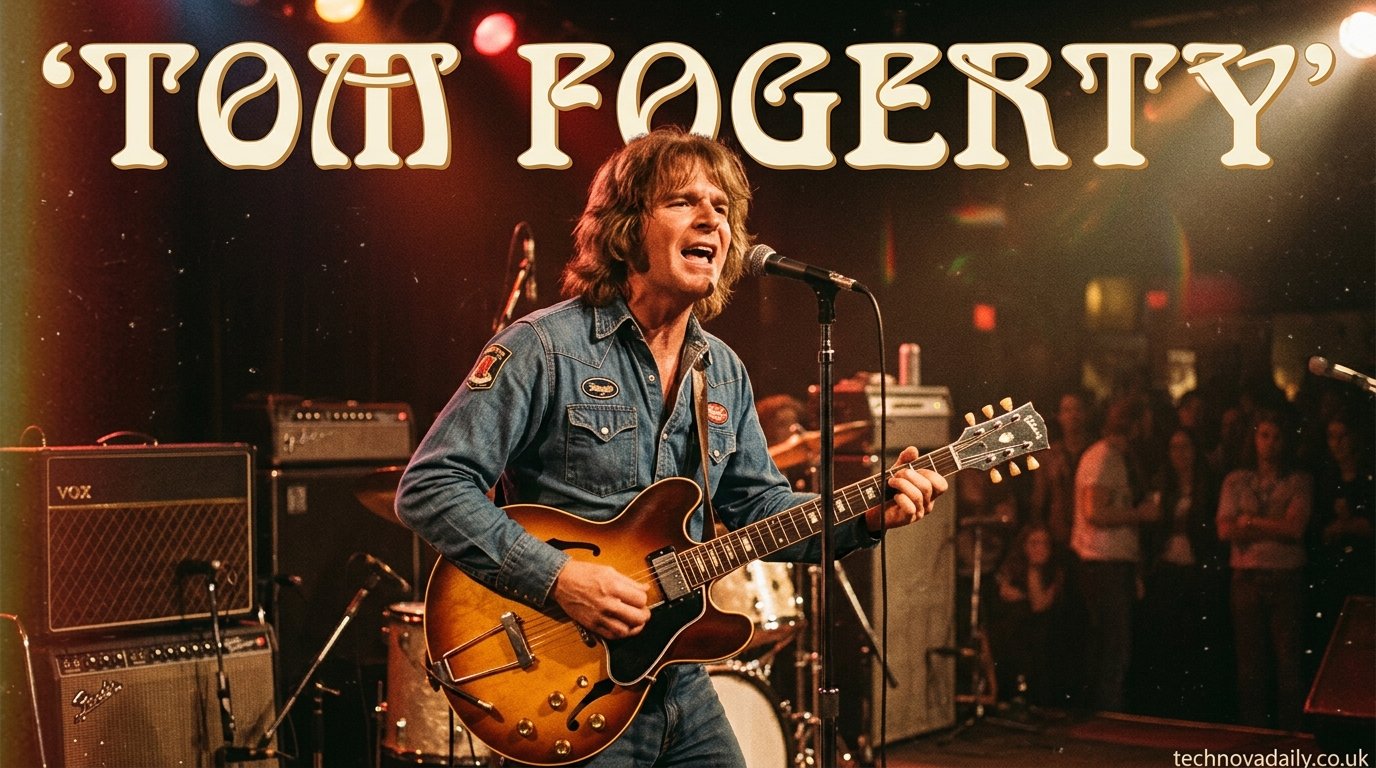
Tom Fogerty remains one of classic rock’s most fascinating yet overlooked figures. As the rhythm guitarist and elder brother in Creedence Clearwater Revival, he helped build one of America’s most influential rock bands before stepping into a quieter, less celebrated solo career. While his younger brother John Fogerty became the face and voice of CCR, Tom’s contributions as a songwriter, bandleader, and steady musical presence shaped the group’s earliest years in ways many fans never fully appreciate.
Understanding Tom Fogerty means looking beyond the shadow cast by his brother’s fame. His story involves family loyalty, creative frustration, and a tragic ending that still resonates with classic rock enthusiasts today. This article explores his life, career, music, and legacy in detail, offering an honest and accurate picture of who he was and why he still matters in rock history.
Early Life and Family Background
Thomas Richard Fogerty was born on November 9, 1941, in Berkeley, California, into a family of Irish descent with five sons. He grew up in nearby El Cerrito, attending Saint Mary’s College High School, where he balanced his interest in football with an early fascination for rock and roll music. Like many teenagers of his generation, Tom was drawn to the energy of the late 1950s music scene, and he found his outlet by joining a local group called the Playboys before later performing with Spider Webb and the Insects.
This early period set the foundation for everything that followed. Tom signed a recording contract with Del-Fi Records in 1959 alongside Spider Webb and the Insects, though the group disbanded before their single ever saw release. Around this same time, his younger brother John was developing his own musical chops with a band called the Blue Velvets, a group that would eventually evolve into Creedence Clearwater Revival. The Fogerty family’s musical environment, combined with the close age gap between the brothers, created both opportunity and rivalry that would define their relationship for decades.
What makes this chapter important for understanding Tom Fogerty is how it reveals his role as an initiator. He was performing professionally before John, and for a period, he was the more experienced and visible musician of the two. This dynamic would later reverse dramatically, setting up tensions that never fully healed.
Joining Forces With His Brother’s Band
After Spider Webb and the Insects dissolved, Tom began performing as a solo artist, but it was his brother’s band, the Blue Velvets, that changed his trajectory. The group started backing Tom during performances, and he eventually joined them full-time around 1960. Billed as Tommy Fogerty and the Blue Velvets, the band recorded three singles for the small Orchestra Records label between 1961 and 1962, with Tom handling lead vocals.
During this era, both brothers used stage pseudonyms for songwriting credits, with Tom going by “Rann Wild” and John using “Toby Green.” By 1964, the band signed with Fantasy Records, which rebranded them as the Golliwogs. This period is particularly notable because Tom’s role was far more prominent than it would later become in Creedence Clearwater Revival. He shared lead vocal duties with John and even sang lead on the group’s first three singles, with the brothers co-writing much of the material together.
As the Golliwogs years progressed, it became increasingly clear that John possessed a stronger natural talent for singing and songwriting. By the time the band renamed itself Creedence Clearwater Revival in 1967, after John left his day job at Pacific Gas and Electric Company to commit fully to music, the creative balance had shifted decisively. John became the band’s lead singer and primary songwriter, while Tom transitioned into the role of rhythm guitarist, a position he would hold for the remainder of CCR’s existence.
Tom Fogerty’s Role in Creedence Clearwater Revival
Creedence Clearwater Revival rose to massive popularity in the late 1960s, blending swamp rock, blues, and roots rock into a sound that felt both fresh and timeless. The band’s lineup, consisting of John and Tom Fogerty alongside bassist Stu Cook and drummer Doug Clifford, released a string of hit albums including their self-titled debut, Bayou Country, and Green River. Their performance at Woodstock in 1969 further cemented their status as one of the defining American rock acts of the era.
Within this lineup, Tom’s contributions were largely supportive rather than central. He played rhythm guitar and contributed backing vocals, but his songwriting input was minimal once John took full creative control. In fact, only one of Tom’s compositions, originally titled “Walking on the Water” and dating back to the Golliwogs period, made it onto a CCR studio album. This lack of creative opportunity became a growing source of frustration for Tom as the band’s success expanded.
The imbalance between the brothers’ roles created lasting friction. Tom watched his younger brother become a celebrated frontman and primary songwriter while he remained largely in the background, both musically and financially, since royalties and credits favored the band’s principal writer. This dynamic, combined with long-standing personal tension between the brothers, eventually became unsustainable and led to one of the more consequential decisions of Tom’s career.
Why Tom Left Creedence Clearwater Revival
In early 1971, after the completion of the album Pendulum, Tom Fogerty made the decision to leave Creedence Clearwater Revival. His departure came after years of feeling creatively sidelined within a band he had helped build from its earliest incarnations. He wanted more freedom to sing his own material and write songs that reflected his own voice, something the band’s structure no longer allowed.
John Fogerty later spoke candidly about his brother’s exit, noting that Tom’s departure surprised him and that he had hoped the band could simply take a break to relieve mounting stress rather than split permanently. Tom, however, was determined to pursue separation. This moment marked a turning point not just for Tom personally, but for Creedence Clearwater Revival as a whole, since the band would never fully recover from losing one of its founding members.
Following Tom’s exit, CCR continued for one more album, Mardi Gras, released in 1972 as a trio. The album received a lukewarm critical reception, and the band officially dissolved later that year. Many fans and critics view Tom’s departure as the beginning of the end for the group, even though the underlying tensions between the brothers had been building for years before he formally left.
Tom Fogerty’s Solo Career and Music
After leaving CCR, Tom Fogerty embarked on a solo career, remaining signed with Fantasy Records. His debut single, “Goodbye Media Man,” released in April 1971, failed to make a significant commercial impact, though it did appear on lower industry charts. His self-titled debut album followed in 1972, reaching a respectable position on the Billboard 200 and featuring collaborations with notable Bay Area musicians.
During this period, Tom developed connections within the broader San Francisco music scene, playing rhythm guitar with the Saunders-Garcia band in local clubs throughout 1971 and 1972. His follow-up album, Excalibur, featured contributions from Grateful Dead guitarist Jerry Garcia and keyboardist Merl Saunders, lending the project a respected pedigree even though it failed to chart commercially. His subsequent releases, including Zephyr National and Myopia in 1974, brought back former CCR bandmates Stu Cook and Doug Clifford as supporting musicians.
Notably, the track “Mystic Isle Avalon” from Zephyr National marked the last time all four original CCR members appeared on the same studio recording, although John Fogerty recorded his guitar parts separately from the others. Throughout the remainder of the 1970s and into the 1980s, Tom continued recording both as a solo artist and as a member of a band called Ruby, releasing several albums that earned modest critical praise but never achieved widespread commercial success.
The Band Ruby and Later Musical Projects
In 1976, Tom Fogerty formed a new band called Ruby alongside musicians Randy Oda, Anthony Davis, and Bobby Cochran. The group released its self-titled debut album in 1977 to favorable critical reception, with Tom both producing and performing on the record. One standout track, an instrumental piece written by Randy Oda titled “B.A.R.T.,” gained unexpected popularity in the United Kingdom, where it was used as background music for the BBC’s Ceefax information service.
Ruby continued releasing material throughout the late 1970s and early 1980s, including the 1978 album Rock & Roll Madness and the 1984 release Precious Gems, which is sometimes credited to Tom Fogerty and Ruby jointly. Although commercial success remained elusive, these projects allowed Tom the creative freedom and lead vocal presence he had long sought during his time with CCR. His final recorded project, an album titled Sidekicks made with Ruby bandmate Randy Oda, was completed in 1988 but not released until 1992, two years after his death.
These later years also brought a notable moment of reconciliation among the original CCR members. At Tom’s wedding reception to his second wife, Tricia Clapper, in October 1980, all four original Creedence Clearwater Revival members reunited and performed together for the first time in nearly a decade. They would take the stage together one final time three years later at a school reunion, marking the last public performances featuring the complete original lineup.
The Strained Relationship Between Tom and John Fogerty
The relationship between Tom and John Fogerty grew increasingly complicated after Creedence Clearwater Revival’s breakup. Much of this tension stemmed from ongoing legal and financial disputes between John and Fantasy Records owner Saul Zaentz, disputes that dominated John’s life for years and shaped the broader narrative around the band’s legacy. Tom’s continued business association with Zaentz, and his willingness to side with him in various disagreements, deepened the rift between the brothers.
John later described his brother’s loyalty to Zaentz in starkly emotional terms, comparing it to a kind of psychological phenomenon where a person aligns with those who have wronged them. According to John’s recollections, Tom went so far as to write him letters defending his alliance with Zaentz, statements that John found deeply painful given the family history involved. This dynamic meant that for nearly two decades, the brothers who had once shared a stage and a musical vision remained largely estranged.
The estrangement only began to soften near the very end of Tom’s life. John visited his brother several times in his final months, and while their reconciliation came late and was far from complete, the two found some measure of peace before Tom’s death. John later eulogized his brother at the funeral, reflecting on simpler ambitions the brothers once shared, a poignant reminder that beneath the business disputes and legal battles, their connection as siblings had never entirely disappeared.
Illness and Death
In the years following his move to Scottsdale, Arizona, Tom Fogerty underwent surgery to address ongoing back problems. During this procedure, he received a blood transfusion that had not been properly screened for HIV, a tragic and largely preventable circumstance given the medical screening limitations of the era. This transfusion resulted in Tom contracting HIV, which progressed to AIDS and left him vulnerable to additional complications, including tuberculosis.
Tom Fogerty passed away on September 6, 1990, at his home in Scottsdale, Arizona, at the age of 48. His death came after years of declining health that had largely been kept private from the public. He was survived by his second wife, Tricia Clapper, along with six children from his two marriages, having first married his high school sweetheart Gail Skinner before later marrying Clapper in 1980.
His death added another layer of tragedy to the already complicated story of Creedence Clearwater Revival, since the unresolved tension between Tom and John meant that any full reconciliation between the brothers would now never be possible. When the band was inducted into the Rock and Roll Hall of Fame in 1993, Tom’s widow brought his ashes to the ceremony in his honor, since he had not lived to see this recognition of the band’s lasting influence on American music.
Tom Fogerty’s Legacy in Rock History
Despite living in the shadow of his more famous younger brother, Tom Fogerty’s place in rock history remains secure through his foundational role in building Creedence Clearwater Revival from its earliest days as the Blue Velvets and the Golliwogs through to international stardom. Without his early initiative and his willingness to bring his brother’s band under his wing, the chain of events that led to CCR’s formation might never have unfolded in the same way. His induction into the Rock and Roll Hall of Fame in 1993 as a member of CCR formally recognized this contribution, even though he did not live to attend the ceremony himself.
Music historians and classic rock fans continue to revisit Tom’s solo catalog and his work with Ruby, recognizing these recordings as honest attempts by a talented musician to step out from under a long shadow and establish his own artistic identity. While none of his solo or Ruby-era material achieved the commercial heights of CCR’s biggest hits, songs like “Goodbye Media Man,” “Joyful Resurrection,” and the instrumental “B.A.R.T.” demonstrate a musician who remained creatively active and committed to his craft until the very end of his life.
Perhaps most importantly, Tom Fogerty’s story serves as a reminder of the human complexities that often exist behind even the most beloved bands in rock history. His relationship with his brother, marked by both deep loyalty and painful estrangement, reflects the kind of family dynamics that many listeners can relate to on some level. For fans of Creedence Clearwater Revival, understanding Tom’s full story adds depth and emotional resonance to the music the band created together, transforming familiar songs into a richer narrative about brotherhood, ambition, and the cost of fame.
