



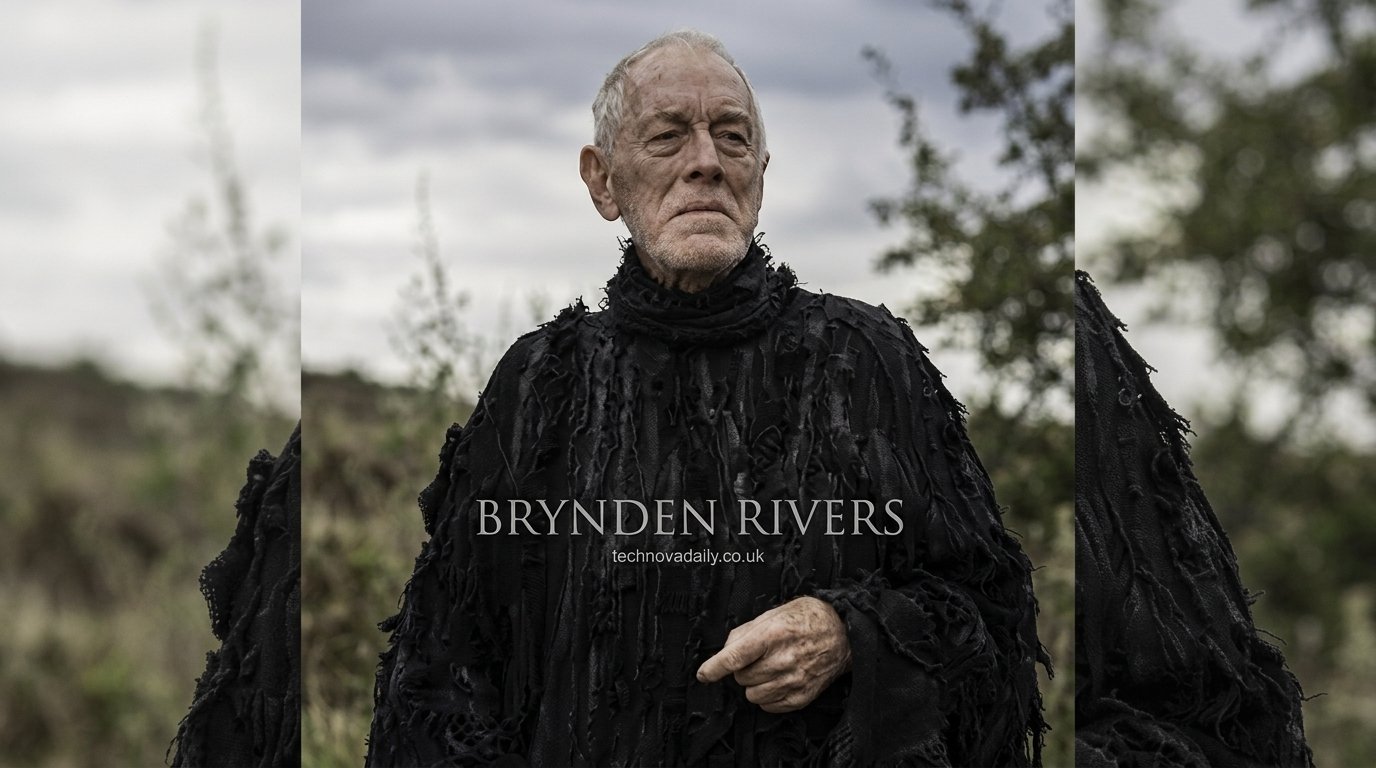
Brynden Rivers, known across Westeros as Bloodraven, is a Targaryen bastard turned spymaster, exiled Night’s Watch commander, and finally the Three-Eyed Raven who trains Bran Stark. He is one of the most consequential background figures in George R.R. Martin’s A Song of Ice and Fire, connecting the Blackfyre Rebellions of old Valyria’s fading empire to the present-day story of Bran Stark beyond the Wall.
Brynden Rivers If you’ve come across his name in a Reddit thread, a lore video, or a passing mention in the show and wondered who he actually is, this guide breaks down his identity, his history, and why fans still argue about his motives decades after his last confirmed appearance in the books.
Who Is Brynden Rivers?
Brynden Rivers was born a bastard son of King Aegon IV Targaryen, given the surname “Rivers” as was customary for baseborn children in the Riverlands. He earned the nickname Bloodraven for two reasons: the deep red birthmark covering half his face, and the red eye he was left with after losing the other in battle — a rare genetic trait shared by some Targaryens, but exaggerated in his case by unusual pale skin and near-white hair that made him look almost ghostlike.
Quick answer: Brynden Rivers is a legitimized Targaryen bastard, former Hand of the King, Lord Commander of the Night’s Watch, and the current Three-Eyed Raven who lives fused with a weirwood tree beyond the Wall.
Family Background and Origins
Brynden was one of several bastard children fathered by Aegon IV, born to his mistress Melissa “Missy” Blackwood. Aegon IV was notorious for fathering illegitimate children and, on his deathbed, legitimized nearly all of them — a decision that destabilized the Targaryen succession for generations.
Among his half-siblings, two relationships defined his life:
- Daemon Blackfyre — a legitimized bastard who believed he had a stronger claim to the throne and rebelled against the crowned Targaryen line.
- Aegor “Bittersteel” Rivers — another bastard son of Aegon IV, and Brynden’s lifelong rival. The two were said to despise each other from childhood, partly due to a shared romantic interest and partly due to opposing loyalties during the rebellions that followed.
This tangled family tree is essential context: nearly every major conflict of Brynden’s early life traces back to Aegon IV’s decision to legitimize his bastards.
Role in the Blackfyre Rebellions
When Daemon Blackfyre rose in rebellion against his half-brother King Daeron II, Brynden Rivers remained loyal to the crown. He fought at the Battle of the Redgrass Field, one of the bloodiest battles in Westerosi history, where he is credited with killing Daemon Blackfyre himself with a single arrow.
His loyalty was rewarded. Brynden rose through the ranks of the royal court, eventually becoming Hand of the King. During this period he built a reputation not as a warrior first, but as a master of information — earning the title “a thousand eyes and one,” a reference to both his missing eye and his sprawling network of informants across the realm.
Bittersteel, meanwhile, survived the rebellion and fled into exile, founding the Golden Company — a mercenary force that would go on to launch further Blackfyre uprisings for decades. The rivalry between Brynden and Bittersteel became one of the defining feuds of that era of Westerosi history.
The Spymaster Years
As Hand of the King, Brynden Rivers governed through intelligence rather than open force. His network of spies and informants was said to reach every corner of the Seven Kingdoms, making him one of the most feared political figures of his time. This reputation for ruthlessness and secrecy followed him for the rest of his life — even centuries later, when he had become something far stranger than a court official.
Trial, Exile, and Journey Beyond the Wall
Brynden’s fall from power came under King Aerys I. He was accused of using dark magic — specifically glamors, or illusion spells — to interfere in a trial by combat. Whether the accusation was true is left ambiguous in the source material, but it was enough to end his political career.
Rather than face execution, Brynden chose exile to the Night’s Watch, where he eventually rose to become Lord Commander. Near the end of his life, he led a small group of rangers beyond the Wall to investigate the growing threat of the Others (White Walkers) and vanished into the far north. He was never seen in the living world again.
Bloodraven as the Three-Eyed Raven
Centuries later, Brynden Rivers resurfaces — transformed. He is discovered to be alive in a physical sense but fused into a weirwood tree, sustained by the tree’s roots and nearly immobile, having become the being known as the Three-Eyed Raven. In this state, he possesses greenseeing abilities that let him observe events across time and space through the eyes of animals and the weirwood network.
It’s in this form that he takes on Bran Stark as his successor, teaching Bran to use his own greenseeing and warging abilities before ultimately fading, as all who hold the role of Three-Eyed Raven eventually do.
Bloodraven vs. Bran Stark: The Three-Eyed Raven Comparison
| Aspect | Brynden Rivers (Bloodraven) | Bran Stark |
|---|---|---|
| Origin | Targaryen bastard, former Lord Commander | Stark heir, paralyzed after a fall |
| How he became the Three-Eyed Raven | Chose to merge with the weirwood after decades beyond the Wall | Trained directly by Bloodraven as his chosen successor |
| Physical state | Nearly fused with tree roots, barely able to move | Still mobile in the early stages of his role |
| Narrative role | Mentor figure, source of exposition on Westerosi history | Active protagonist whose story continues after Bloodraven fades |
The show condensed much of this backstory, introducing the Three-Eyed Raven as an established mystical figure without explaining that he was once a living historical person with a full political career. Readers of the books get considerably more context about who Bloodraven was before he became a being of pure sight and memory.
Theories and Fan Speculation
Because so much of Brynden’s later motivations are left unexplained in the published books, fan communities have built extensive theories around him, including:
- The manipulation theory — some readers argue Bloodraven has been quietly influencing events in Westeros for years through his network of spies, wargs, and visions, possibly even shaping the War of the Five Kings from behind the scenes.
- The redemption arc theory — others read his mentorship of Bran as an attempt to atone for the ruthless methods he used as Hand of the King.
- The “last greenseer” theory — questions remain about what happens to the role of Three-Eyed Raven after Bran takes over fully, and whether Bloodraven’s consciousness persists in some form within the weirwood network even after fading.
None of these theories are confirmed, since Brynden’s story beyond the Wall is only partially told in the released books.
Bloodraven in the TV Show vs. the Books
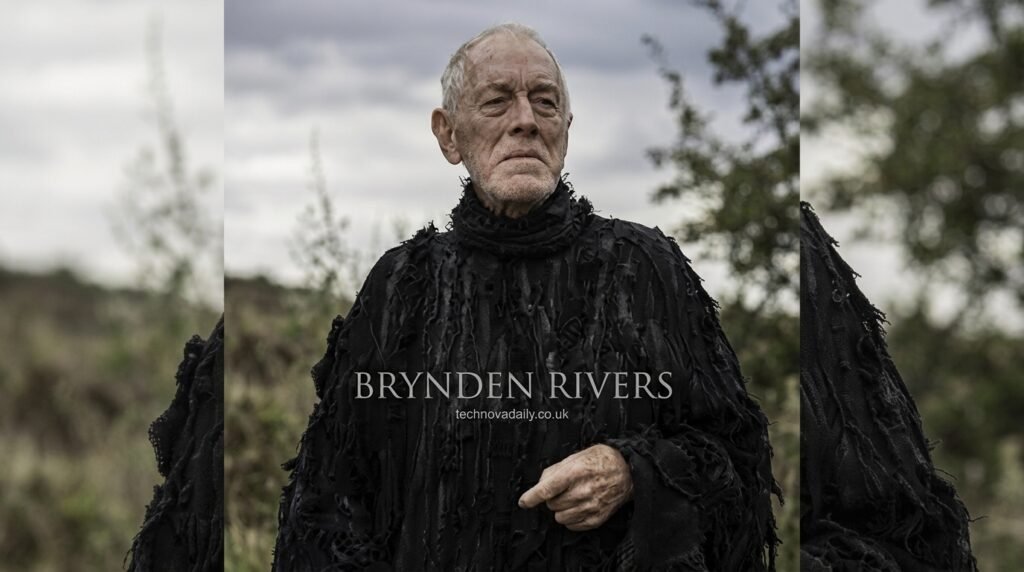
The television adaptation significantly reduced Brynden Rivers’ role. He appears briefly as “the Three-Eyed Raven,” played by Max von Sydow, with almost no reference to his identity as a historical Targaryen bastard, his time as Hand of the King, or his rivalry with Bittersteel. Viewers who only watched the show typically have no idea that the character has an entire political history predating his time as a tree-bound mystic.
This is one of the more significant compressions in the adaptation, and it’s a major reason book readers tend to have a much richer understanding of the character than show-only viewers.
Frequently Asked Questions
Is Brynden Rivers the same person as the Three-Eyed Raven? Yes. Brynden Rivers, also known as Bloodraven, becomes the Three-Eyed Raven after journeying beyond the Wall and merging with a weirwood tree.
Who killed Daemon Blackfyre? Brynden Rivers is credited with killing Daemon Blackfyre at the Battle of the Redgrass Field.
Is Bloodraven related to the Targaryens? Yes. He is an illegitimate son of King Aegon IV Targaryen, later legitimized under the surname Rivers, which was standard for bastards born in the Riverlands.
Why did Bloodraven join the Night’s Watch? He was exiled to the Night’s Watch after being accused of using illegal magic to influence a trial by combat during the reign of Aerys I.
Does Bloodraven appear much in the Game of Thrones TV show? Very little. The show introduces him only as an already-established Three-Eyed Raven and omits nearly all of his backstory as a Targaryen bastard and political figure.
Conclusion
Brynden Rivers ties together two eras of Westerosi history that might otherwise feel disconnected: the political chaos of the Blackfyre Rebellions and the present-day mystery of the Three-Eyed Raven. Whether readers see him as a manipulative power player or a tragic figure trying to make amends, his story adds real depth to the greater mythology of A Song of Ice and Fire — and his full role likely won’t be understood until George R.R. Martin finishes telling it.
