



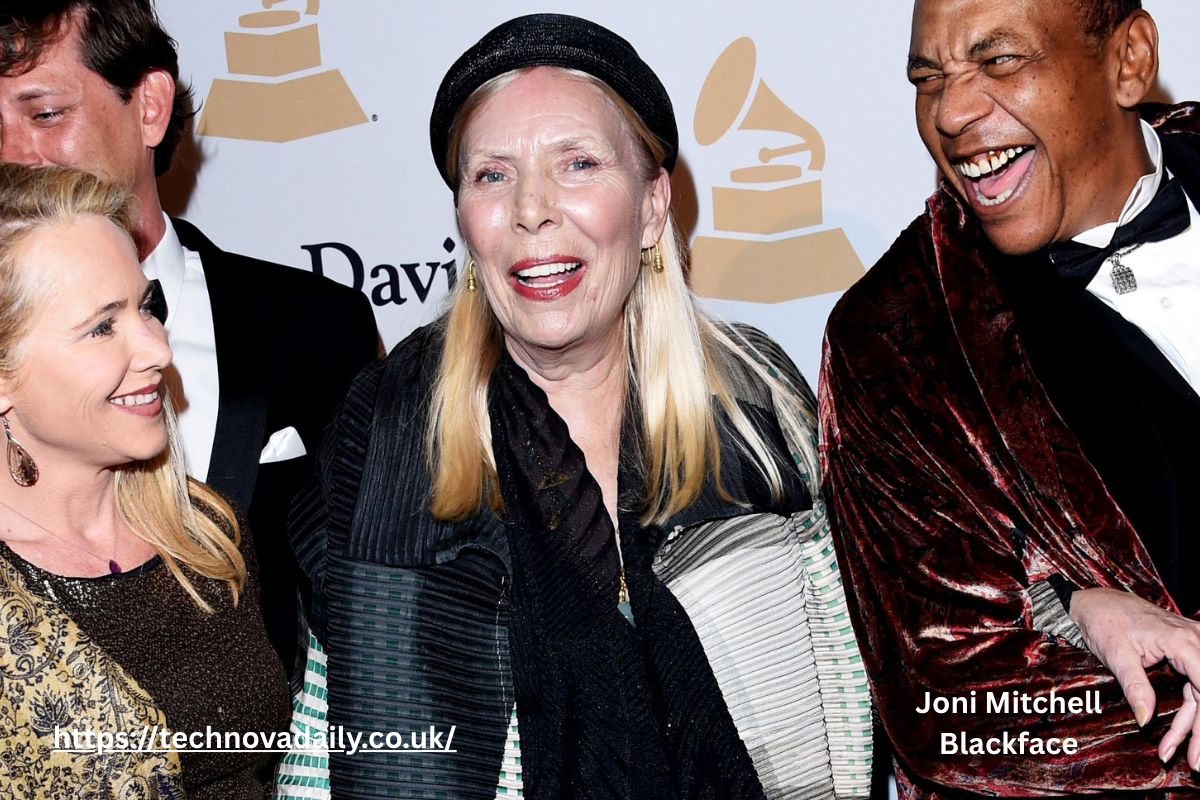
The topic of Joni Mitchell and blackface has become one of the most discussed and debated aspects of her long and influential career. Joni Mitchell is widely recognized as one of the greatest musicians of all time, known for her poetic songwriting and genre-defying creativity. However, alongside her artistic achievements, there exists a controversial chapter that continues to spark conversations about race, identity, and artistic freedom.
In recent years, the phrase “Joni Mitchell blackface” has gained renewed attention as audiences revisit past cultural moments through a modern lens. What may have once been interpreted differently is now being critically examined in light of deeper awareness about racial sensitivity and representation. This article explores the origins of the controversy, its cultural implications, and how it continues to shape discussions around Mitchell’s legacy.
Understanding Blackface and Its Historical Context
To fully understand the controversy, it is essential to examine the historical meaning of blackface. Blackface originated in 19th-century minstrel shows, where white performers used dark makeup to portray exaggerated and offensive stereotypes of Black people. These performances played a significant role in reinforcing racial discrimination and harmful narratives that persisted for generations.
Because of this history, blackface is widely regarded today as deeply offensive and unacceptable. Even when used without malicious intent, it carries the weight of its past and the harm it caused. This historical context is critical when evaluating instances where public figures, including artists like Joni Mitchell, engaged in such practices. It helps explain why the topic remains sensitive and widely debated.
The Origins of Joni Mitchell’s Blackface Persona
Joni Mitchell’s use of blackface began in the mid-1970s during a period of intense creative experimentation. She developed an alter ego often referred to as “Art Nouveau,” which she described as being inspired by a Black man she encountered. This character became a way for her to explore different perspectives and identities through her art.
What started as a personal artistic experiment soon became more public. Mitchell appeared in blackface at gatherings and began incorporating the persona into her creative projects. She presented this transformation as an exploration of identity and empathy, but it also raised questions about cultural boundaries and the appropriateness of adopting another racial identity in artistic expression.
The Controversial Album Cover of Don Juan’s Reckless Daughter
One of the most visible examples of this controversy is the album cover of Don Juan’s Reckless Daughter, released in 1977. The artwork features Mitchell in multiple costumes, including one where she appears in blackface dressed in an exaggerated character. This image has become central to discussions about her use of racial imagery.
At the time of its release, reactions to the album cover were mixed. Some viewed it as bold and experimental, consistent with Mitchell’s artistic style, while others found it inappropriate. Over time, as cultural awareness grew, the image came to be seen as problematic, and it is now frequently cited in conversations about race and representation in music history.
Continued Use in Performances and Media
Joni Mitchell’s use of blackface was not limited to a single instance. She continued to portray the persona in various forms throughout the late 1970s and 1980s. This included appearances in concert films such as Shadows and Light and other visual projects where she embodied different characters.
These repeated uses reinforced the controversy and made it a recurring aspect of her public image during that era. While Mitchell framed these portrayals as artistic storytelling, critics argued that the repeated use of blackface made it difficult to separate intent from impact. The visibility of these performances ensured that the issue would remain part of her legacy.
Joni Mitchell’s Perspective and Public Statements
Over the years, Joni Mitchell has addressed the controversy in interviews, offering her own perspective on why she adopted the persona. She has often stated that her intention was not to mock but to express a sense of connection and admiration for Black culture. She described her work as an attempt to write from different perspectives and explore human experiences beyond her own.
However, these explanations have not resolved the controversy. Many critics argue that intention does not outweigh the historical and cultural implications of blackface. The gap between Mitchell’s personal interpretation and public reception highlights the complexity of the issue, showing how artistic intent can be understood very differently by audiences.
Public Reaction and Critical Analysis
Public reaction to Joni Mitchell’s blackface has evolved significantly over time. In earlier decades, the issue received limited mainstream attention, but as discussions around race and representation became more prominent, criticism grew stronger. Today, the topic is often revisited in academic and cultural discussions.
Critics emphasize that even influential artists must be held accountable for actions that perpetuate harmful imagery. At the same time, some supporters argue for a more nuanced understanding that considers the cultural context of the time. This ongoing debate reflects broader societal conversations about how to evaluate historical actions in light of modern values.
Changes in Modern Releases and Industry Response
In recent years, there have been visible changes in how this aspect of Joni Mitchell’s work is presented. Updated versions of Don Juan’s Reckless Daughter on streaming platforms now feature alternative artwork that removes the controversial imagery. This change reflects a growing awareness within the music industry about the need to address past controversies.
These updates have sparked further discussion about how to handle historical content. Some view such changes as necessary steps toward cultural sensitivity, while others question whether altering original works affects their historical authenticity. The situation highlights the challenges of balancing preservation with evolving social standards.
The Impact on Joni Mitchell’s Legacy
Joni Mitchell’s legacy remains both extraordinary and complex. Her contributions to music are undeniable, influencing countless artists and shaping the landscape of modern songwriting. At the same time, the blackface controversy has become an inseparable part of her public narrative.
For many fans and critics, the challenge lies in reconciling these two aspects. Appreciating her artistry while acknowledging the controversy requires a thoughtful and balanced approach. This dual perspective allows for a deeper understanding of both her achievements and the broader cultural issues her work touches upon.
Conclusion: A Complex but Important Conversation
The “Joni Mitchell blackface” controversy is not a simple story with clear answers. It is a multifaceted issue that reflects changing cultural values, artistic freedom, and the importance of historical awareness. By examining the context, intent, and impact of her actions, a more complete picture emerges
