



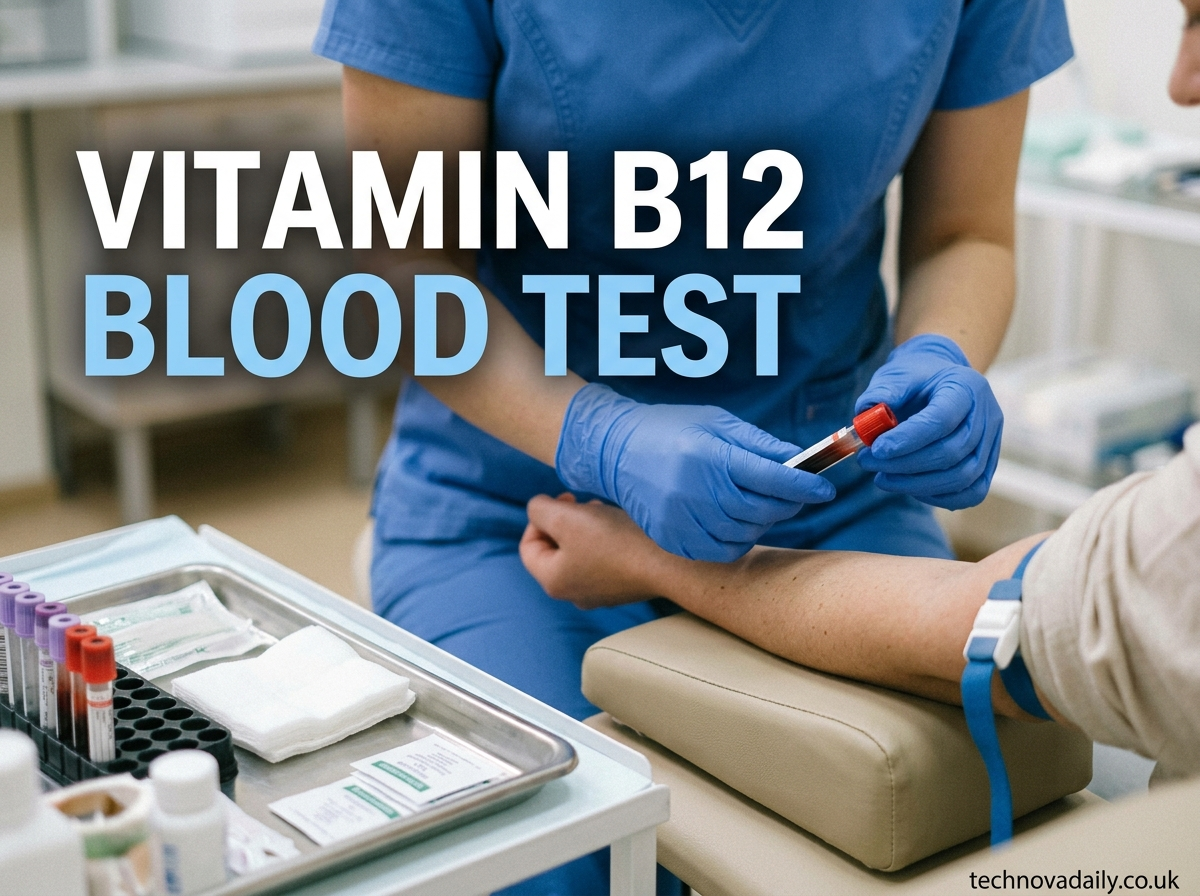
A vitamin B12 blood test measures the amount of vitamin B12 in your blood. Doctors use this test to check for vitamin B12 deficiency, which can affect red blood cell production, nerve function, and brain health. Low levels may cause tiredness, weakness, numbness, or memory problems. Understanding your test results can help you know whether further testing, dietary changes, or treatment may be needed.
What Is a Vitamin B12 Blood Test?
A vitamin B12 blood test is a laboratory test that measures the level of vitamin B12 in a blood sample. Vitamin B12, also called cobalamin, is a nutrient your body needs to make healthy red blood cells, maintain nerve cells, and produce DNA.
Your body cannot make vitamin B12 on its own, so you must get it from foods, fortified products, or supplements. A deficiency can develop when you do not consume enough B12 or your body cannot absorb it properly.
Doctors may order this test if you have symptoms of anemia, unexplained fatigue, tingling in your hands or feet, or problems with memory and concentration. It may also be recommended if you follow a vegan diet, have certain digestive conditions, or take medicines that can affect B12 absorption.
Why Do You Need a Vitamin B12 Blood Test?
A doctor may recommend a vitamin B12 blood test when symptoms or medical history suggest that your body may not have enough of this nutrient. Some symptoms develop slowly and can be mistaken for stress, poor sleep, or other health problems.
Common reasons for testing include:
- Ongoing tiredness and weakness: Low B12 may affect red blood cell production and the delivery of oxygen to body tissues.
- Dizziness or pale skin: These symptoms can occur when B12 deficiency leads to anemia.
- Tingling or numbness: Low B12 can damage nerves and cause unusual sensations in the hands and feet.
- Memory or concentration problems: A deficiency may affect brain and nervous system function.
- Balance difficulties: Nerve problems caused by low B12 may affect coordination and walking.
- Unexplained anemia: Doctors may check B12 levels when a complete blood count shows abnormal red blood cells.
You may also need testing if you have a condition that affects nutrient absorption, have had stomach or intestinal surgery, or use certain medicines for a long time. A blood test helps identify a possible deficiency, but your doctor may need other tests to confirm the cause.
What Is the Normal Vitamin B12 Blood Test Range?
The normal vitamin B12 blood test range depends on the laboratory, the testing method, and the units used to report the result. Many laboratories consider levels below 200–250 pg/mL to be low, while results near the lower end of the range may need further evaluation.
Health Professional Fact Sheet
+1
The following table gives a general guide to total vitamin B12 levels in adults. It is not a replacement for the reference range printed on your own lab report.
| Vitamin B12 level | General interpretation |
|---|---|
| Below 200 pg/mL | Often considered low |
| 200–250 pg/mL | May be low or borderline, depending on the lab |
| 250–350 pg/mL | Interpretation depends on the lab and clinical context |
| Above the laboratory’s lower cutoff | May be within range, but symptoms still matter |
These are approximate guides, not universal diagnostic cutoffs. Different clinical guidelines use different thresholds. For example, NICE classifies total B12 below 180 pg/mL as confirming deficiency, 180–350 pg/mL as an indeterminate result, and above 350 pg/mL as making deficiency less likely under its testing framework. Your clinician should use the method and reference range relevant to your test.
NICE
+1
Understanding pg/mL and pmol/L
Vitamin B12 results may be reported in picograms per milliliter (pg/mL) or picomoles per liter (pmol/L). These are two different units for measuring the same substance. Always check which unit appears on your report before comparing your result with information online.
Vitamin B12 Blood Test Results Explained
Your result needs to be considered alongside your symptoms, medical history, diet, medicines, and other blood tests. A number alone cannot always confirm whether you have a deficiency.
What Does a Low Vitamin B12 Level Mean?
A low result may mean your body does not have enough vitamin B12 to support normal red blood cell production and nerve function. If the deficiency continues, it can lead to anemia and nerve-related symptoms.
Your doctor may check a complete blood count (CBC), folate, or other markers to learn more. If the B12 result is borderline, a methylmalonic acid (MMA) test may help clarify whether a deficiency is present.
Health Professional Fact Sheet
+1
What Does a Borderline Vitamin B12 Result Mean?
A borderline result means the vitamin level does not clearly confirm or rule out a deficiency. Your symptoms and risk factors become especially important when interpreting this result.
For example, a person with tingling in the feet, a restrictive diet, or a condition that affects absorption may need additional testing. Do not start or stop prescribed treatment based only on a borderline result.
Can You Have B12 Deficiency With Normal Test Results?
Yes. Some people have symptoms even when their total B12 level falls within the laboratory’s reference range. The usual blood test measures total B12, which includes forms that may not all be available for the body to use.
If symptoms suggest a deficiency, your doctor may consider additional tests, such as MMA, and review your medicines and supplements. A normal result should not automatically end the investigation when symptoms remain unexplained.
NHS inform
+1
What Does a High Vitamin B12 Level Mean?
A high result can occur when you take B12 supplements, multivitamins, or injections. It may also be associated with certain liver conditions, kidney problems, or blood disorders.
A high result does not automatically mean you have a serious illness. Your doctor may review your supplement use, symptoms, medical history, and other test results to decide whether further investigation is needed.
What Causes Low Vitamin B12 Levels?
Low vitamin B12 can develop because of insufficient intake, poor absorption, or certain medical conditions. Finding the cause helps determine which treatment is likely to work.
Not Getting Enough Vitamin B12 From Food
Vitamin B12 occurs naturally in animal-based foods, including meat, fish, eggs, and dairy products. People who follow a vegan diet without reliable fortified foods or supplements may be at greater risk of deficiency.
A restrictive diet can also contribute to low levels if it does not provide enough B12 over time.
Pernicious Anemia and Absorption Problems
Pernicious anemia is an autoimmune condition that interferes with the body’s ability to absorb vitamin B12. The body may not produce enough intrinsic factor, a protein needed for B12 absorption.
Other digestive conditions and some stomach or intestinal surgeries can also reduce absorption. In these cases, eating more B12-rich foods may not be enough to correct the deficiency.
NHS
+1
Medicines That May Affect Vitamin B12
Long-term use of certain medicines can affect B12 levels. These include metformin, which is used to treat diabetes, and proton pump inhibitors, which reduce stomach acid.
Do not stop a prescribed medicine on your own. Tell your doctor what you take, including non-prescription supplements, so they can decide whether testing or treatment is needed.
NICE
+1
Digestive Surgery and Other Health Conditions
People who have undergone certain bariatric procedures or operations involving the stomach or terminal ileum may have trouble absorbing enough vitamin B12. Some intestinal disorders can cause similar problems.
If you have had digestive surgery or a diagnosed absorption condition, your healthcare professional may recommend regular monitoring or long-term B12 replacement.
How Is a Vitamin B12 Blood Test Done?
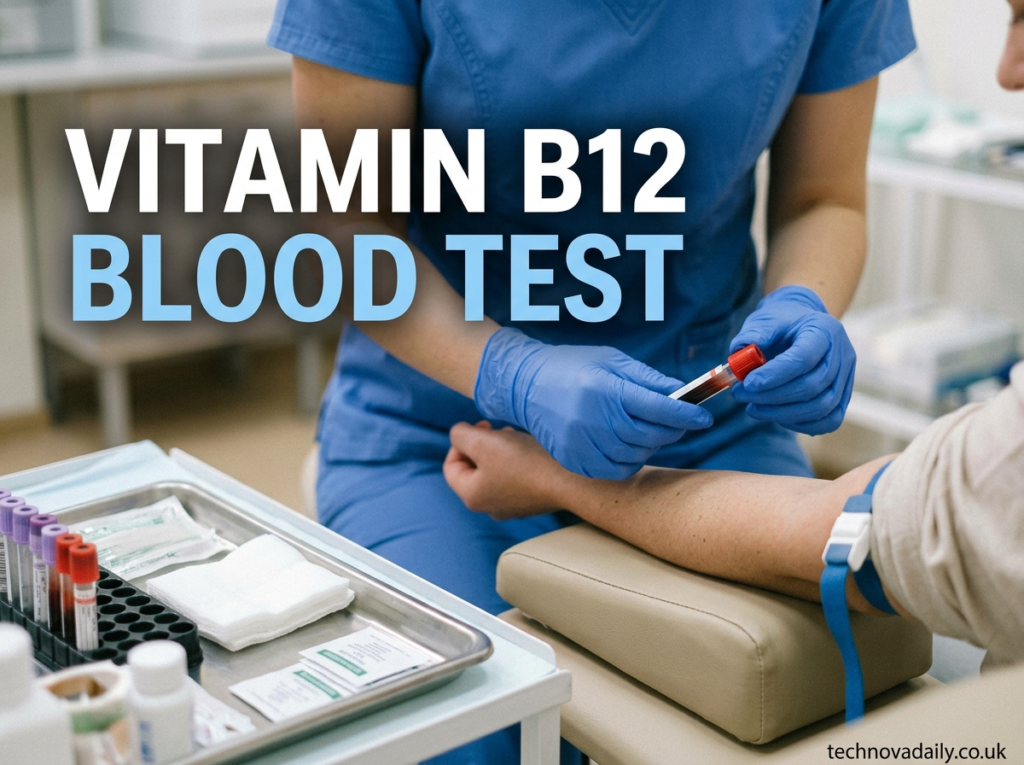
A vitamin B12 blood test is a routine laboratory procedure. A healthcare professional collects a small blood sample, usually from a vein in your arm, and sends it to a laboratory for analysis.
The process usually takes only a few minutes. You may feel a brief pinch when the needle enters your skin. Mild soreness or a small bruise can occur afterward, but most people return to their usual activities straight away.
The time needed to receive your results depends on the laboratory. Ask the testing center when your report is likely to be ready.
Do You Need to Fast Before a Vitamin B12 Blood Test?
Fasting is not always required before a vitamin B12 blood test. However, your laboratory or doctor may ask you to fast if your blood sample will also be used for other tests that require it.
Before your appointment, follow the instructions provided by your healthcare professional. Tell them if you take vitamin B12 supplements, multivitamins, injections, or other medicines because these may affect how your results are interpreted.
Whenever possible, blood samples used to investigate a suspected deficiency should be collected before starting B12 replacement. However, do not delay urgent medical treatment if your doctor is concerned about serious anemia or nerve-related symptoms.
NICE
+1
What Is the Difference Between Vitamin B12 and Other Blood Tests?
Doctors may order other blood tests alongside vitamin B12 testing because different tests provide different information about your health.
Vitamin B12 Test vs. CBC
A complete blood count (CBC) measures blood components, including red blood cells, hemoglobin, and other blood cells. It can show signs of anemia or unusually large red blood cells.
A CBC cannot directly measure your vitamin B12 level. Also, B12 deficiency can cause nerve symptoms even when anemia is absent, so a normal CBC does not rule it out.
NHS
+1
Vitamin B12 Test vs. Folate Test
Folate, also known as vitamin B9, is another nutrient needed for healthy red blood cell production. Low folate and low B12 can cause similar types of anemia.
Doctors may test both nutrients when investigating abnormal blood counts, fatigue, or other symptoms. Identifying which nutrient is low helps guide treatment.
What Is an MMA Test?
A methylmalonic acid (MMA) test measures a substance that can rise when the body does not have enough usable vitamin B12. Doctors may order it when a standard B12 result is borderline or does not match the person’s symptoms.
MMA is not perfect: kidney problems can also raise its level. Your doctor will interpret the result alongside other findings.
Health Professional Fact Sheet
+1
When Is a Homocysteine Test Used?
Homocysteine is a substance involved in normal metabolism. Its level may rise when vitamin B12 is low, but folate deficiency and reduced kidney function can also affect it.
For this reason, homocysteine alone cannot confirm a B12 deficiency. It may be useful as part of a wider assessment when a doctor needs more information.
How Is Low Vitamin B12 Treated?
Treatment depends on how low your level is, whether you have symptoms, and why the deficiency developed.
Vitamin B12 tablets: Oral supplements may be suitable when low levels result from inadequate dietary intake or when oral treatment is appropriate for the person’s absorption needs.
Vitamin B12 injections: Injections may be recommended when absorption is poor, pernicious anemia is present, or nerve-related symptoms require a particular treatment approach.
Dietary changes: Eating more B12-rich foods can help prevent or correct a deficiency caused by low dietary intake. However, food alone may not correct a deficiency caused by an absorption problem.
Your doctor may repeat blood tests to check your response to treatment. Do not rely only on an improved number if symptoms continue, and seek medical advice promptly for new or worsening numbness, balance problems, or weakness.
NHS
+1
Foods That Help Maintain Healthy Vitamin B12 Levels
Vitamin B12 is naturally present in several animal-based foods. Fortified foods and supplements can also provide B12, especially for people who do not eat animal products.
- Meat and poultry: Beef, chicken, and other meats provide vitamin B12.
- Fish and seafood: Fish and some shellfish are good dietary sources.
- Eggs and dairy products: Milk, yogurt, cheese, and eggs provide varying amounts of B12.
- Fortified foods: Some breakfast cereals and plant-based milk products contain added vitamin B12. Check the nutrition label to confirm.
- Supplements: People following a vegan diet may need a reliable B12 supplement or regular fortified foods.
If a blood test confirms a deficiency, discuss the right treatment with your healthcare professional rather than relying on dietary changes alone.
When Should You See a Doctor About Your Vitamin B12 Results?
Speak with a healthcare professional if your test shows a low or borderline B12 level, especially if you have ongoing fatigue, weakness, pale skin, a sore tongue, or tingling in your hands or feet.
You should also seek medical advice if you have memory changes, difficulty walking, or balance problems. These symptoms can have several causes, but some nerve problems related to B12 deficiency can become permanent if treatment is delayed.
NHS
+1
Your doctor can review your report, check for possible causes, and decide whether you need additional tests or treatment. Seek urgent medical attention for sudden or severe neurological symptoms.
Frequently Asked Questions About the Vitamin B12 Blood Test
What Is a Normal Vitamin B12 Blood Test Result?
Many laboratories use a lower reference limit around 200–250 pg/mL, but the exact range varies. Some guidelines use different thresholds to classify results as low, indeterminate, or reassuring. Always check the range printed on your report and discuss it with your doctor.
Health Professional Fact Sheet
+1
What B12 Level Is Considered Deficient?
A level below 200 pg/mL is often considered low, although the cutoff depends on the laboratory and clinical guideline. A borderline result may require additional testing, such as an MMA test, particularly if symptoms are present.
Do You Need to Fast Before a Vitamin B12 Blood Test?
Not always. Follow your laboratory’s instructions, especially if other tests are being performed at the same time. Tell your healthcare professional about any B12 supplements or injections you use.
Can a CBC Detect Vitamin B12 Deficiency?
A CBC can show anemia or large red blood cells that may occur with B12 deficiency, but it does not measure B12 directly. A separate B12 test is needed to assess the vitamin level, and some people have a deficiency without anemia.
What Does a High Vitamin B12 Blood Test Result Mean?
High levels may result from supplements or injections. They can also occur with certain medical conditions. Your doctor can decide whether the result needs further investigation based on your medical history and other tests.
Can You Have B12 Deficiency With Normal Blood Test Results?
Yes. Symptoms may occur despite a total B12 result within the laboratory’s reference range. If deficiency is still suspected, your doctor may consider MMA testing or other investigations.
How Long Does It Take to Get Vitamin B12 Blood Test Results?
The turnaround time varies by laboratory. Some facilities provide results within a short period, while others take several days. Contact your testing center for its expected reporting time.
How Can I Increase My Vitamin B12 Levels Naturally?
You can increase your dietary intake by eating foods such as fish, meat, eggs, dairy products, and B12-fortified foods. If you have a confirmed deficiency caused by poor absorption or pernicious anemia, you may also need supplements or injections.
Conclusion
A vitamin B12 blood test helps identify low vitamin B12 levels that may affect red blood cell production, nerve function, and overall health. Understanding your results can help you and your doctor decide whether further testing or treatment is needed.
