



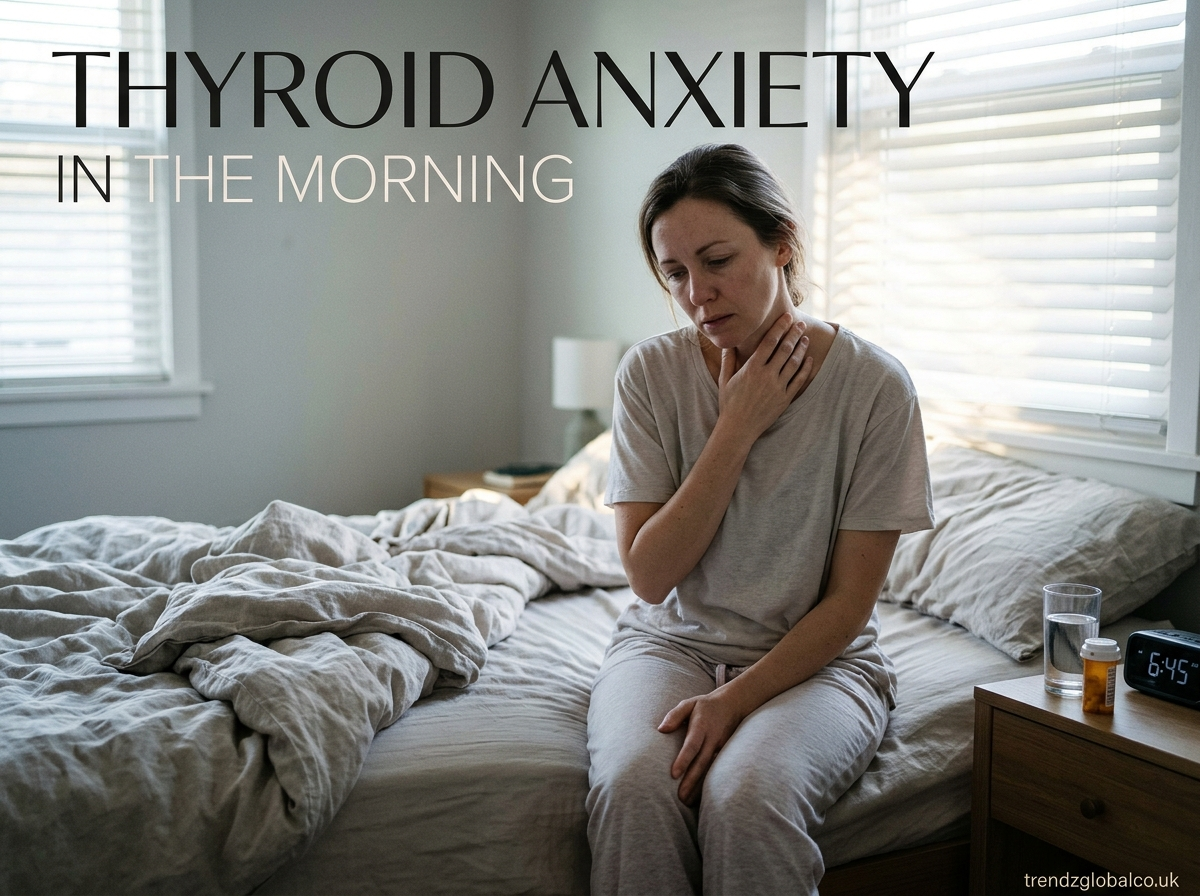
Thyroid anxiety in the morning can happen when an imbalance in thyroid hormones affects heart rate, energy levels, sleep, and mood. People may wake up feeling nervous, restless, shaky, or as if their heart is beating too fast. An overactive thyroid is a known cause of these symptoms, although other conditions can produce similar feelings.
Waking up anxious does not automatically mean you have a thyroid problem. Stress, poor sleep, caffeine, certain medicines, and other health conditions can also cause morning anxiety. Thyroid blood tests, including thyroid-stimulating hormone (TSH) and free thyroxine (free T4), can help a healthcare professional determine whether thyroid function may be involved.
Can Thyroid Problems Cause Anxiety in the Morning?
Yes, thyroid problems can contribute to anxiety in the morning. The thyroid gland produces hormones that help regulate metabolism, heart rate, body temperature, and several functions that affect how you feel throughout the day. When thyroid hormone levels are too high, the body may become more active than usual, leading to nervousness, restlessness, sweating, and a racing heartbeat.
Hyperthyroidism, or an overactive thyroid, is particularly associated with anxiety and irritability. Some people feel these symptoms soon after waking, while others experience them throughout the day. Hypothyroidism, or an underactive thyroid, is more often associated with tiredness and low mood, but some people with hypothyroidism also experience anxiety.
The timing of symptoms alone cannot identify a thyroid disorder. If you regularly wake up feeling anxious, especially alongside unexplained weight changes, tremors, heat intolerance, or unusual fatigue, discuss your symptoms with a healthcare professional.
Why Does Thyroid Anxiety Feel Worse in the Morning?
Morning anxiety can have several causes. The body’s cortisol level normally rises around waking time to help you become alert. This natural change may contribute to a feeling of nervous energy in some people, although it does not mean cortisol is abnormal or that the thyroid is responsible.
When thyroid hormone levels are too high, the body’s response to normal daily activity may feel more intense. You might notice a faster heartbeat, sweating, trembling, or a sense of uneasiness while getting ready for the day. Poor sleep can make these symptoms harder to manage because sleep loss may increase irritability and make ordinary stress feel more difficult.
Other factors can also play a role. Drinking coffee before eating, worrying about the day ahead, skipping meals, or having an irregular sleep schedule may contribute to morning anxiety. If symptoms occur frequently, looking at your sleep habits, caffeine intake, medications, and thyroid health can help your healthcare professional identify the cause.
Common Symptoms of Thyroid-Related Morning Anxiety
Thyroid-related anxiety may cause emotional symptoms as well as physical changes. The symptoms depend partly on whether the thyroid produces too much or too little hormone, and not everyone experiences the same combination.
Common symptoms include:
- Feeling nervous, restless, or panicky after waking.
- A racing heart or noticeable heartbeats.
- Shaky hands or unexplained sweating.
- Difficulty falling asleep or staying asleep.
- Trouble concentrating or feeling unusually irritable.
- Unexplained weight loss or weight gain.
- Feeling too hot or too cold compared with usual.
- Tiredness that continues even after a full night’s sleep.
People with hyperthyroidism may experience a fast heartbeat, increased sweating, tremors, frequent bowel movements, and weight loss despite having a normal or increased appetite. People with hypothyroidism may notice fatigue, constipation, dry skin, difficulty concentrating, and sensitivity to cold.
These symptoms can overlap with anxiety disorders and other medical conditions. A person may have anxiety without a thyroid problem, and someone with a thyroid disorder may have few obvious symptoms. Blood tests and a review of your medical history are more useful than symptoms alone for determining whether the thyroid is involved.
Which Thyroid Conditions Can Cause Morning Anxiety?
Several thyroid-related conditions may affect mood and anxiety. Identifying the underlying condition matters because treatment depends on the cause and the person’s thyroid hormone levels.
Hyperthyroidism
Hyperthyroidism occurs when the thyroid gland produces more thyroid hormone than the body needs. The excess hormone can increase heart rate and make the nervous system feel more active. Symptoms may include anxiety, irritability, shaking, sweating, difficulty sleeping, and unexplained weight loss.
Graves’ disease is a common cause of hyperthyroidism. Other causes include certain thyroid nodules and thyroid inflammation. If you wake up feeling anxious alongside a racing heart, tremors, or heat intolerance, a clinician may recommend thyroid testing.
Hypothyroidism
Hypothyroidism occurs when the thyroid gland does not produce enough hormone. It commonly causes tiredness, slowed thinking, constipation, dry skin, and sensitivity to cold. Some people also report anxiety or changes in mood.
Morning anxiety in someone with hypothyroidism may be related to several factors, including poor sleep, stress, another health condition, or thyroid hormone levels that are not adequately controlled. Anxiety by itself is not enough to diagnose hypothyroidism.
Hashimoto’s Thyroiditis
Hashimoto’s thyroiditis is an autoimmune condition in which the immune system attacks the thyroid gland. Over time, this can reduce thyroid hormone production and lead to hypothyroidism. Symptoms may develop gradually, so a person might notice changes in energy, mood, or concentration before understanding the cause.
A clinician may check TSH and free T4 and, when appropriate, thyroid antibodies to assess for Hashimoto’s disease. Not everyone with thyroid antibodies has an underactive thyroid or needs thyroid medication.
Thyroid Medication
Thyroid medication can sometimes contribute to anxiety when the dose is higher than a person needs. For example, too much levothyroxine may cause symptoms resembling hyperthyroidism, including a fast heartbeat, sweating, shaking, and difficulty sleeping.
If morning anxiety starts after a medication change or continues while you are receiving treatment, contact your prescriber. Do not change the dose or stop prescribed thyroid medication on your own.
How Do You Know If Morning Anxiety Is Caused by Your Thyroid?
There is no single symptom that proves morning anxiety comes from the thyroid. A pattern of anxiety combined with other thyroid-related symptoms may give a clinician a reason to investigate, but testing is needed to assess thyroid function.
Thyroid-related anxiety may occur alongside unexplained weight changes, tremors, unusual sweating, changes in bowel habits, or persistent fatigue. Anxiety linked to stress may occur around particular situations or worries, although anxiety disorders can also cause symptoms without an obvious trigger. These patterns can provide clues, but they do not reliably distinguish one cause from another.
A healthcare professional may ask when your symptoms started, whether they occur only in the morning, what medicines or supplements you take, how much caffeine you consume, and whether you have a personal or family history of thyroid disease. They may also check your pulse and examine your neck for thyroid enlargement.
Other possible causes include poor sleep, panic attacks, low blood sugar, certain medications, and heart rhythm problems. Depending on your symptoms, your clinician may recommend tests beyond thyroid blood work. The goal is to find the actual cause rather than assume that every episode of morning anxiety is hormone-related.
What Thyroid Blood Tests Should You Get?
Thyroid blood tests help determine whether the thyroid is producing an appropriate amount of hormone. A clinician usually starts with TSH and may order free T4 or other tests depending on the results and symptoms.
| Blood test | What it checks |
|---|---|
| TSH | A signal from the pituitary gland that helps regulate thyroid hormone production. |
| Free T4 | The amount of unbound thyroxine available in the blood. |
| T3 | Another thyroid hormone, often checked when hyperthyroidism is suspected. |
| Thyroid antibodies | Markers that may help identify autoimmune thyroid disease. |
TSH is commonly used as the initial test of thyroid function. A low TSH with high free T4 or T3 may suggest hyperthyroidism, while a high TSH with low free T4 may suggest primary hypothyroidism. Results can vary with pregnancy, certain medicines, acute illness, and other factors, so they should be interpreted in context.
There is no single thyroid test that confirms the cause of anxiety in every person. If your thyroid results are normal, your clinician may investigate other reasons for your symptoms. If results are abnormal, further assessment can help determine whether treatment is needed.
Most routine thyroid blood tests do not require fasting, but follow the instructions from your laboratory or healthcare professional. Tell them about your medicines and supplements, including biotin, which can interfere with some thyroid test results.
How to Reduce Thyroid Anxiety in the Morning
The best way to manage morning anxiety depends on its cause. If a thyroid disorder is responsible, treating the hormone imbalance may help. Healthy daily habits can also make anxiety easier to manage, but they do not replace medical treatment when it is needed.
Try to maintain a regular sleep schedule and allow enough time to get ready in the morning without rushing. If coffee or energy drinks make you feel shaky or nervous, reduce your caffeine intake or avoid it. Drinking water, eating a balanced breakfast when appropriate, and taking a gentle walk may help you feel more settled.
Slow breathing can be useful when anxiety starts after waking. Breathe in gently through your nose and breathe out slowly without forcing your breath. Repeat for a few minutes while sitting comfortably. If you notice that certain situations, poor sleep, or caffeine trigger your symptoms, keeping a simple record may help you recognize patterns.
If blood tests show a thyroid problem, follow your clinician’s treatment plan. Do not start thyroid supplements or iodine products to treat anxiety without medical advice, as some products can affect thyroid function. Seek medical assessment if morning anxiety keeps returning, interferes with daily activities, or occurs alongside physical symptoms.
Can Thyroid Medication Cause Morning Anxiety?
Yes. Thyroid medication can contribute to morning anxiety in some people, particularly when thyroid hormone replacement is more than the body needs. For example, an excessive dose of levothyroxine may cause nervousness, sweating, tremors, a fast heartbeat, and trouble sleeping.
However, anxiety does not always mean your medication dose is too high. Symptoms may have another cause, and people taking thyroid medication can still experience anxiety related to stress, sleep problems, or an anxiety disorder.
If your symptoms began after starting thyroid medication or changing the dose, contact your healthcare professional. They may review your dose, how you take the medicine, and your latest TSH and free T4 results. Dose changes are usually guided by blood tests and clinical assessment rather than symptoms alone.
Take your medication according to the instructions provided. Levothyroxine is commonly taken on an empty stomach, usually 30–60 minutes before breakfast, but you should follow your own prescription instructions. Avoid changing the timing or dose without discussing it with your clinician.
When Should You See a Doctor for Morning Thyroid Anxiety?
Arrange a medical appointment if you regularly wake up feeling anxious without a clear reason, particularly if the symptoms are new or getting worse. An assessment is also appropriate if you notice unexplained weight changes, persistent fatigue, hand tremors, unusual sweating, changes in bowel habits, or a racing heartbeat.
You should also seek advice if you have a diagnosed thyroid condition and your symptoms change despite taking medication as prescribed. Your clinician can determine whether your thyroid levels need checking or whether another health issue may be contributing to the problem.
Seek urgent medical attention if anxiety occurs with chest pain, fainting, severe shortness of breath, or a very rapid heartbeat accompanied by severe symptoms. These signs should not be assumed to be anxiety or a thyroid problem.
Getting help early can make it easier to identify the cause and choose suitable treatment. If thyroid tests are normal, your healthcare professional can also help you explore other explanations and discuss support for anxiety.
Frequently Asked Questions About Thyroid Anxiety in the Morning
Can an overactive thyroid cause anxiety when you wake up?
Yes. An overactive thyroid can cause nervousness, restlessness, sweating, tremors, and a racing heart. These symptoms may be noticeable when you wake up, although they can occur at other times of the day as well. TSH and thyroid hormone tests can help identify hyperthyroidism.
Does hypothyroidism cause morning anxiety?
Hypothyroidism is more commonly linked to fatigue, low mood, constipation, and difficulty concentrating. Some people with an underactive thyroid also experience anxiety. However, morning anxiety alone does not confirm hypothyroidism, so a clinician may recommend thyroid testing and assess other possible causes.
Why do I wake up with a racing heart and anxiety?
A racing heart and anxiety after waking can result from stress, poor sleep, caffeine, panic attacks, thyroid hormone imbalance, or heart rhythm problems. If this happens repeatedly, arrange a medical assessment. Seek urgent care if you experience chest pain, fainting, or severe shortness of breath.
Can thyroid medication make anxiety worse in the morning?
Yes. If your thyroid hormone replacement dose is higher than you need, it may cause anxiety, shaking, sweating, or a rapid heartbeat. Other causes are also possible. Contact your prescriber if symptoms develop after a medication change, and do not adjust your dose yourself.
What is the best thyroid test for anxiety?
TSH is often the first test used to assess thyroid function. A clinician may also order free T4, T3, or thyroid antibody tests based on your symptoms and initial results. No thyroid test can establish that anxiety is thyroid-related without considering the overall clinical picture.
How long does thyroid-related anxiety take to improve?
The time varies depending on the cause, treatment, and how the body responds. People treated for hyperthyroidism may notice some improvement as hormone levels come under control, but recovery can take weeks or longer. Symptoms may persist if another condition is also contributing. Your clinician can advise you based on your diagnosis and test results.
Can morning anxiety be caused by something other than thyroid problems?
Yes. Stress, anxiety disorders, poor sleep, caffeine, certain medications, low blood sugar, and some heart conditions can cause morning anxiety or a racing heart. If symptoms are frequent, severe, or unexplained, a healthcare professional can help determine the cause.
Conclusion
Thyroid anxiety in the morning can be linked to an imbalance in thyroid hormones, especially an overactive thyroid. Symptoms may include nervousness, a racing heart, shaking, sweating, and difficulty sleeping. However, morning anxiety can also occur for reasons unrelated to thyroid function.
