



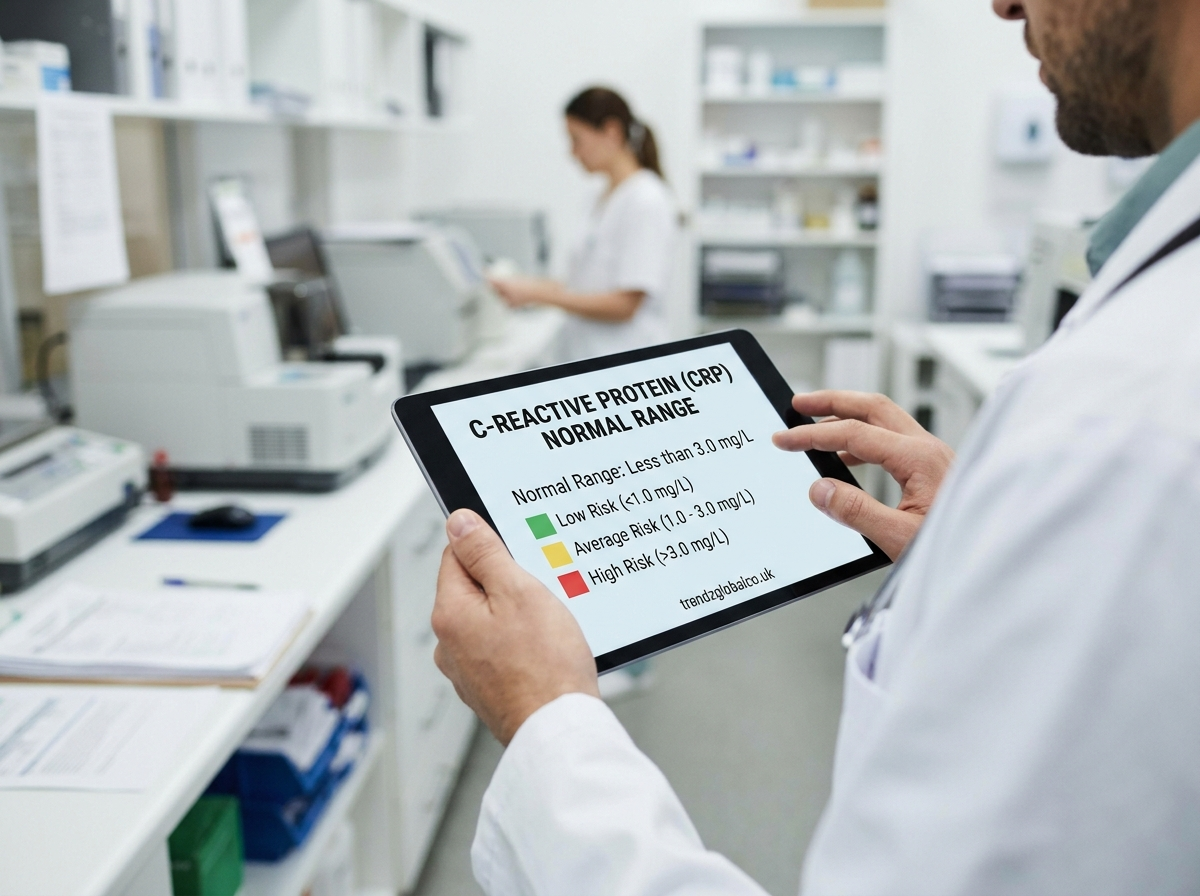
The normal C-reactive protein (CRP) range is often less than 5 mg/L for a standard CRP blood test. However, the normal range can vary between laboratories, so you should compare your result with the reference range printed on your report. A high CRP level may indicate inflammation, infection, or tissue damage, but it cannot identify the exact cause on its own.
Overview: C-Reactive Protein (CRP), Serum
+1
What Is C-Reactive Protein (CRP)?
C-reactive protein is a protein made by the liver. Its level in the blood rises when the body responds to inflammation, infection, or tissue injury. Doctors use the CRP blood test to check for inflammation and monitor how a condition responds to treatment.
CRP is not a test for one specific disease. A high result may occur with an infection, an autoimmune condition, or another health problem that causes inflammation. Doctors interpret the result alongside your symptoms, medical history, examination, and other laboratory tests.
MedlinePlus
+1
What Is the Normal C-Reactive Protein Range?
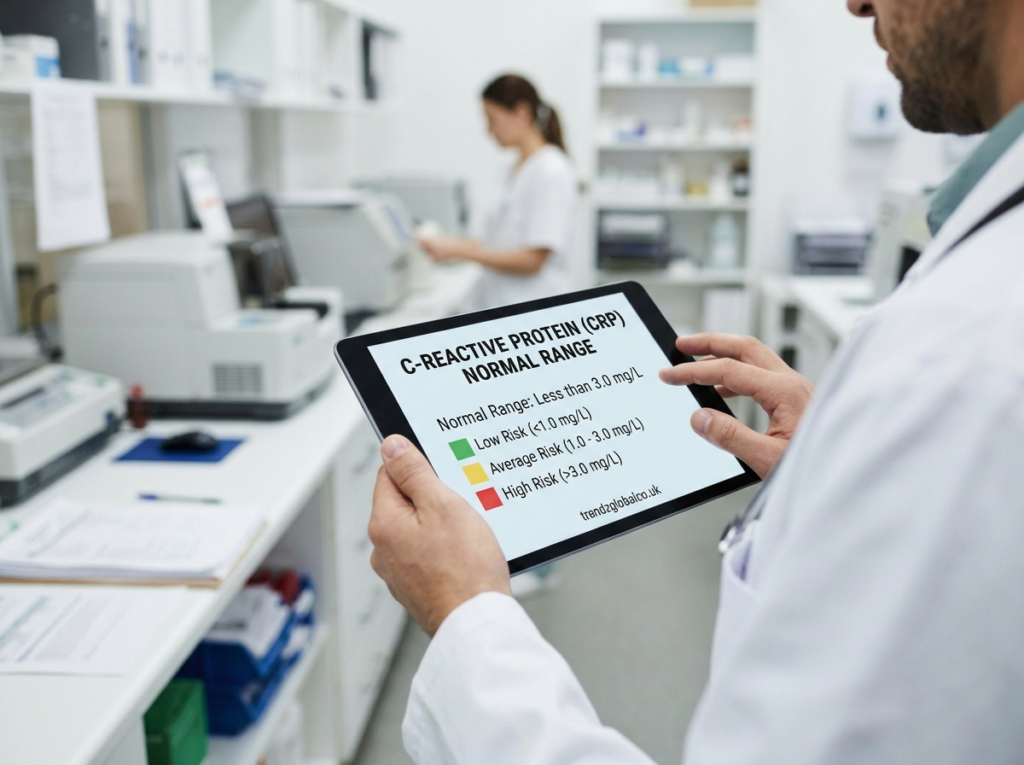
For a standard CRP blood test, a result below 5 mg/L is a commonly used reference range. Some laboratories may use different limits, so a result marked high on one report may be assessed differently by another laboratory.
CRP results are commonly reported in milligrams per liter (mg/L) or milligrams per deciliter (mg/dL). One mg/dL equals 10 mg/L. For example, a CRP result of 0.5 mg/dL is equal to 5 mg/L. Always check the units before comparing your result with a reference range.
Overview: C-Reactive Protein (CRP), Serum
+1
C-Reactive Protein Normal Range Chart
The following chart gives a general guide to standard CRP results in adults.
| CRP level | General interpretation |
|---|---|
| Below 5 mg/L | Within many laboratories’ normal range |
| 5–10 mg/L | May be mildly elevated, depending on the lab |
| Above 10–100 mg/L | Elevated; inflammation or infection may be present |
| Above 100 mg/L | Markedly elevated; serious infection or major tissue injury is possible |
These categories are general guides, not fixed diagnostic rules. A result above 100 mg/L can occur with severe infection or major trauma, but the number alone cannot confirm a diagnosis. Your doctor will consider the full clinical picture.
Overview: C-Reactive Protein (CRP), Serum
+2
What Does a High CRP Level Mean?
A high CRP level means that inflammation may be present somewhere in the body. It does not tell you where the inflammation is or what caused it. The higher the result, the more important it is to assess it in the context of your symptoms and health history.
Common causes include bacterial or viral infections, rheumatoid arthritis, lupus, inflammatory bowel disease, injuries, and inflammation following surgery. Smoking and obesity may also be linked to higher CRP levels. A mild increase does not automatically mean you have a serious illness, but an unexplained or persistent elevation should be discussed with a healthcare professional.
MedlinePlus
+1
What Is Considered a Dangerously High CRP Level?
A CRP level above 100 mg/L is considered markedly elevated in many clinical settings and can occur with severe infection, including sepsis, or major tissue injury. However, there is no single CRP number that determines whether a person is in immediate danger. Symptoms, vital signs, and other test results matter as well.
Overview: C-Reactive Protein (CRP), Serum
+1
Seek emergency medical care if you have signs of a serious illness, such as difficulty breathing, new confusion, fainting, or severe weakness, particularly when accompanied by fever or suspected infection. Do not wait for a CRP result if you have emergency symptoms. If your CRP is very high but you feel relatively well, contact your healthcare professional promptly for advice.
What Does a Low or Normal CRP Level Mean?
A normal CRP result usually means there is no large increase in this inflammation marker at the time of testing. It can be reassuring when considered alongside your symptoms and other findings.
However, a normal CRP does not rule out every infection or inflammatory disease. Some conditions, including certain cases of lupus or rheumatoid arthritis, may occur without a high CRP result. If you continue to experience pain, fever, swelling, or other unexplained symptoms, speak with your doctor even if your CRP is within the laboratory’s normal range.
MedlinePlus
+1
CRP vs. hs-CRP: What Is the Difference?
Standard CRP and high-sensitivity C-reactive protein (hs-CRP) tests measure the same protein, but they are used for different purposes. A standard CRP test is mainly used to assess inflammation associated with infection, injury, and inflammatory conditions.
An hs-CRP test can measure smaller changes in CRP and may be used to help assess cardiovascular risk in certain adults. Its interpretation differs from that of a standard CRP test. For example, Mayo Clinic Laboratories lists an hs-CRP reference value below 2.0 mg/L for adults, while many standard CRP tests use a reference value below 5 mg/L. These values serve different purposes and should not be treated as interchangeable.
Mayo Clinic Laboratories
+1
What Factors Can Affect CRP Test Results?
Several factors can affect your CRP level, so a high result does not always point to a specific disease. Your doctor may consider recent illnesses, injuries, medical treatments, and existing health conditions when reviewing your report.
Common factors include:
- Recent infection: A cold, flu, or other infection can raise CRP.
- Injury or surgery: Tissue damage can cause a temporary increase.
- Smoking: Tobacco use is associated with higher CRP levels.
- Obesity: Excess body fat can contribute to ongoing low-grade inflammation.
- Pregnancy and hormonal treatment: These may affect CRP levels in some people.
- Chronic health conditions: Autoimmune diseases and other inflammatory disorders can cause raised results.
Some medicines may also affect test results. Tell your healthcare professional about your medicines and supplements, and do not stop prescribed treatment without medical advice.
MedlinePlus
+2
How Is a CRP Blood Test Performed?
A CRP test requires a blood sample, usually taken from a vein in your arm. A healthcare professional cleans the area, inserts a small needle, and collects blood into a tube. The procedure generally takes only a few minutes.
Fasting is not usually required for a standard CRP test. However, if your doctor has ordered other blood tests at the same time, you may need to follow additional preparation instructions. Tell your healthcare professional about medicines and supplements you take, as some may affect your results. Results are often available within one or two days, although timing varies by laboratory.
MedlinePlus
+2
How Can You Lower High CRP Levels?
The best way to lower CRP is to identify and address the reason it is elevated. If an infection, injury, or inflammatory condition is responsible, treatment should focus on that underlying cause. CRP may fall as the condition improves.
For long-term health, you can discuss the following steps with your healthcare professional:
- Eat a balanced diet that includes vegetables, fruit, whole grains, and healthy sources of fat.
- Stay physically active at a level appropriate for your health.
- Avoid smoking and seek help if you want to quit.
- Work toward a healthy weight if recommended.
- Follow your treatment plan for existing medical conditions.
These steps may support general health, but they are not a substitute for treating an infection or another medical condition. Do not take antibiotics or anti-inflammatory medicines solely to lower CRP without medical guidance. A repeat blood test may be useful if your doctor needs to check whether the level is falling.
MedlinePlus
+1
When Should You See a Doctor About CRP Results?
Talk to your doctor if your CRP result is above the laboratory’s reference range, especially if you have a fever, persistent pain, swelling, unexplained tiredness, or other symptoms. Your doctor may recommend additional tests to identify the cause.
A mildly elevated result without symptoms may not require emergency care, but it should be interpreted in context. A very high CRP result, a rising level, or a high result after surgery or during treatment for an infection needs prompt medical review.
Seek emergency help if you develop difficulty breathing, confusion, fainting, or severe weakness. These symptoms can signal a serious condition and should not be judged by the CRP number alone.
Frequently Asked Questions About C-Reactive Protein Normal Range
1. What is the normal CRP range in mg/L?
A common reference range for a standard CRP test is below 5 mg/L. The exact limit depends on the laboratory and the test method. Check the reference range printed on your report.
Overview: C-Reactive Protein (CRP), Serum
+1
2. Is a CRP level below 5 mg/L normal?
Yes. A result below 5 mg/L falls within the normal range used by many laboratories. However, a normal result does not rule out every infection or inflammatory condition.
3. Is a CRP level of 10 mg/L high?
A result of 10 mg/L is above the normal range used by many laboratories and may indicate inflammation. It does not automatically mean you have a serious infection. Your symptoms and other test results help determine its meaning.
Overview: C-Reactive Protein (CRP), Serum
+1
4. What CRP level indicates a serious infection?
CRP levels above 100 mg/L can occur with severe infections, including sepsis, but this level does not confirm sepsis by itself. Doctors use symptoms, examination findings, and other tests to assess the cause and severity.
Overview: C-Reactive Protein (CRP), Serum
+1
5. Can CRP levels be high without an infection?
Yes. Autoimmune diseases, injuries, surgery, obesity, smoking, and other inflammatory conditions can raise CRP even when an infection is not present.
MedlinePlus
+1
6. Does a normal CRP level mean I am healthy?
Not necessarily. A normal result is reassuring in some situations, but it cannot rule out every illness. If you have ongoing symptoms, discuss them with your doctor.
7. What is the difference between CRP and hs-CRP?
A standard CRP test helps assess inflammation, while hs-CRP measures smaller changes and may be used to estimate cardiovascular risk in selected adults. Their reference ranges and clinical uses differ.
MedlinePlus
+1
8. Do I need to fast before a CRP blood test?
Usually, no. A standard CRP test does not generally require fasting. Follow your laboratory’s instructions if other tests are being performed at the same time.
healthdirect
+1
9. How quickly can CRP levels return to normal?
CRP can rise within hours of an inflammatory response and often peaks within 24–48 hours. It may fall as the underlying condition improves, but the time it takes to return to normal depends on the cause and how well it responds to treatment.
Overview: C-Reactive Protein (CRP), Serum
+1
10. Can stress increase CRP levels?
Some factors associated with stress, including poor sleep, may be linked to higher CRP levels. However, a raised CRP should not automatically be blamed on stress. Your doctor can help assess other possible causes.
MedlinePlus
+1
Conclusion
The normal C-reactive protein range is often below 5 mg/L for a standard CRP blood test, although laboratory reference ranges may differ. A higher result can indicate inflammation caused by infection, injury, or an ongoing health condition. However, CRP alone cannot identify the cause or confirm a diagnosis.
