



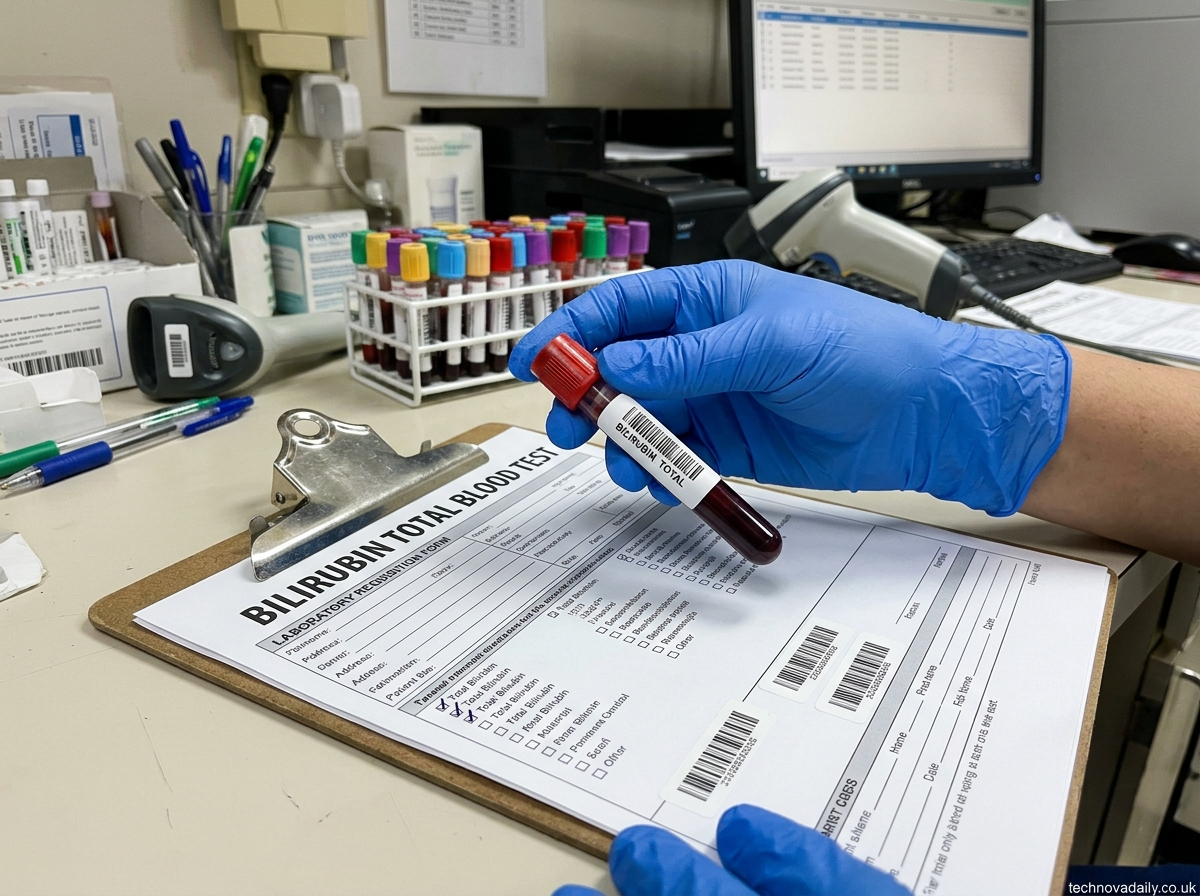
The bilirubin total blood test measures the amount of bilirubin in your blood. Bilirubin is a yellow substance produced when the body breaks down old red blood cells. The liver processes this substance and helps remove it from the body through bile.
Doctors use this test to check for possible liver problems, bile duct blockages, and conditions that cause red blood cells to break down too quickly. It is also used when a person has jaundice, which causes the skin and whites of the eyes to turn yellow.
A high bilirubin result does not always mean you have liver disease. The meaning depends on your actual level, symptoms, medical history, and other blood test results. Understanding these factors can help you know what questions to ask your healthcare provider.
What Is a Total Bilirubin Blood Test?
A total bilirubin blood test measures the combined amount of direct and indirect bilirubin in a blood sample. These are two forms of bilirubin that reflect different stages of the body’s process for removing this substance.
When red blood cells reach the end of their normal lifespan, the body breaks them down and produces bilirubin. This substance initially travels to the liver in an indirect form. The liver then processes it into direct bilirubin, which can pass into bile and eventually leave the body through stool.
Doctors may order this test if you have yellowing of the eyes or skin, dark urine, pale stools, or unexplained abdominal discomfort. It may also be included in blood work used to assess liver health. Although the result can point toward a possible problem, the test alone cannot identify every cause of an abnormal bilirubin level.
What Is the Normal Total Bilirubin Range?
For many adults, the normal total bilirubin range is approximately 0.1 to 1.2 milligrams per deciliter (mg/dL). In international units, this is about 1.7 to 20.5 micromoles per liter (µmol/L). However, the exact reference range can vary between laboratories.
Your blood test report should show the reference interval used by the laboratory. A result slightly above the upper limit may not have the same meaning as a much higher result. Your doctor may review the result again or order additional tests, depending on your symptoms and medical history.
Newborn babies have different bilirubin ranges because their bodies process bilirubin differently during the first days of life. Their levels must be assessed according to their age in hours, gestational age, and other risk factors. A result that is normal for an adult may be unsafe for a newborn, so adult reference ranges should never be used to interpret a baby’s result.
What Does a Total Bilirubin Blood Test Measure?
Total bilirubin includes direct bilirubin and indirect bilirubin. Measuring these forms separately can help doctors understand why the total amount is high.
Direct bilirubin, also called conjugated bilirubin, is the form that has already been processed by the liver. It can enter bile and move through the digestive system. A high direct bilirubin level may occur when the liver cannot release bilirubin properly or when a blockage affects the flow of bile.
Indirect bilirubin, also called unconjugated bilirubin, has not yet been processed by the liver. It may increase when red blood cells break down too quickly or when the liver has difficulty processing bilirubin. The total bilirubin result combines both forms, so a doctor may request a direct bilirubin measurement and calculate or assess indirect bilirubin to help find the cause.
Why Is a Bilirubin Blood Test Done?
Doctors order a bilirubin blood test to investigate possible liver problems, jaundice, or changes in the way the body breaks down red blood cells. It may also be part of a routine evaluation when symptoms suggest that the liver or bile ducts are not working as expected.
The test can help investigate conditions such as hepatitis, cirrhosis, gallstones, and hemolytic anemia. It may also help doctors monitor an existing liver condition or check whether certain medicines are affecting the liver. However, bilirubin results must be reviewed alongside other findings to understand what is causing the problem.
A doctor may recommend additional blood tests or an ultrasound if the bilirubin level is abnormal. These tests can help determine whether the problem involves liver cells, bile flow, or red blood cells.
What Causes High Total Bilirubin Levels?
A high total bilirubin result means that bilirubin is building up in the blood. This can happen when too much bilirubin is produced, when the liver cannot process it properly, or when bile cannot drain normally.
Liver conditions: Hepatitis, cirrhosis, and other liver diseases can affect how the liver processes bilirubin. Depending on the condition, other liver blood tests may also show abnormal results.
Gallstones and bile duct blockage: A gallstone can block the flow of bile from the liver or gallbladder. This may cause direct bilirubin to rise and can lead to jaundice, dark urine, pale stools, and abdominal pain.
Hemolytic anemia: When red blood cells break down faster than usual, the body produces more bilirubin. This often raises indirect bilirubin and may occur with anemia or other blood disorders.
Gilbert syndrome: This inherited condition affects the liver’s ability to process bilirubin. It usually causes mild increases that come and go. Fasting, dehydration, illness, and strenuous exercise may trigger higher levels in some people.
Medicines and other factors: Certain medicines can affect the liver or bilirubin levels. A healthcare professional may review your medications, supplements, recent illness, and other test results to identify the likely cause.
A high bilirubin result should not be ignored, especially if you have jaundice or other new symptoms. The right next step depends on how high the level is and what other findings appear on your report.
What Does Low Total Bilirubin Mean?
A low total bilirubin level is generally not a cause for concern. Unlike high bilirubin, which may point to a liver, bile duct, or red blood cell problem, a low result usually does not indicate a condition that requires treatment.
Some medicines can affect bilirubin measurements, but low levels are rarely important when considered on their own. If other blood tests are abnormal or you have symptoms, your doctor can review the findings together.
There is usually no need to take supplements or make dietary changes to raise a low bilirubin level. Follow your healthcare provider’s advice if your report shows other abnormalities or if the test was ordered to investigate a specific health concern.
Bilirubin Total Blood Test Results Chart
The following chart provides a general guide to total bilirubin results in adults. The laboratory’s own reference range should be used when interpreting your report.
| Total bilirubin level | General meaning |
|---|---|
| 0.1–1.2 mg/dL | Common adult reference range |
| Above 1.2 mg/dL | May be above the laboratory’s reference range |
| Around 2–3 mg/dL or higher | Jaundice may become visible |
| Very high or rapidly rising levels | Prompt medical assessment is needed |
These figures are general guides, not fixed diagnostic or emergency thresholds. Jaundice may become visible at different levels depending on the person. Newborn babies require separate, age-specific assessment.
To convert bilirubin from mg/dL to µmol/L, multiply the result by approximately 17.1. For example, a result of 1.2 mg/dL is about 20.5 µmol/L.
If your bilirubin is slightly above the normal range, your doctor may check direct bilirubin, ALT, AST, and alkaline phosphatase (ALP). These results, along with your symptoms, can help determine whether further testing is needed.
What Are the Symptoms of High Bilirubin?
Mildly elevated bilirubin may not cause noticeable symptoms. When bilirubin builds up enough to cause jaundice, the whites of the eyes and the skin may appear yellow. Changes in the whites of the eyes can be easier to notice than changes in skin color.
Other possible symptoms include dark urine, pale stools, itching, tiredness, nausea, and discomfort in the upper-right side of the abdomen. These symptoms can occur when the liver or bile ducts are affected, but they do not all occur in every person.
New yellowing of the eyes or skin should be checked by a healthcare professional promptly. Seek emergency care if you have severe abdominal pain with fever, confusion, fainting, or unusual bleeding, as these may be signs of a serious condition.
How Is the Total Bilirubin Blood Test Performed?
A total bilirubin blood test is a routine blood test. A healthcare professional collects a small blood sample, usually from a vein in your arm, and sends it to a laboratory for measurement.
Do you need to fast before the test? Not always. Some people may need to fast because bilirubin testing is being performed with other tests that require fasting. Follow the instructions provided by your doctor or laboratory.
Tell your healthcare provider about any prescription medicines, over-the-counter drugs, vitamins, and supplements you take. Do not stop prescribed medication without medical advice. After the blood draw, you may experience mild soreness or a small bruise at the needle site, but serious complications are uncommon.
Results may be available within hours or by the next day, depending on the laboratory and whether additional testing is required.
What Other Tests Are Done With Bilirubin?
A total bilirubin result often provides only part of the picture. Doctors may order additional tests to find out whether an abnormal level is linked to liver injury, blocked bile flow, or increased breakdown of red blood cells.
- Direct bilirubin: Measures the form of bilirubin processed by the liver.
- ALT and AST: Enzymes that may rise when liver cells are injured.
- Alkaline phosphatase (ALP) and GGT: May help identify problems affecting bile flow.
- Complete blood count (CBC): Checks blood cells and can help identify anemia.
- Reticulocyte count: Helps assess whether the body is producing new red blood cells at an increased rate.
- Abdominal ultrasound: May be used when gallstones or a bile duct blockage are suspected.
Not everyone needs all these tests. Your doctor will select the appropriate investigations based on your bilirubin level, symptoms, medical history, and initial findings.
How Can High Bilirubin Levels Be Lowered?
The treatment for high bilirubin depends on the underlying cause. There is no single medicine, food, or home remedy that safely lowers bilirubin in every situation. Finding the reason for the increase is the first step.
If a medicine is contributing to the problem, your doctor may review your treatment and consider an alternative if needed. Liver conditions require care based on their cause, while a blocked bile duct may require a medical procedure to restore normal bile flow. If red blood cells are breaking down too quickly, treatment will focus on the cause of that breakdown.
People with Gilbert syndrome usually do not need specific treatment because the condition is generally harmless. Staying hydrated, eating regularly, and following medical advice during illness may help reduce episodes of raised bilirubin. Newborn jaundice may require phototherapy, depending on the baby’s age, bilirubin level, and risk factors.
Avoid relying on detox drinks or unverified supplements to lower bilirubin. Some products can harm the liver or interact with medicines. If your result is high, consult a healthcare professional before attempting treatment.
When Should You See a Doctor?
Arrange prompt medical assessment if you notice yellowing of your skin or eyes, particularly if it is new. Dark urine, pale stools, persistent itching, and unexplained abdominal discomfort are also reasons to seek medical advice.
Seek urgent medical care if you experience severe abdominal pain with fever or chills, or if jaundice occurs with confusion, unusual bleeding, or a marked deterioration in your condition. These symptoms can indicate a serious liver or bile duct problem.
Newborn jaundice needs particular attention. Contact a healthcare professional urgently if a baby develops yellow skin or eyes. Seek emergency care if the baby is difficult to wake, feeds poorly, has breathing difficulties, or develops jaundice during the first 24 hours after birth. High bilirubin can harm a newborn’s brain if it reaches dangerous levels and is not treated.
Frequently Asked Questions About the Bilirubin Total Blood Test
1. What is a total bilirubin blood test?
A total bilirubin blood test measures the combined amount of direct and indirect bilirubin in your blood. Doctors use it to investigate jaundice and assess possible liver, bile duct, or red blood cell problems.
2. What is the normal total bilirubin level in adults?
A common adult reference range is 0.1–1.2 mg/dL, or approximately 1.7–20.5 µmol/L. The exact range varies between laboratories, so check the reference interval on your report.
3. Is 1.2 mg/dL bilirubin normal?
Yes, 1.2 mg/dL is within the upper end of many adult reference ranges. Your laboratory may use a different upper limit, so compare the result with the range printed on your report.
4. What level of bilirubin is dangerous?
There is no single bilirubin number that is dangerous for every person. The cause, rate of increase, symptoms, and other test results all matter. Newborn babies require separate assessment based on their age and risk factors.
5. What causes high bilirubin with normal liver enzymes?
Possible causes include Gilbert syndrome, increased red blood cell breakdown, fasting, dehydration, or a recent illness. Normal ALT and AST levels do not rule out every liver or bile duct condition.
6. Does high bilirubin always mean liver disease?
No. High bilirubin can occur because of liver disease, bile duct blockage, hemolytic anemia, or Gilbert syndrome. Additional tests can help identify the cause.
7. Do you need to fast before a bilirubin blood test?
Not always. Fasting may be required if other tests are being performed at the same time. Follow your healthcare provider’s preparation instructions.
8. What is the difference between total and direct bilirubin?
Total bilirubin measures both direct and indirect bilirubin combined. Direct bilirubin measures the form that has already been processed by the liver. Testing both can help explain an elevated total result.
9. Can dehydration increase bilirubin levels?
Dehydration may contribute to a temporary increase, especially in people with Gilbert syndrome. Fasting, illness, and strenuous exercise may also affect bilirubin levels. Persistent elevation should be assessed rather than automatically blamed on dehydration.
10. How long does it take to get bilirubin blood test results?
Many laboratories provide results within hours or by the next day, although the timing varies. Your laboratory can tell you when to expect your report.
Conclusion
The bilirubin total blood test measures the amount of bilirubin in your blood and helps doctors investigate jaundice, liver conditions, bile duct problems, and increased breakdown of red blood cells. A common adult reference range is 0.1–1.2 mg/dL, but the range on your laboratory report should guide interpretation.
