



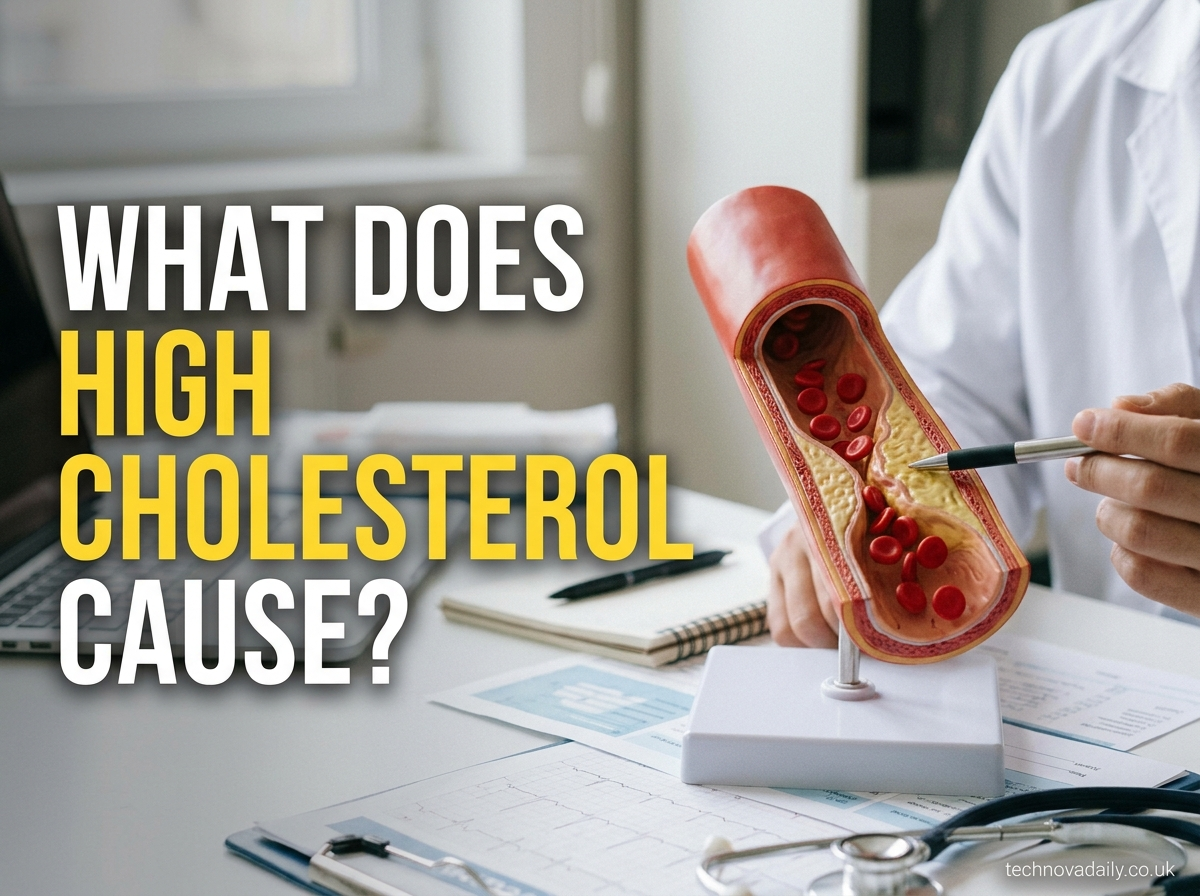
High cholesterol causes fatty plaque to build up inside your arteries (atherosclerosis), which can lead to heart attack, stroke, peripheral artery disease, and chest pain (angina). It usually has no symptoms until one of these complications develops, which is why it is often called a silent condition.
Key Takeaways
- High cholesterol narrows and hardens the arteries, reducing blood flow to the heart, brain, and limbs.
- Its main complications are heart attack, stroke, peripheral artery disease, angina, and carotid artery disease.
- Most people feel nothing, so a blood test (lipid profile) is the only reliable way to know your levels.
- High cholesterol is largely manageable through diet, exercise, quitting smoking, and, when needed, medication.
What Is High Cholesterol?
High cholesterol means you have too much cholesterol, a waxy fat-like substance, circulating in your blood. Your body needs some cholesterol to build cells and make hormones, but too much of the wrong type becomes harmful.
There are three numbers to know:
- LDL (low-density lipoprotein): the “bad” cholesterol. It deposits cholesterol in artery walls.
- HDL (high-density lipoprotein): the “good” cholesterol. It carries cholesterol back to the liver for removal.
- Triglycerides: another type of blood fat that, when high, adds to cardiovascular risk.
Healthy vs. High Cholesterol Levels (Adults)
| Measure | Desirable | Borderline | High |
|---|---|---|---|
| Total cholesterol | Below 200 mg/dL | 200-239 mg/dL | 240 mg/dL and above |
| LDL cholesterol | Below 100 mg/dL | 130-159 mg/dL | 160 mg/dL and above |
| HDL cholesterol | 60 mg/dL and above (protective) | 40-59 mg/dL | Below 40 mg/dL is considered low |
| Triglycerides | Below 150 mg/dL | 150-199 mg/dL | 200 mg/dL and above |
Ranges follow commonly used U.S. guidelines (NHLBI/AHA). Your doctor may set personal targets based on your overall risk.
How High Cholesterol Damages Your Body
High cholesterol harms the body by slowly clogging the arteries that supply blood to vital organs. The process usually takes years:
- Excess LDL cholesterol enters the inner lining of your artery walls.
- The body responds with inflammation, and white blood cells absorb the cholesterol.
- Fat, cholesterol, calcium, and cellular debris form a thick deposit called plaque.
- Plaque narrows the artery and makes it stiff, which reduces blood flow.
- If plaque ruptures, a blood clot can form and block the artery completely.
This gradual process is called atherosclerosis, and it is the root cause of most cholesterol-related health problems.
Health Problems Caused by High Cholesterol
The main conditions caused by high cholesterol are coronary artery disease, heart attack, stroke, peripheral artery disease, angina, and carotid artery disease. Here is how each one develops.
Coronary Artery Disease and Heart Attack
When plaque builds up in the arteries that feed the heart, the condition is called coronary artery disease (CAD). If a plaque ruptures and a clot blocks the artery, heart muscle is starved of oxygen and a heart attack occurs. CAD is one of the leading causes of death worldwide, and high LDL cholesterol is one of its most important modifiable risk factors.
Stroke
A stroke happens when blood flow to part of the brain is cut off. Plaque in the arteries leading to the brain, or a clot that forms on ruptured plaque, can cause an ischemic stroke. High cholesterol therefore raises the risk of stroke, especially when combined with high blood pressure, diabetes, or smoking.
Peripheral Artery Disease (PAD)
Plaque can also narrow the arteries in the legs and arms. This is peripheral artery disease. It may cause leg pain when walking (claudication), cold or numb feet, slow-healing sores, and, in severe cases, tissue damage that can lead to amputation.
Angina (Chest Pain)
When narrowed coronary arteries cannot deliver enough blood to the heart during physical effort or stress, you may feel pressure, tightness, or pain in the chest. This is called angina. It is a warning sign of heart disease and should never be ignored.
High Blood Pressure
As arteries become stiff and narrow, the heart has to pump harder to push blood through them. Over time, this can contribute to high blood pressure (hypertension), which further damages blood vessels and increases the risk of heart attack and stroke.
Carotid Artery Disease
The carotid arteries run along both sides of your neck and supply blood to the brain. Plaque buildup here is called carotid artery disease and is a major cause of stroke. Doctors may detect it with an ultrasound if they hear an abnormal sound (a bruit) over the artery.
Does High Cholesterol Have Symptoms?
In most people, high cholesterol has no symptoms at all. You can feel completely healthy while plaque quietly builds up. The first sign is often a serious event such as a heart attack or stroke.
In rare cases, especially in people with inherited high cholesterol (familial hypercholesterolemia), visible signs may appear:
- Xanthomas: yellowish, fatty bumps on the tendons, elbows, knees, or hands.
- Xanthelasma: yellow patches on or around the eyelids.
- Corneal arcus: a grey-white ring around the colored part of the eye, which is significant when it appears before age 45.
The only reliable way to know your cholesterol level is a lipid profile, a simple blood test. Many guidelines recommend that adults be tested at least every 4-6 years, and more often if they have risk factors. People with a family history of early heart disease may need testing earlier, including in childhood.
What Causes High Cholesterol in the First Place?
High cholesterol is caused by a combination of lifestyle habits, genetics, and underlying medical conditions.
Lifestyle factors
- A diet high in saturated and trans fats (fried foods, processed snacks, fatty red meat, full-fat dairy, and foods cooked in ghee or hydrogenated oils in excess)
- Physical inactivity
- Being overweight or obese
- Smoking, which lowers HDL and damages artery walls
- Excess alcohol
Genetics
Familial hypercholesterolemia is an inherited condition that causes very high LDL from birth. It is often under-diagnosed.
Medical conditions and medicines
- Type 2 diabetes
- Hypothyroidism (underactive thyroid)
- Chronic kidney disease
- Polycystic ovary syndrome (PCOS)
- Certain medicines, such as some steroids, diuretics, and beta-blockers
Who Is at Higher Risk?
You are at higher risk of high cholesterol and its complications if one or more of the following apply:
- You are over 40, or a woman who has gone through menopause
- You have a family history of high cholesterol or early heart disease
- You have diabetes, high blood pressure, or obesity
- You smoke or have a sedentary lifestyle
- You are of South Asian ancestry, a group that tends to develop heart disease earlier and at lower cholesterol levels than many other populations, often with high triglycerides and low HDL
How to Prevent Complications of High Cholesterol
The best way to prevent cholesterol-related complications is to lower LDL through lifestyle changes, medication when needed, and regular screening.
Lifestyle Changes
- Eat heart-healthy: more vegetables, fruit, legumes (daal, chana), whole grains, nuts, and fish. Limit fried foods, processed meats, and sugary snacks.
- Move more: aim for at least 150 minutes of moderate activity, such as brisk walking, each week.
- Reach a healthy weight: even a modest weight loss can improve your lipid levels.
- Quit smoking: HDL levels and blood vessel health begin to improve after quitting.
- Limit alcohol.
Medication
If lifestyle changes are not enough, or if your risk is high, a doctor may prescribe statins or other cholesterol-lowering medicines. Never start or stop medication without medical advice.
Regular Screening
Get a lipid profile as advised by your doctor, and monitor related risks such as blood pressure and blood sugar.
When to See a Doctor
See a doctor if you have never had your cholesterol checked, have a family history of heart disease, or have risk factors such as diabetes or high blood pressure.
Seek emergency care immediately if you experience: chest pain or pressure, pain spreading to the arm, jaw, or back, shortness of breath, sudden weakness or numbness on one side of the body, facial drooping, or difficulty speaking. These may be signs of a heart attack or stroke.
Frequently Asked Questions
Can high cholesterol cause headaches or dizziness?
High cholesterol itself does not directly cause headaches or dizziness. However, if plaque has narrowed the arteries supplying the brain, or if you have high blood pressure alongside it, you may experience these symptoms. Persistent or sudden symptoms should be checked by a doctor.
Can high cholesterol cause death?
Yes, indirectly. High cholesterol does not kill on its own, but by causing atherosclerosis it greatly increases the risk of fatal heart attack and stroke. The risk is highest when high cholesterol is left untreated or combined with smoking, diabetes, or high blood pressure.
Can high cholesterol cause weight gain?
No, high cholesterol does not cause weight gain. The relationship usually works the other way around: excess weight and an unhealthy diet can raise cholesterol. Some underlying conditions, such as hypothyroidism, can cause both.
Is high cholesterol reversible?
High cholesterol can usually be controlled and often brought into a healthy range through diet, exercise, weight loss, and medication. Lowering LDL can slow, and in some cases partly stabilize, plaque buildup, but it cannot always remove plaque that has already formed. Early action matters.
Can high cholesterol cause chest pain?
It can, indirectly. High cholesterol leads to narrowed coronary arteries, which can cause angina or a heart attack. Any unexplained chest pain should be treated as urgent until a doctor says otherwise.
Conclusion
High cholesterol quietly damages the arteries over years and can lead to heart attack, stroke, peripheral artery disease, angina, and carotid artery disease. Because there are usually no warning signs, testing is essential. The good news is that cholesterol is one of the most controllable risk factors for heart disease. Start with a lipid profile, make heart-healthy changes, and talk to your doctor about the right plan for you.
Sources and Medical Review
This article is for information only and is not a substitute for professional medical advice.
- American Heart Association: About Cholesterol
- Centers for Disease Control and Prevention (CDC): About Cholesterol
- National Heart, Lung, and Blood Institute (NHLBI): High Blood Cholesterol
- World Health Organization (WHO): Cardiovascular Diseases
- Mayo Clinic: High Cholesterol
