



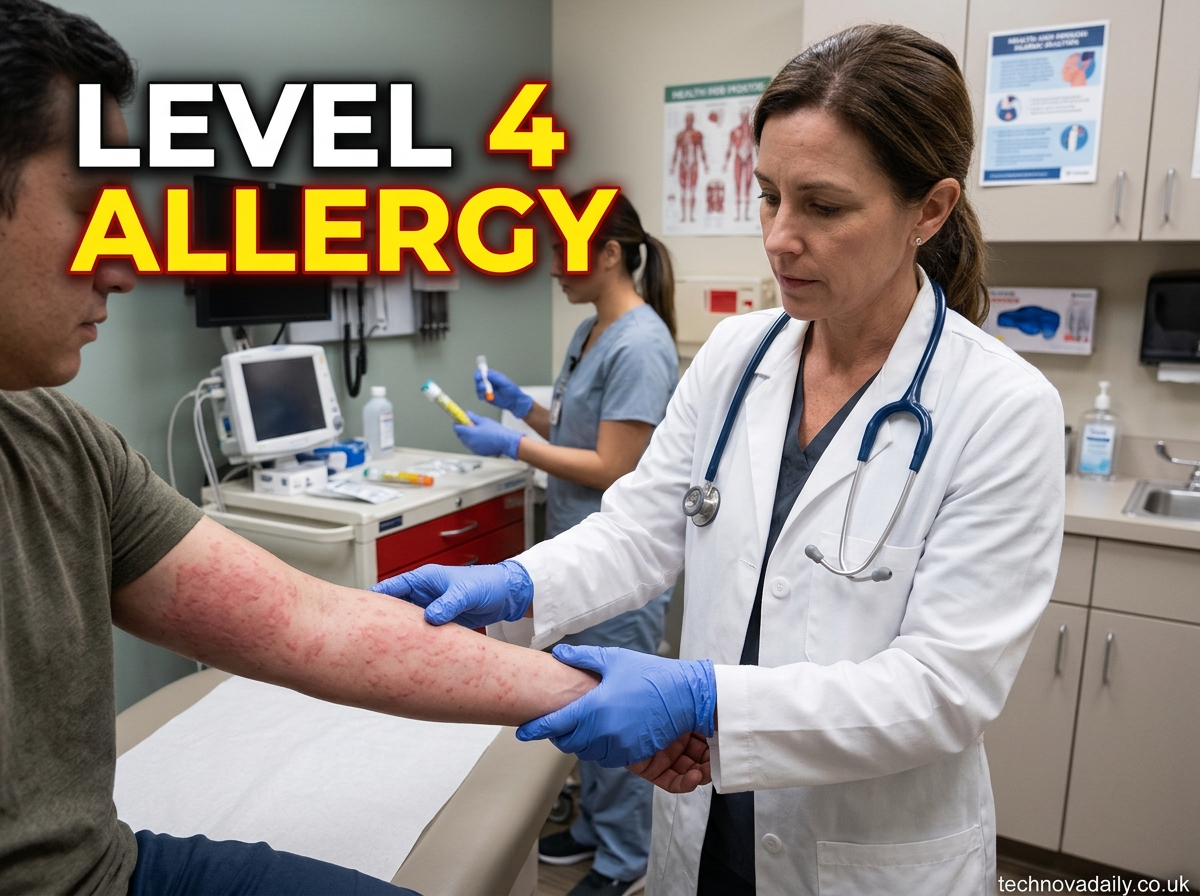
What Does Level 4 Allergy Mean?
A Level 4 allergy usually refers to a high result on an allergen-specific immunoglobulin E (IgE) blood test. This test measures antibodies that the immune system makes in response to substances such as peanuts, milk, pollen, dust mites, or animal dander. When the result falls into Class 4, it suggests that the blood contains a high amount of IgE antibodies against the substance tested.
However, a Level 4 allergy result does not automatically mean that a person will have a severe allergic reaction. The test shows immune system sensitization, but it cannot confirm by itself whether exposure will cause symptoms or how serious those symptoms might be. Doctors interpret the result alongside the person’s symptoms, medical history, and experience with the suspected allergen.
For example, someone may have a Class 4 result for peanut-specific IgE but may never have knowingly eaten peanuts. Another person may have the same result and develop symptoms after exposure. These situations need different assessments, which is why a healthcare professional should review the test before recommending major changes to a person’s diet or daily routine.
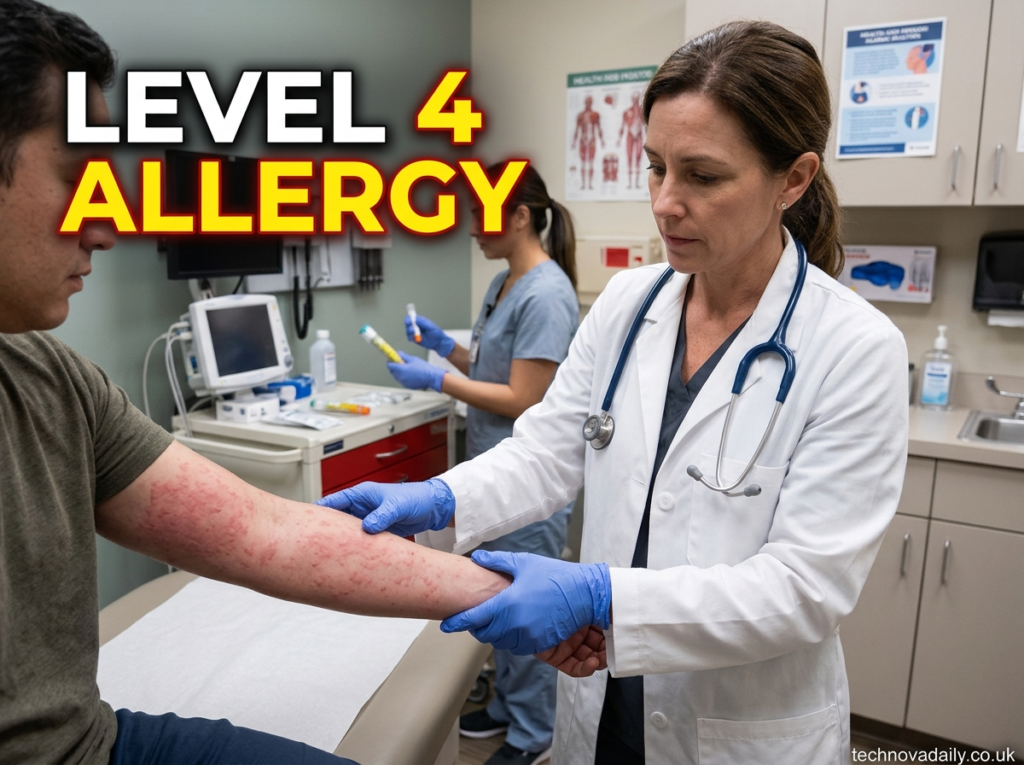
Is a Level 4 Allergy Severe?
A Level 4 allergy is generally considered a high specific IgE test result, but the number does not measure the severity of an allergic reaction. A person with a high result may experience mild symptoms, while someone with a lower result can still have a serious reaction. The level of IgE alone cannot tell a doctor exactly what will happen during future exposure.
Allergic reactions can range from sneezing, itching, and skin rashes to breathing problems and anaphylaxis. The type of allergen, the amount of exposure, the person’s medical history, and other health factors can affect the reaction. A history of a serious reaction is especially important when a doctor assesses future risk.
It is also important to distinguish an allergy test class from an anaphylaxis severity grade. Class 4 describes a laboratory result, whereas anaphylaxis is a potentially life-threatening reaction that can develop rapidly. If a person experiences throat or tongue swelling, difficulty breathing, faintness, or other signs of anaphylaxis, they need emergency medical care regardless of their allergy test result.
Level 4 Allergy Range and Blood Test Results
A specific IgE blood test measures the amount of IgE antibodies directed against a particular allergen. Many laboratories group these results into classes, ranging from Class 0 to Class 6. A Class 4 result commonly falls between 17.50 and 49.99 kU/L, although the exact classification depends on the laboratory and testing method.
| Allergy class | Approximate specific IgE level | General interpretation |
|---|---|---|
| Class 0 | Below 0.35 kU/L | Undetectable or very low |
| Class 1 | 0.35–0.69 kU/L | Low |
| Class 2 | 0.70–3.49 kU/L | Moderate |
| Class 3 | 3.50–17.49 kU/L | High |
| Class 4 | 17.50–49.99 kU/L | Very high |
| Class 5 | 50–99.99 kU/L | Very high |
| Class 6 | 100 kU/L or higher | Extremely high |
These figures are examples of a commonly used classification system, not universal reference ranges. Always check the reference range printed on your laboratory report. A result of 20 kU/L, for instance, may fall into Class 4 in one testing system, but the interpretation still depends on which allergen was tested and whether the person has symptoms.
Specific IgE testing is different from a total IgE test. Specific IgE measures antibodies against an individual allergen, while total IgE measures the overall amount of IgE in the blood. Neither result alone can confirm every allergy or predict exactly how severe a reaction will be.
What Symptoms Can a Level 4 Allergy Cause?
The symptoms associated with a Level 4 allergy depend on the allergen and the way a person encounters it. Airborne allergens such as pollen, dust mites, and animal dander may cause sneezing, a runny or blocked nose, itchy eyes, and coughing. Some people also experience wheezing or worsening asthma symptoms after exposure.
Food allergies can cause itching in the mouth, hives, swelling, vomiting, abdominal pain, or diarrhea. Symptoms may begin shortly after eating the food, although the timing can vary. Some reactions remain mild, while others can affect breathing or circulation. A high IgE result does not tell a person which symptoms they will develop.
Skin symptoms can include redness, itching, and raised welts known as hives. However, these signs can have causes other than allergies. Anyone experiencing repeated symptoms should discuss them with a healthcare professional rather than relying only on a blood test. Sudden breathing difficulty, throat swelling, collapse, or other signs of anaphylaxis require emergency treatment.
Which Allergens Can Show a Level 4 Result?
A Class 4 result can appear for many different allergens. Common examples include peanuts, tree nuts, milk, eggs, shellfish, pollen, dust mites, mold, and animal dander. The result relates to the specific substance included in the test, so a Class 4 result for one allergen does not automatically mean that other foods or environmental substances will cause a reaction.
For example, a person may have a high specific IgE result for house dust mites and experience year-round nasal congestion or sneezing. Another person may have a high result for a food allergen but have no known history of reacting to that food. The first situation may support an environmental allergy diagnosis if the symptoms match, while the second requires careful assessment before the food is labeled an allergy trigger.
Cross-reactivity can also affect results. This happens when the immune system recognizes similar proteins found in different substances. For instance, certain pollen allergies can be associated with reactions to particular raw fruits. An allergist can help determine whether a positive result reflects a clinical allergy, cross-reactivity, or sensitization without symptoms.
How Is a Level 4 Allergy Diagnosed?
Doctors usually diagnose allergies by combining a person’s medical history with examination findings and suitable allergy tests. A specific IgE blood test measures antibodies against selected allergens. A skin-prick test is another option in which small amounts of suspected allergens are introduced into the skin to check for a reaction. The choice depends on the person’s symptoms, medical history, medications, and other factors.
A positive blood test does not always mean a person has a clinical allergy. It may show sensitization, meaning the immune system recognizes the substance but exposure does not necessarily cause symptoms. This is why doctors ask about previous reactions, when symptoms occur, what triggers them, and whether the same pattern happens repeatedly.
In some cases, an allergist may recommend additional testing or a medically supervised oral food challenge. During this procedure, the person receives carefully measured amounts of a suspected food under medical supervision. It should not be attempted at home when a serious food allergy is possible. Test results should always be interpreted in the context of the person’s symptoms and history.
How Is a Level 4 Allergy Treated?
Treatment depends on the allergen, the symptoms, and the person’s risk of a serious reaction. If a food allergy is confirmed, a healthcare professional can explain how to avoid the trigger, read ingredient labels, and reduce the risk of accidental exposure. For environmental allergies, reducing exposure to dust mites, pollen, mold, or animal dander may help control symptoms.
Medicines may be recommended to manage particular symptoms. Antihistamines can help with some mild symptoms, such as itching, sneezing, and hives. Nasal sprays may help with allergic rhinitis, while asthma medicines may be needed for people who experience allergy-related breathing symptoms. The right treatment depends on the diagnosis, so people should follow advice from their healthcare professional.
People at risk of anaphylaxis may need a prescribed epinephrine auto-injector and a written emergency plan. Epinephrine is the first-line treatment for anaphylaxis. Antihistamines should not be used as a substitute for epinephrine when a severe reaction occurs. Allergen immunotherapy may help some people with certain environmental allergies, but it is not suitable for every allergen or every patient.
When Should You Seek Emergency Medical Help?
Anaphylaxis is a serious allergic reaction that can develop quickly and may become life-threatening. Warning signs include difficulty breathing, swelling of the tongue or throat, sudden dizziness, fainting, or symptoms affecting more than one body system. A severe reaction can occur even when a person has never previously experienced anaphylaxis.
If anaphylaxis is suspected, use a prescribed epinephrine auto-injector immediately according to the person’s emergency plan and call local emergency services. Do not wait to see whether symptoms improve on their own. Emergency medical assessment is needed even if symptoms begin to settle after epinephrine.
A Level 4 allergy test result by itself is not an emergency. The urgency depends on the person’s current symptoms and exposure. Someone with a high result but no symptoms should arrange an appropriate medical review, while someone experiencing signs of a severe allergic reaction needs immediate help regardless of their test class.
Level 4 Allergy in Children and Adults
Allergies can affect people at any age, and a Level 4 result should be interpreted according to the person’s symptoms and circumstances. In children, food allergies may involve milk, eggs, peanuts, tree nuts, or other foods. Environmental allergies can cause sneezing, itchy eyes, nasal congestion, or asthma symptoms. Parents should not remove several foods from a child’s diet based only on positive test results without medical guidance.
Adults may develop allergies to foods or environmental substances even if they had no problems with them earlier in life. Symptoms can vary from mild itching and nasal symptoms to more serious reactions. A doctor may consider other conditions, medications, and exposure patterns when deciding whether the test result explains the symptoms.
Children and adults with a Level 4 result should receive advice based on their individual risk. An allergist can help identify confirmed triggers, explain precautions, and decide whether an emergency plan or further testing is needed. Avoiding foods unnecessarily can make nutrition harder, especially for children, so dietary changes should be guided by an appropriate assessment.
Frequently Asked Questions About Level 4 Allergy
What does Level 4 allergy mean on a blood test?
Level 4 usually means a high concentration of allergen-specific IgE antibodies was detected. It suggests sensitization to the tested substance, but it does not confirm by itself that exposure will cause symptoms.
Is a Level 4 allergy considered high?
Yes. In commonly used specific IgE classification systems, Class 4 is considered a high or very high result. However, the laboratory’s reference range and the person’s clinical history must be considered.
Can a Level 4 allergy cause anaphylaxis?
Yes, a person with a Class 4 result may experience anaphylaxis, but the result cannot predict whether a severe reaction will occur. A lower result does not rule out anaphylaxis either.
What is the normal range for a Level 4 allergy?
Class 4 commonly corresponds to specific IgE levels of approximately 17.50–49.99 kU/L. This is a classification range, not a universal definition of allergy or a measure of reaction severity.
Can a Level 4 allergy go away?
Some allergies change over time, but the outcome depends on the allergen and the person. Certain childhood food allergies may be outgrown, while others can persist. Follow-up testing and medical assessment can help determine whether an allergy remains present.
Does a Level 4 allergy mean I must avoid that food?
Not necessarily. A positive test may indicate sensitization without a clinical allergy. If you have never reacted to the food, consult an allergist before removing it from your diet or trying it as a test.
What is the difference between Level 3 and Level 4 allergies?
Class 3 generally indicates a lower specific IgE concentration than Class 4. Both results show antibody levels, not a direct ranking of how severe an allergic reaction will be.
Should I see an allergist for a Level 4 result?
An allergist can help interpret the result, especially if you have symptoms, a suspected food allergy, asthma, or a history of allergic reactions. They can also determine whether further testing or an emergency treatment plan is needed.
Conclusion
A Level 4 allergy generally indicates a high specific IgE blood test result against a particular allergen. It can help doctors assess possible allergies, but it does not establish how severe a reaction will be or confirm an allergy without considering symptoms and medical history.
