



In short: A TSH (thyroid-stimulating hormone) blood test measures how much TSH your pituitary gland is releasing to tell your thyroid what to do. It is the most common first test for checking thyroid function and helps doctors screen for and monitor an underactive thyroid (hypothyroidism) or an overactive thyroid (hyperthyroidism). Fasting is usually not required, and results are normally ready within one day.
If you have felt unusually tired, gained or lost weight without explanation, or noticed changes in your heartbeat, your doctor may suggest a TSH blood test. This guide explains what the test measures, why it is ordered, how to prepare, what the normal range is, and what high or low results can mean.
What is a TSH blood test?
A TSH blood test measures the amount of thyroid-stimulating hormone in your blood. TSH is made by the pituitary gland, a small gland at the base of the brain. Its job is to signal the thyroid gland in your neck to produce two hormones: thyroxine (T4) and triiodothyronine (T3). These hormones control metabolism, heart rate, body temperature, energy levels and many other body functions.
The system works like a thermostat. When thyroid hormone levels in the blood fall, the pituitary releases more TSH to push the thyroid to work harder. When thyroid hormone levels are high, the pituitary releases less TSH. This is why TSH is such a sensitive marker: even a small change in thyroid hormones causes a noticeable change in TSH.
Why is a TSH blood test done?
Doctors order a TSH test for several reasons:
- To investigate symptoms. Common signs of an underactive thyroid include fatigue, weight gain, dry skin, constipation, feeling cold, hair thinning and low mood. Signs of an overactive thyroid include weight loss, fast or irregular heartbeat, anxiety, tremor, sweating, feeling hot and trouble sleeping.
- To screen people at higher risk. This includes people with a family history of thyroid disease, an autoimmune condition such as type 1 diabetes, or a previous thyroid problem.
- To monitor treatment. People taking thyroid medicine such as levothyroxine need regular TSH tests so the dose can be adjusted.
- During pregnancy or when trying to conceive. Thyroid function matters for both the mother and the baby’s development.
- To check the cause of other problems, such as unexplained high cholesterol, infertility, irregular periods or a visible swelling in the neck (goiter).
How to prepare for a TSH blood test
Most people do not need to do anything special. A few points are worth knowing:
- Fasting is usually not required. Unless your doctor is testing other things at the same visit (such as blood sugar or cholesterol), you can eat and drink normally.
- Tell your doctor about biotin (vitamin B7). Biotin in hair, skin and nail supplements can interfere with some lab methods and give misleading thyroid results. Your doctor may ask you to stop it for a couple of days or longer before the test, depending on the dose. Do not stop any prescribed medicine without advice.
- Mention all medicines and supplements. Steroids, dopamine, amiodarone, lithium and some other drugs can change thyroid test results.
- Ask about your thyroid tablet timing. If you take levothyroxine, your doctor may tell you whether to take it before or after the blood draw.
- Try to test at a consistent time. TSH naturally varies through the day and tends to be higher at night and early morning. Having repeat tests at a similar time of day makes comparisons more reliable.
How is the TSH test done?
The test is a simple blood draw and takes only a few minutes.
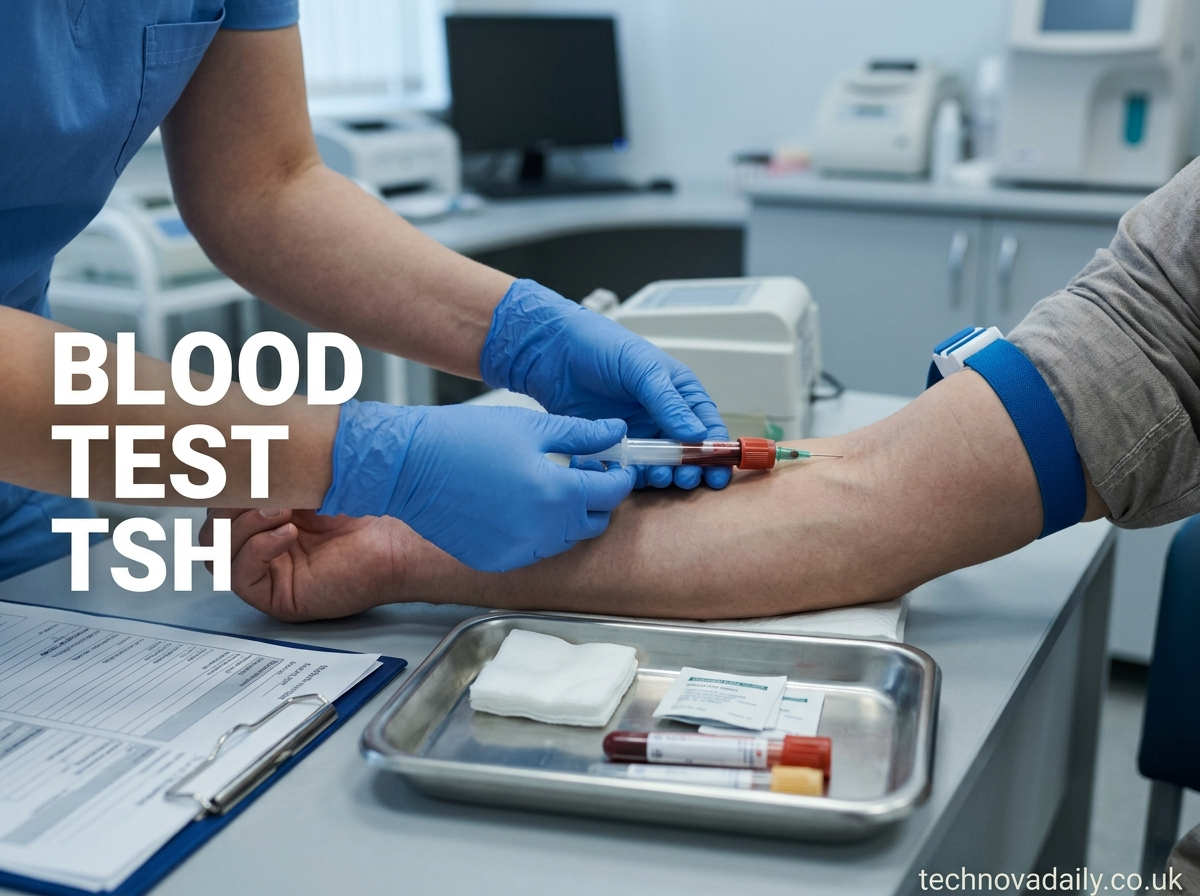
- A healthcare professional cleans the skin on your arm and ties a band above the site.
- A small needle takes a blood sample from a vein, usually at the inner elbow.
- The sample is sent to a laboratory for analysis.
- Results are usually available within 24 hours, though timing depends on the lab.
You may feel a brief sting, and some people notice mild bruising afterwards. Many labs also offer home sample collection.
What is the normal TSH range?
For most healthy adults, a normal TSH level falls roughly between 0.4 and 4.0 mIU/L (milli-international units per liter). Some laboratories use slightly different limits, for example 0.5 to 4.5 mIU/L, so always compare your result with the reference range printed on your own lab report.
| Group | Typical TSH reference range (mIU/L) |
|---|---|
| Adults | About 0.4 to 4.0 |
| Older adults | Upper limit may be slightly higher |
| Newborns and infants | Higher than adults; interpreted using age-specific ranges |
| Children and teenagers | Age-specific ranges set by the lab |
| Pregnancy | Lower upper limit than non-pregnant adults; trimester-specific or local ranges are preferred |
During pregnancy, TSH often falls slightly, especially in the first trimester. Doctors use pregnancy-specific ranges, so do not rely on the general adult range if you are pregnant. A result outside the range does not automatically mean disease. It tells your doctor whether further testing is needed.
What does a high TSH level mean?
A high TSH usually means your thyroid is not producing enough hormone, so the pituitary is working harder to stimulate it. This pattern is called primary hypothyroidism. The most common cause is Hashimoto’s thyroiditis, an autoimmune condition. Other causes include iodine deficiency, previous thyroid surgery or radioactive iodine treatment, certain medicines, and being under-treated while on thyroid medication.
Typical symptoms include tiredness, weight gain, constipation, dry skin, feeling cold, slow heart rate, muscle aches and depression.
A mildly raised TSH with normal T4 is called subclinical hypothyroidism. Doctors often repeat the test after a few weeks and may check thyroid antibodies before deciding whether treatment is needed.
What does a low TSH level mean?
A low TSH usually means the thyroid is making too much hormone, so the pituitary reduces its TSH output. This pattern is called hyperthyroidism. Common causes include Graves’ disease, thyroid nodules that overproduce hormone, thyroiditis, and taking too much thyroid medicine.
Symptoms can include weight loss despite normal appetite, rapid or irregular heartbeat, anxiety, tremor, heat intolerance, sweating and frequent bowel movements.
Less commonly, a low TSH can result from a problem with the pituitary gland itself (central hypothyroidism), where TSH is low but thyroid hormone levels are also low. Severe illness and some medicines can also lower TSH temporarily.
What can affect TSH test results?
A TSH result does not always reflect thyroid health alone. Factors that can change it include:
- Biotin supplements, which can distort lab readings
- Medicines such as steroids, amiodarone, lithium and dopamine
- Pregnancy and the stage of pregnancy
- Recent or ongoing illness, especially serious illness or hospital stay
- Time of day the sample was taken
- Recent imaging with iodine contrast
- Age
If a result looks unexpected, your doctor may simply repeat the test or add other thyroid tests.
Other thyroid tests your doctor may order
TSH is often the first test, but it is rarely interpreted in isolation. Depending on your result and symptoms, your doctor may add:
- Free T4 and free T3: to measure the actual thyroid hormones in the blood
- Thyroid antibodies (anti-TPO, anti-thyroglobulin): to look for autoimmune thyroid disease such as Hashimoto’s
- TSH receptor antibodies: to help diagnose Graves’ disease
- Thyroid ultrasound: to look at the gland and any nodules
TSH test cost and availability
Prices vary widely by country, city and lab. A TSH test is generally among the more affordable blood tests, and it is often offered alone or as part of a thyroid profile that includes T3 and T4. Many diagnostic labs provide home collection and online reports. If you have health insurance or a public health service, a doctor’s referral may reduce or remove the cost. Check with your local lab for current pricing.
When should you see a doctor?
See a doctor if you have symptoms that could point to a thyroid problem, if your TSH result is outside the reference range, or if you are pregnant or planning pregnancy and have never had your thyroid checked. Seek urgent care for a very fast or irregular heartbeat, chest pain, confusion, severe weakness or extreme sensitivity to cold, as these can indicate serious thyroid-related conditions.
If you already take thyroid medicine, keep your follow-up tests. Doses are usually rechecked about 6 to 8 weeks after any change, then at regular intervals.
Frequently asked questions
Do I need to fast for a TSH blood test?
No, fasting is usually not required for a TSH test. You can eat and drink normally unless your doctor is also testing blood sugar, cholesterol or other values that need fasting.
What is the normal TSH range?
For adults, the normal TSH range is roughly 0.4 to 4.0 mIU/L, though some labs use slightly different limits. Children, older adults and pregnant women have different reference ranges, so always use the range on your lab report.
Can a TSH test detect thyroid cancer?
No. A TSH test shows how well the thyroid is functioning but cannot diagnose thyroid cancer. If a nodule or lump is suspected, doctors use ultrasound and sometimes a needle biopsy.
How often should I get a TSH test?
It depends on your situation. People on thyroid medicine are usually tested every 6 to 12 months once their dose is stable, and 6 to 8 weeks after dose changes. People without symptoms or risk factors may not need regular testing. Follow your doctor’s advice.
Can stress or anxiety change my TSH?
Ordinary day-to-day stress is unlikely to change TSH significantly, but serious physical illness can. Stress can cause symptoms that mimic thyroid problems, which is one reason a blood test is useful.
What is the difference between TSH and T3/T4?
TSH is made by the pituitary gland and tells the thyroid to produce hormones. T3 and T4 are the hormones the thyroid itself produces. TSH usually changes first when thyroid function shifts, which is why it is the standard screening test.
Can I take a TSH test at home?
Some labs offer home blood collection, and some kits allow finger-prick sampling that is mailed to a lab. Results should still be reviewed by a doctor, especially if they are abnormal.
Key takeaways
- A TSH blood test is the standard first test for thyroid function.
- Fasting is usually unnecessary, but tell your doctor about biotin and other supplements.
- The typical adult range is about 0.4 to 4.0 mIU/L, but use your lab’s own range.
- High TSH usually points to an underactive thyroid; low TSH usually points to an overactive one.
- An abnormal result needs follow-up testing and a doctor’s interpretation, not self-diagnosis.
