



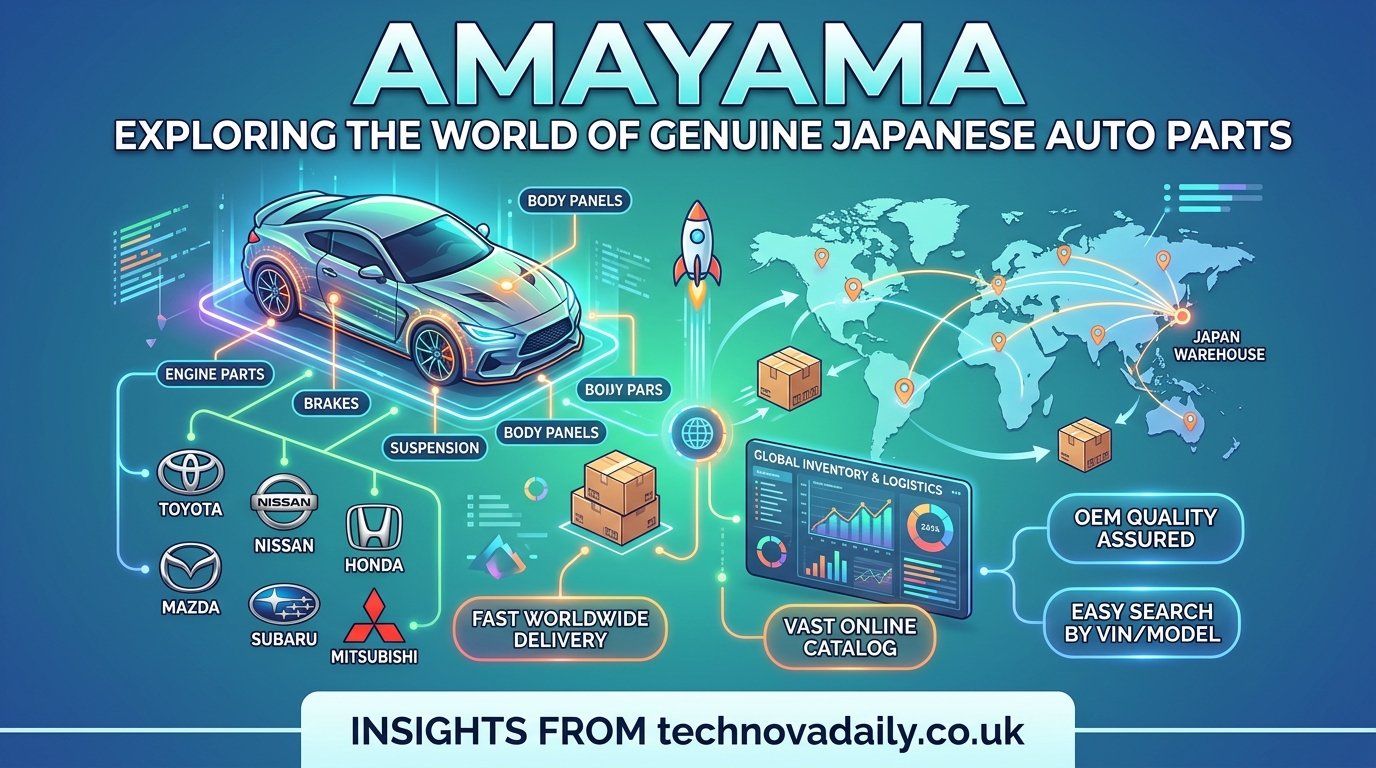
Japanese vehicles have earned a global reputation for reliability, long-term durability, engineering precision, and strong resale value. Brands like Toyota, Honda, Nissan, Subaru, Mazda, Mitsubishi, Suzuki, Lexus, and Infiniti dominate roads across Asia, Europe, North America, the Middle East, Africa, and Australia. As these vehicles age, owners often face one major challenge: finding genuine OEM replacement parts at reasonable prices. Many dealerships charge premium rates, local suppliers may stock only aftermarket alternatives, and discontinued components can become extremely difficult to locate. This growing demand for authentic Japanese auto parts has made Amayama one of the most recognized names in the international OEM automotive parts industry.
Amayama has become especially popular among mechanics, car enthusiasts, restoration experts, import vehicle owners, and people maintaining Japanese Domestic Market vehicles. The company focuses on supplying genuine factory-original parts sourced from Japanese manufacturers and official supply channels. Unlike generic aftermarket marketplaces, Amayama specializes in OEM components that are designed specifically for each vehicle model according to factory engineering standards. This has helped the platform build trust among buyers who prioritize reliability, fitment accuracy, and long-term vehicle performance.
The global automotive parts market has changed significantly over the last decade. More drivers are keeping vehicles longer because modern Japanese cars can often exceed hundreds of thousands of kilometers with proper maintenance. At the same time, automotive enthusiasts continue restoring classic models like the Toyota Supra, Nissan Skyline GT-R, Honda S2000, Subaru WRX STI, and older Land Cruiser generations. These trends have increased demand for specialized OEM suppliers capable of sourcing difficult-to-find components from Japan and other international markets. Amayama has positioned itself as one of the key platforms serving this growing global audience.
Understanding What Amayama Actually Is
Amayama is an online automotive parts supplier that specializes primarily in genuine OEM parts for Japanese vehicles. The company provides access to thousands of factory-original components covering major Japanese manufacturers including Toyota, Lexus, Nissan, Infiniti, Honda, Mazda, Mitsubishi, Subaru, Suzuki, Isuzu, Daihatsu, and Hino. Instead of focusing heavily on aftermarket replacements, the platform concentrates on authentic manufacturer-approved parts that match the exact specifications used during original vehicle production.
One of the defining features of Amayama is its catalog system. Customers can search for parts using VIN numbers, OEM part numbers, model details, production dates, chassis codes, and illustrated factory diagrams. This level of detail is extremely important because Japanese vehicles often have regional variations, trim-level differences, engine-specific components, and market-specific configurations. A single model may use different parts depending on production year or destination country, so accurate identification is critical.
The company also serves customers globally rather than limiting sales to Japan. Vehicle owners from the United States, Canada, Australia, New Zealand, the United Kingdom, Europe, the Middle East, Southeast Asia, and Africa regularly use the platform to source hard-to-find OEM components. This international approach has made Amayama especially valuable for owners of imported vehicles whose local dealerships may not support Japanese-market configurations.
Why Genuine OEM Parts Matter for Japanese Vehicles
OEM stands for Original Equipment Manufacturer, meaning the parts are produced according to the same standards and specifications used during vehicle assembly. Genuine OEM components are designed specifically for compatibility with factory systems, making them highly desirable for maintaining long-term reliability and performance. Many mechanics and automotive engineers prefer OEM parts because they eliminate uncertainty regarding fitment and quality.
Japanese vehicles are engineered with extremely tight tolerances, particularly in areas like engine management systems, suspension geometry, electronic sensors, transmission assemblies, and fuel systems. Aftermarket alternatives may sometimes fit physically but fail to perform correctly over time. Poor-quality aftermarket sensors, bushings, ignition components, or gaskets can lead to recurring mechanical problems, reduced efficiency, or even damage to surrounding systems. This is one reason many Toyota, Honda, Lexus, Subaru, and Nissan owners insist on genuine parts whenever possible.
The value of OEM parts becomes even more significant for performance vehicles and collectible models. Enthusiasts restoring older Japanese sports cars often prioritize factory authenticity because original specifications influence both performance and resale value. Collectors searching for rare trim pieces, original suspension components, weather seals, interior clips, or factory accessories frequently turn to international suppliers like Amayama when local inventories are unavailable.
Another important factor is durability. Genuine Japanese OEM components are typically tested according to strict manufacturer standards before approval for production use. While some aftermarket brands produce excellent alternatives, low-cost replacement parts may wear faster or create compatibility issues. This is particularly relevant for timing system components, brake assemblies, electrical modules, steering systems, and engine seals where reliability directly affects vehicle safety and performance.
The Growing Global Demand for Japanese OEM Auto Parts
The popularity of Japanese vehicles has expanded dramatically over the past several decades. Toyota alone sells millions of vehicles annually across nearly every major market worldwide. Honda, Nissan, Mazda, Subaru, and Mitsubishi have similarly established strong international reputations for quality engineering and reliability. As these vehicles remain on the road longer, the need for replacement parts continues increasing.
Another major factor driving OEM demand is the growing interest in Japanese Domestic Market vehicles. JDM culture has expanded far beyond Japan and now influences automotive communities worldwide. Cars like the Nissan Silvia, Toyota Chaser, Honda Integra Type R, Mitsubishi Lancer Evolution, Mazda RX-7, and Subaru WRX STI have developed cult followings among enthusiasts. Because many of these vehicles were never officially sold in certain regions, sourcing accurate replacement parts can become extremely difficult through traditional dealership networks.
Older SUVs and utility vehicles also contribute heavily to demand. Toyota Land Cruisers, Hilux trucks, Nissan Patrols, and Mitsubishi Pajeros are known for exceptional longevity and are often maintained for decades. Owners restoring or preserving these vehicles frequently need discontinued parts, specialized hardware, factory seals, or engine components unavailable through local channels. International OEM suppliers help bridge this supply gap.
The rise of online automotive communities has also increased awareness of companies like Amayama. Enthusiasts share repair experiences, restoration projects, maintenance guides, and supplier recommendations across forums, Reddit communities, Facebook groups, and YouTube channels. As more drivers discover alternatives to expensive dealership pricing, international OEM suppliers continue gaining popularity.
How Amayama Helps Owners Find Rare and Discontinued Parts
One of the biggest advantages of Amayama is access to rare and discontinued components. Local dealerships often stop stocking parts for older vehicles after a certain number of years, particularly in smaller markets. However, Japanese manufacturers may still have remaining inventory available through regional warehouses or export supply chains. Amayama helps connect global buyers with these inventories.
This becomes especially important for restoration projects. Older vehicles frequently require small components that are difficult to source, such as clips, seals, interior trim pieces, dashboard hardware, weatherstripping, wiring connectors, or specialized fasteners. While these parts may seem minor, they are often essential for completing proper restorations or maintaining factory originality.
Classic Toyota and Nissan enthusiasts frequently rely on international OEM sourcing to preserve iconic vehicles. Owners restoring older Supras, Celicas, Skylines, and Land Cruisers often search for exact factory parts to maintain authenticity. Even small differences in trim or mechanical specifications can affect collector value, making OEM sourcing highly desirable.
Amayama’s illustrated diagrams also provide a major advantage during restoration work. Exploded parts views allow users to identify surrounding hardware and related components that might otherwise be overlooked. This reduces the risk of incomplete repairs and helps enthusiasts order all necessary parts at once rather than discovering missing items later.
VIN Searches, Part Numbers, and Catalog Accuracy
Finding the correct part for a Japanese vehicle requires careful verification. Japanese automakers frequently update part numbers, revise components during production cycles, and create region-specific configurations. Because of this complexity, Amayama’s VIN search capability is one of its most important features.
A VIN, or Vehicle Identification Number, contains detailed information about a vehicle’s production specifications. By using VIN-based searches, customers can identify exact components associated with their car’s engine type, transmission, trim level, production date, and factory configuration. This greatly reduces compatibility mistakes.
OEM part numbers are equally important. Experienced mechanics often recommend searching by exact manufacturer part numbers whenever possible. Even vehicles that appear identical may use different components depending on market or production year. Searching manually by vehicle model alone can sometimes lead to incorrect orders if multiple variations exist.
Illustrated diagrams further improve accuracy by showing how components fit within assemblies. These diagrams are particularly helpful for complex systems like suspension assemblies, engine internals, HVAC systems, steering racks, and body trim installations. Users can visually confirm related parts before purchasing, helping prevent ordering errors.
Because manufacturers occasionally supersede older part numbers with updated versions, Amayama’s catalog system also helps users identify replacement numbers for discontinued items. This feature is especially valuable when maintaining aging vehicles where original numbers may no longer appear in standard dealership systems.
International Shipping and Delivery Experience
International shipping is one of the defining aspects of ordering from Amayama. The company operates through multiple sourcing and warehouse locations, including facilities in Japan and the United Arab Emirates. Depending on inventory availability, some parts may ship directly from Japan while others are sourced from regional warehouses closer to the destination country.
Shipping times vary based on several factors. In-stock items may dispatch relatively quickly, while rare or backordered components can require additional sourcing time. Customs processing, regional logistics conditions, and local courier performance also influence delivery speed. Customers ordering internationally typically understand that OEM sourcing differs from domestic same-day shipping models.
Packaging quality is frequently mentioned positively in customer feedback. Genuine OEM parts generally arrive in original manufacturer packaging with factory labels and identification numbers intact. This reassures buyers concerned about counterfeit components or damaged goods.
Shipping costs, however, can sometimes surprise first-time buyers. Large body panels, suspension assemblies, wheels, glass components, or heavy mechanical parts may generate substantial freight charges because international shipping rates often depend on package dimensions as much as weight. Smaller maintenance parts typically offer the best overall value when ordered internationally.
Many experienced buyers combine multiple items into single orders to maximize shipping efficiency. This approach helps reduce overall transportation costs while ensuring all required components arrive together. Planning maintenance projects carefully before ordering can improve both cost savings and repair efficiency.
Customer Reviews and Reputation in Automotive Communities
Automotive communities play a major role in shaping the reputation of international parts suppliers. Amayama is frequently discussed on forums, Reddit groups, YouTube channels, and social media communities focused on Japanese vehicles. Overall, the company maintains a largely positive reputation among enthusiasts who prioritize OEM authenticity.
Many customer reviews highlight successful orders involving hard-to-find components for Toyota, Lexus, Subaru, Honda, and Nissan vehicles. Buyers often praise the ability to source genuine factory parts unavailable through local dealerships. Restoration enthusiasts especially appreciate access to discontinued trim pieces and model-specific hardware.
Trust is extremely important in the automotive parts industry because counterfeit products remain a significant problem worldwide. Customers value suppliers capable of delivering authentic manufacturer components with original packaging and verified part numbers. Positive long-term experiences shared by repeat customers have contributed significantly to Amayama’s credibility.
Most criticisms focus on delays rather than authenticity. Because parts are sourced internationally, some orders may require additional processing time. Backorders, warehouse transfers, and customs inspections can extend delivery schedules beyond customer expectations. However, experienced users generally accept these delays as part of international OEM sourcing.
Automotive forums often recommend Amayama alongside other specialized Japanese OEM suppliers when discussing maintenance or restoration projects. This consistent presence in enthusiast communities reflects the company’s strong recognition within the global Japanese automotive market.
Why Amayama Is Popular Among JDM Enthusiasts
JDM enthusiasts represent one of the strongest customer groups for Amayama. Japanese Domestic Market vehicles often contain unique features, engine options, trim packages, and components unavailable in export markets. Maintaining these vehicles requires access to accurate factory parts specifically designed for Japanese-market configurations.
Cars like the Nissan Skyline GT-R, Toyota Chaser, Honda Beat, Mitsubishi Lancer Evolution, Subaru Legacy GT, and Mazda RX-7 have become increasingly collectible worldwide. Many owners invest heavily in preserving originality because factory-correct restorations significantly influence vehicle value and authenticity.
Performance modifications also increase demand for OEM components. Even highly modified vehicles still require genuine seals, sensors, brackets, bearings, bushings, clips, and electrical connectors to maintain reliability. Enthusiasts often combine aftermarket performance upgrades with OEM maintenance components to preserve drivability and long-term durability.
Japanese SUVs and trucks also maintain strong enthusiast communities. Land Cruiser and Hilux owners frequently rely on OEM sourcing for off-road durability and reliability. Many of these vehicles operate in harsh environments where genuine factory components perform better over extended periods.
The global rise of Japanese car culture has strengthened demand for authentic parts and accessories. Enthusiasts increasingly value originality, factory engineering, and proper restoration methods, all of which support the continued popularity of specialized OEM suppliers like Amayama.
Pricing Advantages and Overall Value
One of the primary reasons buyers choose Amayama is pricing. Genuine OEM parts purchased through local dealerships can be extremely expensive, especially in countries where imported vehicles are uncommon. International suppliers often provide the same components at significantly lower base prices because they source directly from Japanese or regional inventories.
Toyota and Lexus owners frequently compare international OEM prices with local dealership quotes and discover substantial savings on maintenance components, trim pieces, and mechanical assemblies. Subaru and Mitsubishi enthusiasts similarly use international sourcing to reduce restoration and maintenance costs.

However, evaluating value requires considering total landed cost rather than listed product price alone. Shipping charges, import taxes, customs duties, and currency exchange rates all influence final expense. Smaller components generally provide the best savings potential, while oversized items may become expensive to transport internationally.
Despite these additional costs, many customers still prefer international OEM sourcing because it provides access to genuine factory components that local markets either cannot supply or price excessively high. For rare vehicles and restoration projects, availability itself often matters more than absolute cost.
Long-term reliability also contributes to value. Genuine OEM parts may cost more upfront than low-quality aftermarket alternatives, but they often last longer and reduce the likelihood of repeated repairs. Many experienced vehicle owners view OEM components as an investment in reliability and long-term ownership satisfaction.
Conclusion
Amayama has established itself as one of the most recognized names in the global Japanese OEM auto parts industry. By specializing in genuine factory-original components for Toyota, Honda, Nissan, Subaru, Mazda, Mitsubishi, Lexus, Infiniti, Suzuki, and other Japanese manufacturers, the company serves a growing international market of vehicle owners who prioritize authenticity, reliability, and accurate fitment.
