



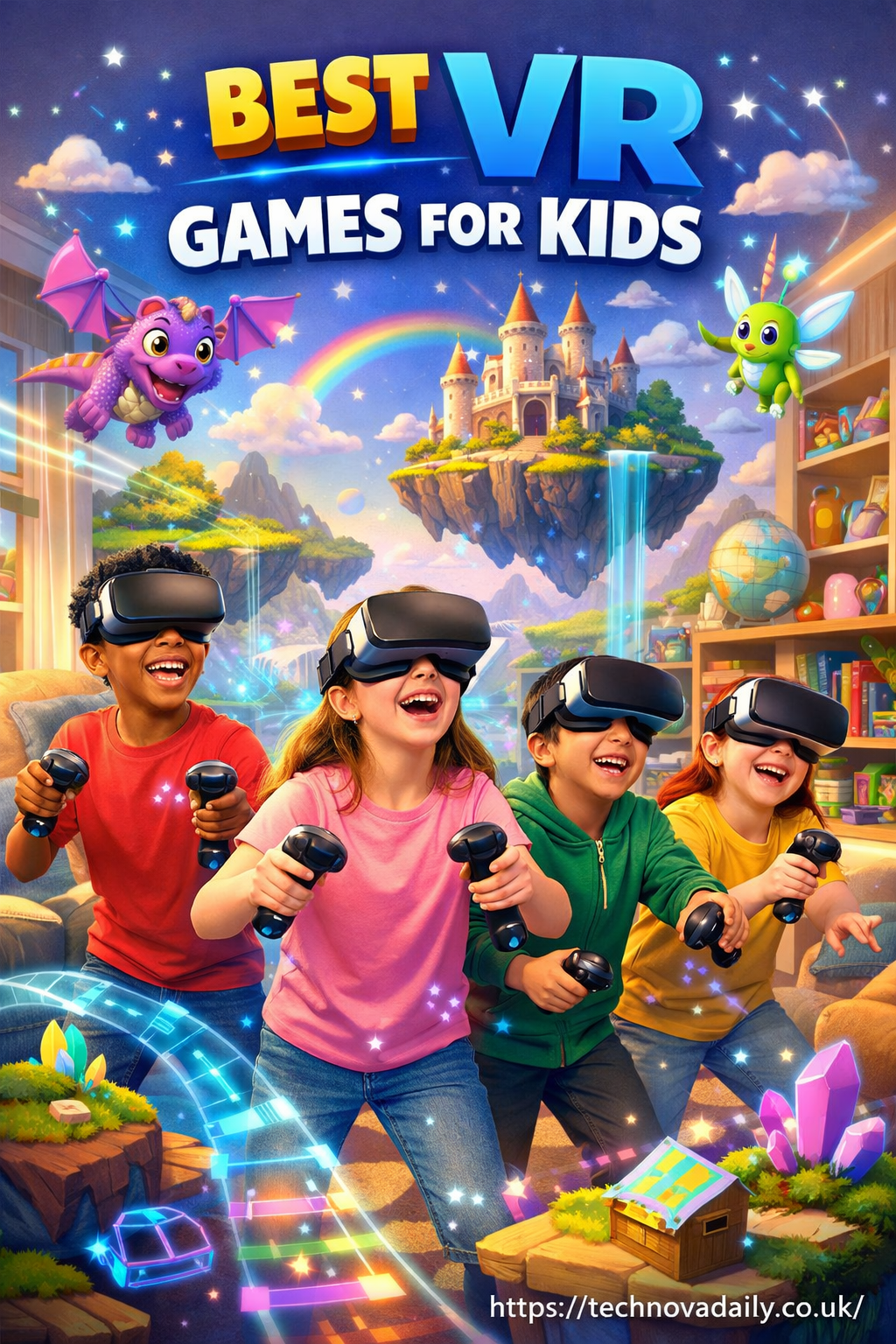
Virtual reality has transformed the way children experience games, turning passive screen time into fully interactive adventures. Instead of simply watching characters on a display, kids can step inside colorful worlds, solve puzzles with their hands, and explore environments that feel real. As VR technology becomes more accessible, many parents are searching for the best VR games for kids that are not only fun but also safe, educational, and age-appropriate.
The growing popularity of VR gaming for children is closely tied to its ability to combine entertainment with learning. From improving coordination to encouraging creativity and problem-solving, VR games offer benefits that traditional gaming often cannot match. However, choosing the right titles requires careful consideration of content, design, and comfort. This article provides a Kids complete guide to the best VR games for kids, along with expert insights, safety tips, and practical advice to help parents make informed decisions.
Understanding VR Gaming for Kids
Virtual reality gaming allows children to interact with digital environments in a three-dimensional space using a headset and motion controllers. This immersive experience creates a sense of presence, meaning children feel like they are actually inside the game. Unlike standard video games, VR engages multiple senses, including sight, sound, and movement, which makes gameplay more engaging and memorable.
For kids, this level of immersion can significantly enhance learning and creativity. Educational VR experiences can simulate real-world environments such as space exploration, underwater ecosystems, or historical settings. These interactive scenarios help children understand complex concepts more easily because they can see and interact with them rather than just reading or watching.
Another important aspect of VR gaming is its ability to encourage active participation. Many VR games require physical movement, which can help improve coordination and motor skills. This makes VR gaming a more dynamic and physically engaging alternative compared to traditional sedentary screen time.
Why VR Games Are Popular Among Children
Children are naturally drawn to experiences that spark imagination, and VR provides exactly that. The ability to explore fantasy worlds, interact with characters, and influence outcomes makes VR gaming incredibly appealing. It allows kids to feel like heroes in their own stories, which enhances emotional engagement and enjoyment.
The diversity of VR games also contributes to their popularity. There are adventure games, creative tools, puzzle challenges, and simulation experiences designed specifically for younger audiences. This variety ensures that every child can find something that matches their interests, whether they enjoy art, science, storytelling, or sports.
In addition, VR gaming offers a sense of novelty that traditional games cannot replicate. The excitement of wearing a headset and stepping into a virtual world creates a unique experience that feels fresh and exciting. This novelty factor keeps children engaged and eager to explore new games and environments.
Safety Considerations for VR Gaming
While VR gaming offers many benefits, safety should always be a top priority for parents. Most VR headset manufacturers recommend a minimum age of around 12 years, mainly due to concerns about eye development and motion sensitivity. Younger children can still use VR under supervision, but sessions should be limited and carefully monitored.
One of the most common issues associated with VR is motion sickness. Some Kids children may feel dizzy or uncomfortable, especially when using games with fast movement or complex visuals. To reduce this risk, parents should choose games designed with comfort in mind, including those with smooth motion and simple controls.
Physical safety is equally important. Because VR blocks the real-world view, children may accidentally bump into objects or lose balance. Setting up a clear play area and using boundary systems can help prevent accidents. Regular breaks, proper headset fit, and supervision are essential to ensure a safe and enjoyable experience.
Characteristics of the Best VR Games for Kids
The best VR games for kids share several key characteristics that make them suitable for younger audiences. First, they focus on positive and engaging content rather than violence or intense competition. Bright visuals, friendly characters, and simple storytelling are common features that appeal to children.
Ease of use is another important factor. Kid-friendly VR games typically have intuitive controls that are easy to learn, allowing children to focus on the experience rather than struggling with complicated mechanics. This accessibility makes the games enjoyable even for beginners.
Educational value also plays a significant role in defining high-quality VR games for kids. Many top titles incorporate elements of learning, such as problem-solving, creativity, and critical thinking. These games provide a balance between fun and development, making them a valuable addition to a child’s digital activities.
Best Adventure and Exploration VR Games
Adventure and exploration games are among the most popular VR genres for children. These games allow kids to journey through imaginative worlds, solve puzzles, and uncover hidden secrets. The immersive nature of VR makes these experiences feel like real adventures, which enhances engagement and excitement.
In these games, children often take on the role of a character and interact with the environment to progress through the story. This encourages problem-solving and critical thinking, as players must figure out how to overcome obstacles and complete objectives. The sense of achievement gained from completing challenges can boost confidence and motivation.
Exploration-based VR games also promote curiosity. Whether it is discovering new landscapes or interacting with unique characters, these experiences encourage children to ask questions and learn more about the world around them. This combination of entertainment and discovery makes adventure VR games highly beneficial for young players.
Creative and Artistic VR Experiences
Creative VR games offer children a platform to express themselves in unique and imaginative ways. Unlike traditional art tools, VR allows kids to create in three-dimensional space, giving them the freedom to design and build without limitations. This type of gameplay encourages innovation and artistic exploration.
These experiences often include tools for drawing, painting, sculpting, or designing virtual objects. Children can experiment with colors, shapes, and textures, developing their artistic skills while having fun. The immersive nature of VR makes the creative process more engaging and interactive.
Creative VR games also help improve cognitive skills such as spatial awareness and problem-solving. By manipulating objects in a 3D environment, children learn how to think critically and visualize ideas. This makes creative VR experiences both entertaining and educational.
Educational VR Games That Support Learning
Educational VR games are designed to make learning more interactive and enjoyable. These games cover a wide range of subjects, including science, history, geography, and mathematics. By turning lessons into immersive experiences, VR helps children understand complex topics more easily.
For example, a child can explore the solar system, walk through ancient civilizations, or dive into the ocean to learn about marine life. These experiences provide a deeper understanding compared to traditional teaching methods because they engage multiple senses and create lasting memories.
In addition to subject-based learning, educational VR games also develop important skills such as critical thinking, problem-solving, and decision-making. These skills are essential for academic success and personal growth, making educational VR games a valuable tool for children.
Casual and Fun VR Games for Younger Players
Casual VR games are perfect for younger children or those new to virtual reality. These games focus on simple mechanics and short play sessions, making them easy to understand and enjoyable without being overwhelming. They often include playful activities such as throwing, catching, or interacting with objects.
These games are designed to be lighthearted and stress-free, providing entertainment without complex challenges. This makes them ideal for younger players who may not yet have the skills or patience for more advanced games. The simplicity of these experiences ensures that children can have fun without frustration.
Casual VR games also help children build confidence as they become familiar with VR technology. By starting with easy and enjoyable experiences, kids can gradually develop the skills needed to explore more advanced games in the future.
Social and Multiplayer VR Experiences
Social VR games allow children to interact with others in virtual environments. These experiences can include playing mini-games, building virtual worlds, or simply exploring spaces together. For kids, this adds a social element to gaming that can be both fun and engaging.
However, multiplayer VR games require careful supervision. Online interactions can expose children to inappropriate behavior if not properly managed. Parents should use privacy settings and monitor communication to ensure a safe environment.
When used responsibly, social VR can help children develop communication and teamwork skills. Playing with friends or family members can strengthen relationships and create shared experiences that are both enjoyable and meaningful.
How to Choose the Right VR Game for Your Child
Selecting the right VR game involves considering several factors, including age, interests, and experience level. Parents should always check age ratings and read reviews to ensure that the content is appropriate for their child. This helps avoid exposure to unsuitable material.
Understanding a child’s preferences is also important. Some children may enjoy creative activities, while others prefer action or exploration. Choosing games that align with their interests will make the experience more enjoyable and engaging.
Compatibility with the VR device is another key consideration. Not all games work on every headset, so parents should ensure that the chosen game is supported by their system. Taking the time to research these details can lead to a better overall experience.
The Future of VR Gaming for Kids
The future of VR gaming for kids is filled with exciting possibilities. As technology continues to evolve, VR experiences are becoming more realistic, interactive, and accessible. Developers are increasingly focusing on creating content specifically designed for younger audiences.
Advancements in hardware are making VR more comfortable and user-friendly. Lightweight headsets, improved graphics, and better motion tracking are enhancing the overall experience while reducing common issues such as motion sickness. These improvements make VR more suitable for children.
In the coming years, VR is expected to play a larger role in education and entertainment. From virtual classrooms to interactive storytelling, the potential applications are vast. For children, this means more opportunities to learn, explore, and create in ways that were once unimaginable.
Conclusion
Virtual reality gaming offers a unique and powerful way for children to play, learn, and explore. By combining immersive technology with engaging content, VR games can stimulate creativity, improve skills, and provide unforgettable experiences. However, choosing the best VR games for kids requires careful attention to safety, age-appropriateness, and overall quality
