



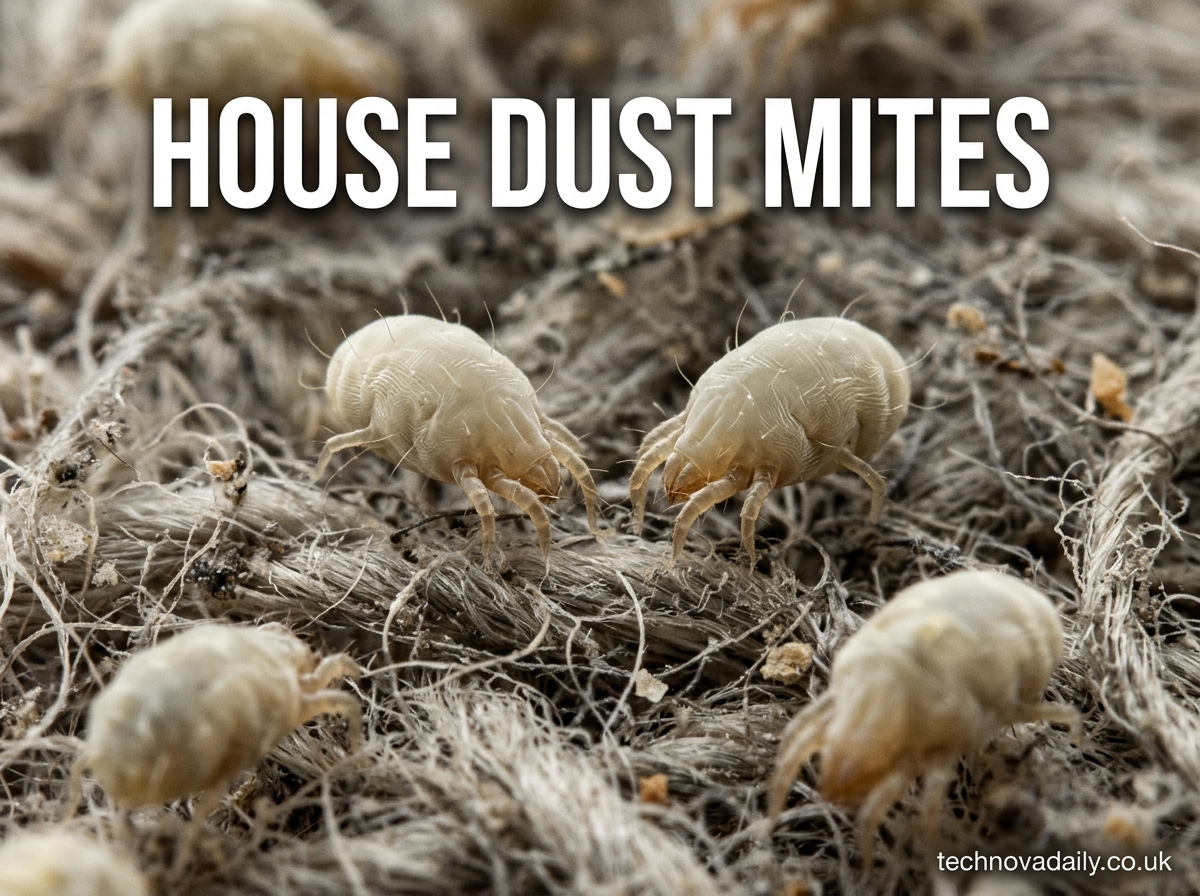
House dust mites are tiny organisms that live in places such as mattresses, pillows, carpets, curtains, and upholstered furniture. They feed mainly on dead skin cells shed by people and pets. Although they do not bite humans, their body parts and waste can trigger allergic reactions in sensitive people. Common symptoms include sneezing, a runny nose, itchy eyes, coughing, and breathing problems.
You cannot completely remove house dust mites from your home, but you can reduce their numbers and limit contact with the allergens they leave behind. Washing bedding regularly, using protective mattress covers, controlling indoor humidity, and cleaning with suitable equipment can help manage symptoms.
What Are House Dust Mites?
House dust mites are microscopic relatives of spiders and ticks. They are not insects, and they are too small to see clearly with the naked eye. They live in indoor environments where they can find food, warmth, and moisture.
These organisms feed mainly on flakes of dead skin that people and animals shed naturally. Mattresses, pillows, blankets, carpets, and fabric furniture provide suitable places for them to live because these items collect skin flakes and hold moisture.
House dust mites are common in homes around the world. Their presence does not mean that a home is dirty. Even regularly cleaned houses can contain dust mites because these organisms are difficult to remove completely.
The main concern is not the mites themselves but the allergens found in their waste and body fragments. When these particles enter the air and are inhaled, they can cause symptoms in people who are allergic to them.
Where Do House Dust Mites Live in Your Home?
House dust mites prefer warm, humid places where they can find food. They are often found in bedrooms because people spend many hours sleeping there, and bedding collects shed skin cells.
Dust Mites in Mattresses and Bedding
Mattresses, pillows, sheets, and blankets can provide a suitable environment for dust mites. Skin flakes collect in these items, while body heat and moisture create conditions that help mites survive.
When you move in bed, some allergen-containing particles can become airborne. People with dust mite allergies may notice more sneezing, nasal congestion, or itchy eyes when they wake up or make their beds.
Dust Mites in Carpets and Rugs
Carpets and rugs trap dust, skin flakes, and other small particles. Thick carpets can also hold moisture, making them suitable places for dust mites to live.
Walking across a carpet or vacuuming can disturb settled particles and release some allergens into the air. Regular vacuuming with a HEPA-filter vacuum can help reduce exposure, although it may not remove all mites or allergens.
Dust Mites in Sofas, Curtains, and Soft Toys
Upholstered sofas, fabric chairs, curtains, cushions, and stuffed toys can collect dust and skin flakes. Items that are rarely washed may allow allergens to build up over time.
Washable curtains and toys are easier to maintain. If someone in your home has a dust mite allergy, consider keeping stuffed toys away from the bed and cleaning fabric furniture according to the manufacturer’s instructions.
Areas With High Humidity
Dust mites survive more easily in warm, humid environments. Rooms with poor ventilation, damp bedding, or high indoor humidity may support larger mite populations.
Bathrooms and damp storage areas can also collect household dust, although mattresses, bedding, carpets, and upholstered furniture are common places to focus on when reducing dust mite exposure.
What Causes House Dust Mites to Grow?
House dust mites need food, suitable temperatures, and moisture to survive. Dead skin cells provide their main food source, while humidity helps prevent them from drying out.
Indoor humidity is particularly important. When relative humidity remains high, dust mites generally have better conditions for survival and reproduction. Keeping indoor humidity around 30% to 50%, when practical, can help make your home less suitable for them.
Soft furnishings also affect how easily dust mites and their allergens build up. Mattresses, heavy curtains, carpets, and fabric cushions can collect skin flakes and dust. Regular washing, damp cleaning, and reducing unnecessary fabric items can help lower exposure.
A clean home can still contain dust mites, so the aim is not to make your surroundings completely free of them. Instead, focus on reducing moisture, cleaning bedding, and limiting the materials where dust and allergens collect.
Do House Dust Mites Bite Humans?
No. House dust mites do not bite humans, sting them, or burrow into their skin. They are different from bedbugs, fleas, and other pests that bite people.
Some people develop itching or skin irritation because of an allergic reaction to dust mite allergens. Others may notice eczema symptoms becoming worse after exposure. However, itchy skin alone does not prove that dust mites are responsible.
If you notice small, itchy bumps after sleeping, consider other possible causes, including bedbugs, fleas, contact dermatitis, or other skin conditions. Bedbugs and fleas can bite, whereas house dust mites do not.
If the itching continues, spreads, or causes skin damage, speak with a healthcare professional to find the cause. Avoid treating your mattress or skin with strong chemicals unless a qualified professional recommends a suitable product.
What Are the Symptoms of House Dust Mite Allergy?
House dust mite allergy occurs when the immune system reacts to proteins found in mite waste and body fragments. The symptoms can resemble other indoor allergies and may continue throughout the year.
Sneezing and a Runny or Blocked Nose
Repeated sneezing, a runny nose, nasal congestion, and an itchy nose are common signs of dust mite allergy. Some people also experience postnasal drip, in which mucus runs down the back of the throat.
Symptoms may become worse after waking up, changing bedding, or cleaning a dusty room. However, similar symptoms can occur with pollen allergies, pet allergies, and respiratory infections.
Itchy, Red, or Watery Eyes
Dust mite allergens can irritate the eyes in people with allergic conjunctivitis. The eyes may become red, watery, itchy, or uncomfortable.
Rubbing the eyes can increase irritation. If you experience severe eye pain, changes in vision, or marked swelling, seek medical advice rather than assuming the symptoms are caused by a household allergy.
Coughing, Wheezing, and Breathing Problems
Dust mite allergens can trigger asthma symptoms in people who are sensitive to them. These symptoms may include coughing, wheezing, chest tightness, and shortness of breath.
Some people notice symptoms at night or when they spend time in dusty rooms. If breathing becomes severely difficult, you cannot speak in full sentences, or prescribed rescue treatment is not helping, seek emergency medical care.
Itchy Skin and Eczema Flare-Ups
Some people with dust mite sensitivity experience itching or worsening eczema. The skin may become dry, red, inflamed, or irritated.
These symptoms have several possible causes, including other allergies and skin conditions. A healthcare professional can help determine whether dust mites are a likely trigger and suggest suitable treatment.
Symptoms That Are Worse at Night or in the Morning
Dust mite allergy may cause more noticeable symptoms during the night or shortly after waking because mattresses and pillows can contain allergens.
Symptoms may also increase while making the bed or cleaning carpets. If this pattern occurs regularly, keeping a symptom diary and noting where symptoms happen can help your healthcare professional assess possible triggers.
How Do You Know if You Have a House Dust Mite Allergy?
A dust mite allergy may be suspected when symptoms such as sneezing, nasal congestion, itchy eyes, or coughing occur regularly indoors. Symptoms that worsen in bed, when cleaning, or in rooms with carpets may provide useful clues.
However, symptoms alone cannot confirm the cause. Dust, mold, pollen, pet dander, and other substances can produce similar reactions. A healthcare professional will consider your symptoms, medical history, home environment, and possible exposure to other allergens.
Skin-Prick Testing
During a skin-prick test, a healthcare professional places small amounts of selected allergens on the skin and gently pricks the surface. The skin is then checked for a reaction, usually within about 15 to 20 minutes.
A raised, itchy bump may indicate sensitivity to the tested allergen. The result must be interpreted alongside your symptoms because a positive test does not always mean that the allergen is causing your current problems.
Specific IgE Blood Testing
A specific IgE blood test measures antibodies directed against particular allergens, including house dust mites. It may be useful when skin testing is unsuitable or when a clinician needs additional information.
Your healthcare professional will interpret the result alongside your medical history and symptoms. Do not diagnose yourself from a test result alone.
How to Get Rid of House Dust Mites
You usually cannot eliminate every house dust mite from your home. However, several practical steps can reduce mite numbers and the allergens that may trigger symptoms. Combining these methods is often more useful than relying on a single cleaning product.
Wash Bedding Regularly
Wash sheets, pillowcases, and blankets every week. Follow the fabric care instructions and use a washing temperature that is suitable for the material and effective for reducing dust mites and allergens.
If hot washing is not suitable for a particular item, ask your healthcare professional or follow reliable product-care guidance for alternatives. Make sure bedding dries fully before you use it again.
Use Dust Mite-Proof Mattress and Pillow Covers
Allergen-proof covers with tightly woven fabric can help keep mites and allergens contained within mattresses and pillows. Choose covers designed specifically for dust mite allergen protection.
Covering mattresses and pillows is particularly useful for people who experience symptoms in bed. Follow the manufacturer’s washing and maintenance instructions to keep the covers in good condition.
Keep Indoor Humidity Below 50%
Try to keep indoor relative humidity at or below 50% when possible. A hygrometer can help you measure humidity, while an air conditioner or dehumidifier may help reduce moisture.
Repair leaks, dry damp areas, and improve ventilation where appropriate. These measures can make the indoor environment less suitable for dust mites, especially in humid climates.
Vacuum Carpets With a HEPA Filter
Vacuum carpets, rugs, and upholstered furniture regularly. A vacuum cleaner with a HEPA filter or suitable high-efficiency filtration can help capture fine particles and reduce the amount of allergen-containing dust left behind.
Vacuuming can temporarily stir allergens into the air. If you have a strong allergy, consider wearing a well-fitting mask and leaving the room while another person cleans. Allow airborne dust to settle before returning.
Clean Surfaces With a Damp Cloth
Use a damp cloth or mop to clean shelves, floors, and other hard surfaces. Dry dusting can move particles into the air instead of removing them.
Clean regularly, paying attention to bedroom surfaces and areas around the bed. Avoid shaking bedding indoors because this can disturb dust and allergens.
Reduce Clutter and Wash Soft Toys
Books, ornaments, cushions, and other items can collect dust. Reducing unnecessary clutter makes cleaning easier and leaves fewer surfaces where dust can build up.
Choose washable stuffed toys where possible, wash them according to care instructions, and keep them off the bed if dust mite allergy is a concern. Clean curtains and upholstered furniture regularly as well.
Consider Hard Flooring and Washable Window Coverings
If allergy symptoms remain difficult to manage, consider replacing bedroom carpets with hard flooring where practical. Smooth flooring is generally easier to clean than thick carpets.
Washable curtains and fewer fabric furnishings can also make dust control easier. These changes may not be necessary for every household, but they can help when several other measures have not provided enough relief.
How Are House Dust Mite Allergies Treated?
Treatment depends on your symptoms, their severity, and whether you have other conditions such as asthma or eczema. Reducing exposure to dust mite allergens is one part of management, but some people also need medication.
Antihistamines may help relieve sneezing, itching, and a runny nose. Nasal corticosteroid sprays can reduce inflammation and congestion. The right option depends on your age, health history, other medicines, and the type of symptoms you have, so ask a healthcare professional or pharmacist for advice.
People with persistent symptoms may benefit from an allergy specialist’s assessment. In selected cases, allergen immunotherapy, given as injections or certain under-the-tongue treatments, may help reduce sensitivity over time. This treatment requires professional guidance and is not suitable for everyone.
If dust exposure triggers asthma, follow your prescribed asthma action plan and use medicines as directed. Seek medical advice if symptoms continue despite home changes or treatment. Severe breathing difficulty requires emergency care.
Are House Dust Mites Dangerous?
House dust mites are not usually dangerous to people who are not allergic to them. They do not bite or spread disease through bites, but their allergens can cause ongoing discomfort in sensitive individuals.
Dust mite allergy can contribute to allergic rhinitis, eye irritation, and worsening eczema. In people with asthma, exposure may trigger coughing, wheezing, chest tightness, or difficulty breathing. Symptoms can interfere with sleep, daily activities, and overall comfort when they are not well controlled.
The best response is to reduce exposure and seek medical advice when symptoms suggest an allergy. You do not need to use harsh chemicals or try to sterilize your home. Regular bedding care, moisture control, and suitable cleaning methods are safer places to start.
Frequently Asked Questions About House Dust Mites
Can You See House Dust Mites With the Naked Eye?
House dust mites are too small to see clearly with the naked eye. A microscope is needed to view them properly. Visible household dust is made up of different materials and does not tell you how many dust mites are present.
Do House Dust Mites Live in Every Home?
Dust mites are common in homes, but their numbers vary with humidity, temperature, furnishings, and cleaning habits. They are more likely to thrive in warm, humid environments with plenty of dust and skin flakes. No home needs to look dirty for dust mites to be present.
What Kills House Dust Mites Naturally?
Regular washing of bedding, suitable heat during laundering, and lowering indoor humidity can help reduce dust mites. Freezing certain washable items may kill mites, but it does not remove the allergens they leave behind. Wash or clean the item afterward when its care instructions allow.
Does Sunlight Kill House Dust Mites?
Direct sunlight may warm and dry exposed materials, but placing bedding in the sun is not a reliable way to remove all mites or allergens. Washing bedding and keeping indoor humidity low are more dependable parts of a dust mite control plan.
Can House Dust Mites Live in Your Hair?
House dust mites normally live in household materials such as bedding, carpets, and fabric furniture. They do not live on human hair in the way head lice do. If you have persistent scalp itching, consider other causes and consult a healthcare professional if needed.
Can House Dust Mites Cause Asthma?
Dust mite allergens can trigger asthma symptoms in people who are sensitive to them. These symptoms may include coughing, wheezing, chest tightness, and shortness of breath. Not everyone with asthma has a dust mite allergy, so testing may help identify relevant triggers.
How Often Should You Wash Bedding to Reduce Dust Mites?
Weekly washing of sheets, pillowcases, and blankets is a common recommendation for people with dust mite allergies. Use a suitable washing temperature and dry the bedding fully. Mattress and pillow covers designed to block allergens can provide extra protection.
What Is the Best Way to Reduce Dust Mites in a Mattress?
Use a dust mite allergen-proof mattress cover, wash bedding weekly, and keep bedroom humidity around or below 50% when practical. Vacuuming the surrounding floor and reducing dust-collecting clutter can also help. These measures reduce exposure but may not remove every mite or allergen.
Conclusion
House dust mites are tiny organisms that commonly live in mattresses, pillows, carpets, and upholstered furniture. Although they do not bite humans, their waste and body fragments can trigger allergies, including sneezing, a blocked nose, itchy eyes, and asthma symptoms.
To reduce house dust mites, wash bedding regularly, use allergen-proof mattress and pillow covers, keep indoor humidity low, and clean surfaces with a damp cloth. Vacuum carpets with suitable filtration and reduce clutter that collects dust. If symptoms continue or affect your sleep and breathing, consult a healthcare professional for allergy testing and treatment.
