



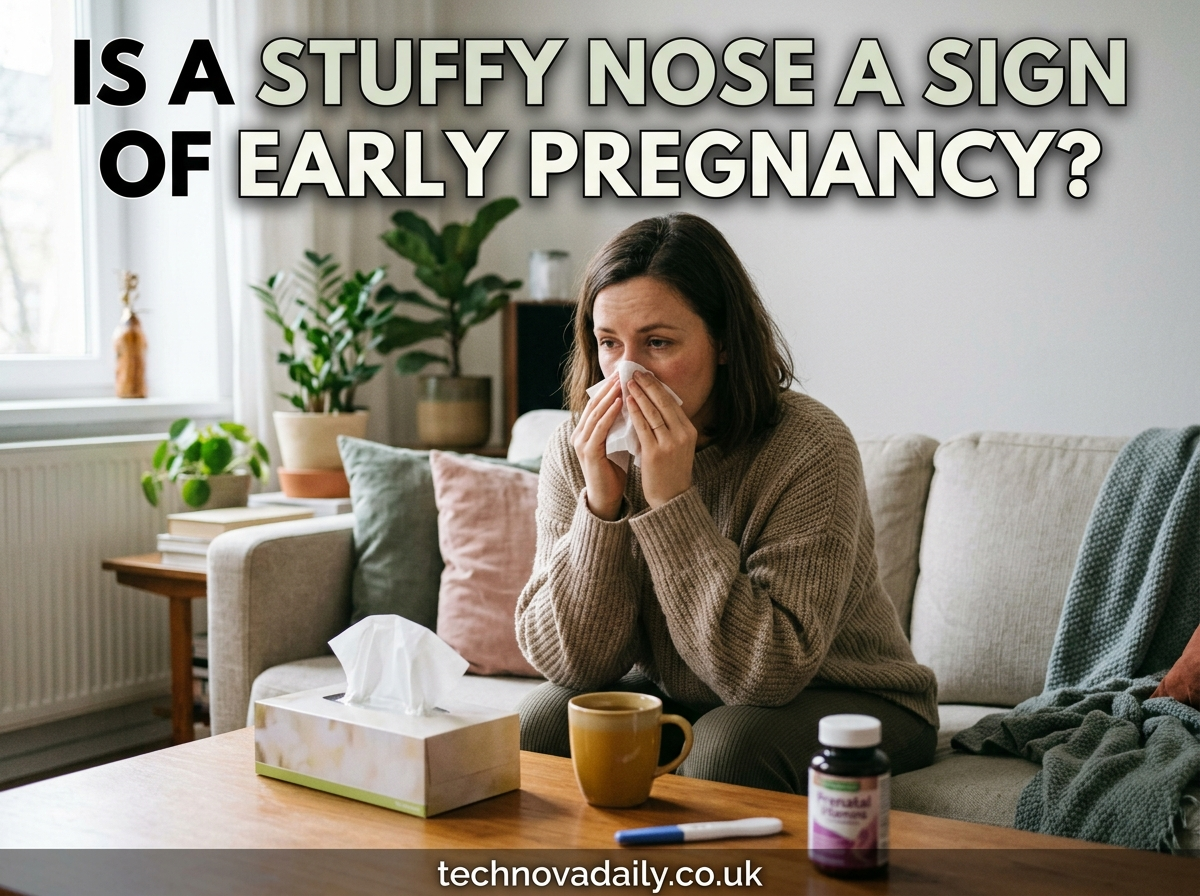
A stuffy nose can happen during pregnancy, but it is not a reliable sign of early pregnancy on its own. Hormonal changes and increased blood flow during pregnancy can cause swelling inside the nose, leading to congestion, extra mucus, or a runny nose. However, colds, allergies, and other conditions can cause the same symptoms.
If you have a stuffy nose and think you might be pregnant, pay attention to other symptoms, such as a missed period, breast tenderness, or unusual tiredness. The best way to find out is to take a pregnancy test at the right time rather than relying on nasal congestion alone.
Can a Stuffy Nose Be an Early Sign of Pregnancy?
Yes, a stuffy nose can occur during pregnancy. Some pregnant women develop nasal congestion because hormonal changes increase blood flow to the lining of the nose. This can make the nasal tissues swell and produce more mucus, making it harder to breathe through the nose.
Pregnancy-related nasal congestion is sometimes called pregnancy rhinitis. It can occur during pregnancy even when a person does not have a cold or allergies. However, it is not a dependable way to identify early pregnancy because nasal congestion is common for many other reasons.
If your nose feels blocked before your period is due, pregnancy is one possible explanation, but it is not the only one. A home pregnancy test can help confirm whether you are pregnant. A stuffy nose by itself cannot tell you whether conception has occurred.
Why Does Your Nose Get Stuffy During Pregnancy?
Hormonal changes are one reason nasal congestion can occur during pregnancy. Changes in estrogen and other hormones may affect the blood vessels and tissues inside the nose. As the lining becomes swollen, the nasal passages narrow, making it harder for air to move freely.
Increased blood volume during pregnancy may also contribute to swelling in the nasal tissues. Some women notice a blocked nose, while others experience sneezing, a runny nose, or mucus dripping down the back of the throat. These symptoms can make sleeping uncomfortable, especially at night.
Pregnancy is not the only cause of these changes. Seasonal allergies, dust, dry air, infections, and exposure to irritants can also lead to nasal congestion. If you suspect pregnancy, consider your menstrual cycle and other symptoms instead of assuming that a blocked nose is caused by hormones.
How Early in Pregnancy Can a Stuffy Nose Start?
A stuffy nose can occur during pregnancy, but there is no fixed time when it begins. Some women notice nasal changes during pregnancy, while others do not experience congestion at all. Pregnancy-related rhinitis is often reported later in pregnancy, so a blocked nose in the days before a missed period should not automatically be treated as an early pregnancy symptom.
Cleveland Clinic
+1
If you have had sex and are wondering whether you could be pregnant, consider when your next period is due. Symptoms alone cannot show exactly when conception happened or confirm that pregnancy has begun. A pregnancy test is a better way to check.
Some home pregnancy tests can detect pregnancy before a missed period, but testing too early may give a negative result even if you are pregnant. For the most reliable result, most tests should be used from the first day of a missed period.
NHS
What Does Pregnancy-Related Nasal Congestion Feel Like?
Pregnancy-related nasal congestion can feel similar to having a mild cold. You may notice that one or both nostrils feel blocked, particularly when lying down or trying to sleep. Some women also have a runny nose, frequent sneezing, or mucus that drains into the throat.
Another possible symptom is postnasal drip, which can cause throat irritation or the feeling that mucus is collecting at the back of your throat. Nasal swelling may also make it harder to sleep comfortably. These symptoms can affect daily activities, but their presence does not mean you are pregnant.
Cleveland Clinic
The main difference is that pregnancy-related rhinitis is not caused by a viral infection or an allergy. However, you cannot always tell the cause from symptoms alone. If congestion persists, becomes worse, or comes with other symptoms, a healthcare professional can help identify the cause.
Stuffy Nose Before a Missed Period: Could You Be Pregnant?
Yes, pregnancy is possible if you have a stuffy nose before your expected period and have had sex that could result in pregnancy. However, nasal congestion is not a dependable early warning sign. Many women experience no noticeable pregnancy symptoms before their period is due.
Other causes may explain your symptoms. For example, dust, pollen, changes in weather, dry air, and a common cold can all make your nose feel blocked. If you also have itchy eyes and repeated sneezing, allergies may be the cause. A sore throat, cough, or fever may point toward an infection, although symptoms can overlap.
If your period is late, take a home pregnancy test and follow the instructions on the package. If the result is negative but your period still does not arrive, repeat the test after a few days. Seek medical advice if repeated tests are negative and your period remains absent.
NHS
+1
Other Early Pregnancy Signs to Look For
A missed period is one of the most useful early signs of pregnancy if your menstrual cycles are usually regular. Other symptoms may include tender breasts, tiredness, nausea, vomiting, and needing to urinate more often. Some women notice changes in their sense of smell, food preferences, or vaginal discharge.
NHS
Early pregnancy symptoms do not look the same for everyone. You might experience several symptoms, only one, or none at first. Breast tenderness and tiredness can also occur before a period, so these changes are not proof of pregnancy either.
If you suspect pregnancy, use a home pregnancy test rather than relying on a list of symptoms. If the test is positive, contact a healthcare professional to discuss the next steps for pregnancy care. If you have severe abdominal pain, heavy bleeding, or fainting, seek urgent medical attention rather than waiting for another test.
Is a Stuffy Nose a Sign of Pregnancy or a Cold?
Pregnancy-related nasal congestion, a common cold, and allergies can all cause a blocked nose. Looking at the symptoms together may provide clues, but it cannot always tell you which condition you have.
A cold often comes with a sore throat, cough, or general feeling of being unwell. Allergies may cause itchy or watery eyes, repeated sneezing, and a clear runny nose, particularly after exposure to dust or pollen. Pregnancy-related rhinitis can cause ongoing nasal blockage without the usual signs of a cold or an allergic reaction.
Cleveland Clinic
+1
There is no single nasal symptom that confirms pregnancy. If you have congestion along with a late period, take a pregnancy test. If you have a fever, worsening facial pain, or symptoms that do not improve, consult a healthcare professional to check for an infection or another cause.
How to Relieve a Stuffy Nose if You Might Be Pregnant
If you think you may be pregnant, try simple measures to ease nasal congestion before reaching for medication. These steps may help you breathe more comfortably while you work out the cause of your symptoms.
- Use a saline nasal spray: Saline can help moisten the nasal passages and loosen mucus.
- Drink enough fluids: Water and other suitable drinks help maintain hydration.
- Use a clean humidifier: Adding moisture to dry indoor air may make breathing more comfortable.
- Raise your head slightly while sleeping: A more upright sleeping position may help reduce the feeling of blockage.
- Avoid known irritants: Smoke, strong fragrances, dust, and other triggers may worsen congestion.
These measures may help with symptoms, but they will not confirm or rule out pregnancy. If you use a nasal rinse, follow the product instructions and use sterile, distilled, or previously boiled and cooled water rather than untreated tap water.
Be careful with medicines marketed for colds, allergies, or blocked noses. Some decongestants may not be suitable during pregnancy, especially in the first trimester. Ask a pharmacist or healthcare professional before taking a new medicine if you might be pregnant.
Cleveland Clinic
+2
When Should You Take a Pregnancy Test?
If you have a stuffy nose and suspect pregnancy, the timing of your test matters more than the symptoms you notice.
Most home pregnancy tests are most reliable from the first day of your missed period. If you do not know when your next period is due, the NHS advises testing at least 21 days after your last unprotected sex. Some tests can be used earlier, but an early negative result may not rule out pregnancy.
NHS
Follow the instructions that come with your test and check the result within the stated time. If the test is negative but your period still has not started, wait a few days and test again. If you receive a positive result, arrange appropriate pregnancy care. If you continue to get negative results and your period remains absent, speak with a healthcare professional.
When Should You See a Doctor About a Stuffy Nose?
A mild stuffy nose often improves with simple home care. However, you should speak with a healthcare professional if the congestion lasts for several weeks, disrupts your sleep, or makes everyday activities difficult. Persistent symptoms may be related to allergies, sinus problems, or pregnancy-related rhinitis.
Seek medical advice if you develop a high or persistent fever, severe facial pain, or symptoms that are getting worse instead of better. Difficulty breathing, chest pain, or other severe symptoms need urgent medical assessment.
If you might be pregnant, tell your healthcare professional before starting any medicine. They can help you choose an appropriate treatment and determine whether your nasal symptoms need further investigation.
Frequently Asked Questions
1. Is a stuffy nose a sign of early pregnancy?
It can occur during pregnancy, but a stuffy nose alone is not a reliable sign. Colds, allergies, and environmental irritants can cause similar symptoms. Take a pregnancy test if you think you might be pregnant.
2. Can a stuffy nose start before a missed period?
It is possible to experience nasal congestion before your period is due, but it does not confirm pregnancy. Nasal congestion has many possible causes, and pregnancy-related rhinitis is often reported later in pregnancy.
3. Is a stuffy nose a pregnancy symptom at 1 week?
A stuffy nose is not a dependable sign of pregnancy at one week. Pregnancy dating usually starts on the first day of your last menstrual period, before conception typically occurs. Nasal congestion at this stage cannot confirm pregnancy.
4. Can pregnancy hormones cause nasal congestion?
Yes. Hormonal changes and increased blood flow can contribute to swelling in the nasal lining and changes in mucus production. This may cause a blocked or runny nose during pregnancy.
Cleveland Clinic
5. How can I tell if my stuffy nose is caused by pregnancy or a cold?
You cannot always tell from symptoms alone. A cold may cause a sore throat, cough, or fever, while allergies often cause itchy eyes and repeated sneezing. A pregnancy test can help determine whether you are pregnant, but a healthcare professional may be needed to identify the cause of congestion.
6. Does every pregnant woman get a stuffy nose?
No. Some pregnant women experience nasal congestion, while others do not. Every pregnancy is different, and the absence of a stuffy nose does not mean you are not pregnant.
7. How long does pregnancy-related nasal congestion last?
Pregnancy-related rhinitis can last for several weeks or longer. It often improves after delivery, commonly within a few days to two weeks. Persistent or severe symptoms should be discussed with a healthcare professional.
Cleveland Clinic
8. What can I take for a stuffy nose if I might be pregnant?
Saline nasal spray, fluids, and a clean humidifier may help. Ask a pharmacist or healthcare professional before using decongestants or other medicines, as some may not be suitable during pregnancy.
9. Can a stuffy nose be the only sign of pregnancy?
Nasal congestion may be the only symptom you notice, but it cannot establish that you are pregnant. Some women have few early symptoms. A pregnancy test is the appropriate way to check.
10. When should I take a pregnancy test if I have a stuffy nose?
Most home pregnancy tests are most reliable from the first day of a missed period. If you do not know when your period is due, test at least 21 days after your last unprotected sex. If the result is negative and your period does not arrive, repeat the test after a few days.
NHS
Conclusion
A stuffy nose can happen during pregnancy because hormonal changes and increased blood flow may cause swelling inside the nose. However, nasal congestion is not a reliable sign of early pregnancy, and it can also result from allergies, a cold, or other causes.
