



Virtual reality gaming is entering a new era, where players are no longer confined to isolated experiences but instead become part of massive, living digital worlds. Orion Drift is one of the most ambitious projects leading this transformation. Built as a social, competitive, and exploratory VR platform, it blends futuristic sports, immersive environments, and real-time interaction into one seamless experience.
Developed by Another Axiom, the studio behind the viral success of Gorilla Tag, Orion Drift represents a major step forward in VR gaming. Released in open early access on February 25, 2025, it has already captured attention for its scale, innovation, and community-driven design.
This article explores Orion Drift in depth, covering its gameplay systems, development background, core features, and its growing influence on the future of virtual reality
What Is Orion Drift and Why It Matters
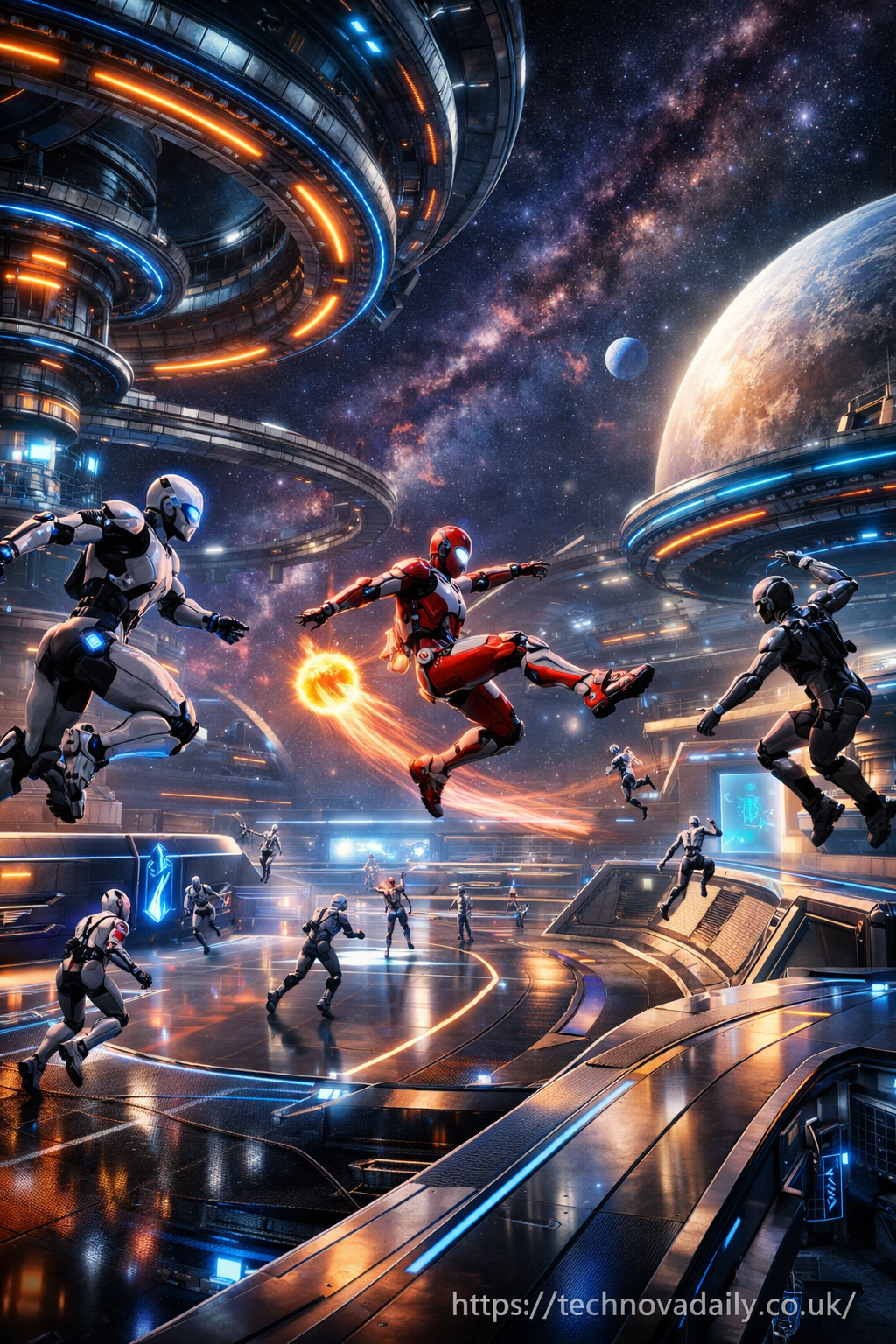
Orion Drift is a multiplayer virtual reality game that combines sports, exploration, and social interaction within a massive sci-fi setting. Players take control of robotic avatars who were once elite athletes on Earth but now compete and interact aboard a drifting space station.
The game is designed as a persistent virtual world rather than a traditional level-based experience. Instead of selecting matches from menus, players physically move through environments to discover activities, join games, or socialize with others. This design philosophy creates a more organic and immersive experience compared to standard multiplayer games.
What makes Orion Drift particularly important is its role in redefining how VR games function. It is not just a game but a platform where sports, creativity, and social interaction coexist. This hybrid structure positions it as a key example of the future of the metaverse-style gaming ecosystem.
The Origins and Development of Orion Drit
The creation of Orion Drift is closely tied to a major moment in VR history: the shutdown of Echo VR in 2023. That game had built a passionate community around zero-gravity sports, and its closure left a significant gap in the market. Orion Drift was developed to fill that gap while expanding on the concept.
Another Axiom, founded in 2020 by Kerestell “Lemming” Smith, quickly gained recognition with Gorilla Tag, a game known for its unique locomotion system. Building on that success, the studio began developing a new project under the codename “A2,” which was later revealed as Orion Drift in 2024.
The development process included early testing events, community previews, and continuous feedback integration. By the time the game entered open early access in 2025, it had already evolved significantly through player input, reflecting a modern live-service development approach.
Core Gameplay Mechanics and Movement System
One of the defining features of Orion Drift is its movement system. Unlike traditional VR games that rely heavily on joystick controls, Orion Drift uses arm-based locomotion. Players physically swing, push, and glide through the environment, creating a strong sense of immersion.
This system builds on the mechanics introduced in Gorilla Tag but expands them into a more complex and versatile framework. Players can run, jump, climb, skate, and even simulate flying movements within the zero-gravity environment.
The gameplay itself is highly varied. Players can engage in sports-like matches, complete parkour challenges, or simply explore the environment. The combination of physical movement and diverse activities ensures that the experience remains engaging over long periods.
The Orion Space Station: A Living Virtual World
The setting of Orion Drift is a विशाल orbital structure known as the Orion station. This space station serves as both the central hub and the primary gameplay environment, offering multiple districts with unique themes and activities.
Each district is designed to support different types of gameplay. Some areas are dedicated to competitive sports, while others focus on social interaction or skill-based challenges. This structure allows players to seamlessly transition between activities without leaving the world.
The scale of the station is one of the game’s most impressive features. It supports up to 75 players simultaneously, with future plans to increase that number significantly. This creates a dynamic, constantly evolving environment where players can interact in real time.
Multiplayer Experience and Social Interaction
Orion Drift is fundamentally a social VR experience. Unlike many traditional games that prioritize solo play, this game is built around interaction, collaboration, and community engagement.
Players can communicate using voice chat and expressive avatar movements, making interactions feel natural and immersive. The large shared spaces encourage spontaneous encounters, whether it’s joining a game in progress or exploring with new friends.
The game also supports community-driven events and activities. Players can gather for competitions, participate in challenges, or simply hang out in designated social areas. This emphasis on community is one of the key reasons Orion Drift is gaining popularity among VR users.
Game Modes, Activities, and Customization
Orion Drift offers a wide variety of activities to keep players engaged. One of the most popular modes is a soccer-like game often referred to as Driftball, where players use physical movements to hit and control the ball.
In addition to sports, the game includes obstacle courses, parkour challenges, and exploration-based tasks. Some areas even feature golf-style gameplay and creative mini-games, showcasing the diversity of the experience.
Customization plays a significant role in player identity. Users can modify their robotic avatars with different cosmetics, accessories, and visual styles. This not only enhances personal expression but also strengthens the social aspect of the game, as players showcase their unique designs.
Technology Behind Orion Drift
Orion Drift is built using Unreal Engine 5, one of the most advanced game engines available today. This allows for high-quality visuals, realistic physics, and smooth performance across supported devices.
The game is currently available on Meta Quest headsets, including Quest 2, Quest 3, and Quest 3S. These standalone VR devices make it accessible to a wide audience without requiring a high-end gaming PC.
There is also a spectator mode available on PC, allowing users to watch gameplay and events. This feature expands the game’s reach and makes it more inclusive for those who may not own a VR headset.
Community Feedback and Player Reception
Since its early access release, Orion Drift has received generally positive feedback from the VR community. Players have praised its innovative movement system, large-scale environments, and social features.
Community discussions highlight the game’s potential to become a major platform in VR gaming. For example, one player described it as having “a ton of other game modes to choose from,” reflecting its variety and replay value.
However, like many early access titles, it also faces challenges. Some players have noted issues with navigation and matchmaking, while others have expressed concerns about the learning curve of its movement system. Despite this, the overall sentiment remains optimistic.
Future Updates and Long-Term Potential
The future of Orion Drift looks promising, with ongoing updates and planned expansions. The developers have indicated that they aim to increase player capacity, introduce new districts, and expand gameplay options.
One of the most exciting planned features is the ability for players to create and customize their own spaces and game modes. This level of user-generated content could significantly extend the game’s lifespan and appeal.
As VR technology continues to evolve, Orion Drift is well-positioned to grow alongside it. Its combination of social interaction, immersive gameplay, and community-driven development makes it a strong contender for long-term success.
Conclusion: Why Orion Drift Is a Game to Watch
Orion Drift is more than just another VR game; it is a glimpse into the future of interactive digital worlds. By combining sports, social interaction, and exploration within a single platform, it offers a unique and compelling experience.
